$50.00
In stock
Disclaimer: This product is for laboratory research use only. It is not intended for human consumption or for medical, veterinary, or household applications. Researchers should handle our peptides with caution and follow all relevant safety protocols during experimentation.

BPC-157 (Body Protective Compound-157) is a synthetic peptide made of 15 amino acids. It is derived from a naturally occurring protein found in gastric juices. It has become one of the most studied peptides in the field of regenerative and reparative biology. Researchers have studied BPC-157 for its role in cellular healing. It may also support angiogenesis and neuroprotection. Additionally, it has anti-inflammatory effects, making it important for scientific research.
In lab studies, BPC-157 affects growth factors and fibroblast cells. It also works on nitric oxide pathways. Together, these help repair and protect tendons, muscles, and blood vessels.
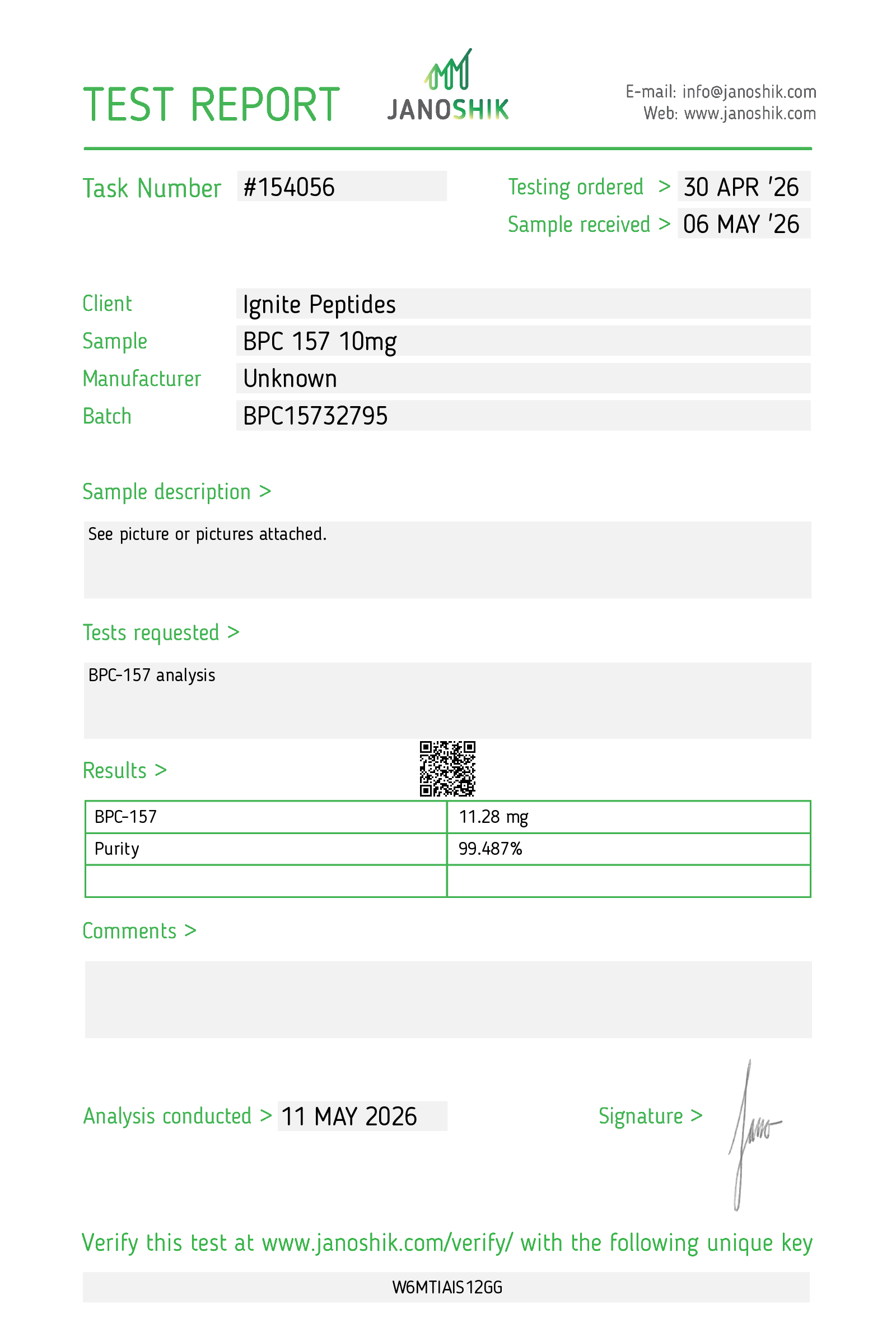
This premium peptide BPC-157 product contains 10mg of BPC-157 as a solid, white lyophilized powder in a 3mL glass vial. It is produced to pharmaceutical-grade quality. The peptide has >99% purity. Before use, reconstitute the peptide with a suitable solvent, such as bacteriostatic (BAC) water, to ensure accurate BPC-157 dosage for research applications.

Source: PubChem
BPC-157 has shown promising results in laboratory models investigating wound closure and tissue regeneration. The peptide appears to accelerate healing through:
Studies in animals show better healing in skin cuts, muscle tears, and ligament injuries. This suggests a strong connection between BPC-157 and the body’s natural repair processes.
Scientists and researchers investigating BPC-157 benefits have highlighted its promise in advancing peptide-based science.
To explore detailed insights into its potential role in healing and tissue repair, read our research overview here:
BPC-157 Peptide: How It May Help With Healing and Tissue Repair
One of the most interesting effects of BPC-157 in research is its ability to promote vascular repair and collateral blood vessel formation.
In preclinical studies, it was found to:
This vascular growth property makes BPC-157 a topic of interest in research related to ischemic injury and tissue oxygenation.
BPC-157 has been widely studied for its potential role in connective tissue recovery.
Research indicates that the peptide:
Animal studies show that BPC-157 can help Achilles tendon and muscle injuries heal faster. It may do this by activating a pathway that helps cells stick together and repair tissue.
BPC-157 exhibits measurable antioxidant-like properties in oxidative stress models.
Key observations from in vitro and in vivo studies include:
These effects suggest that BPC-157 may act as a stabilizer in oxidative or inflammatory environments, providing a protective mechanism at the cellular level.
Emerging research suggests that BPC-157 can influence neuronal regeneration and protection.
Preclinical studies have reported:
Animal studies also suggest that BPC-157 may help restore movement and protect nerve cells. This makes it an interesting option for brain and nerve research.
Scientific data suggest BPC-157 may support osteoblast function and bone regeneration in experimental models.
It has been shown to:
These findings support ongoing exploration into the peptide’s potential in orthopaedic and cartilage research.
BPC-157 might speed up the recovery process for muscles following any type of injury. Research shows this substance supports the healing of damaged or weakened muscle tissue. The treatment should improve blood circulation, which will deliver oxygen and nutrients to support body recovery.
This peptide also helps new muscle cells grow. It may help the body build new muscle fibres to replace the old or injured ones. BPC-157 may also calm swelling and protect cells from damage. This helps the body heal more easily.
During experiments on animals, BPC-157 was applied to muscles, and it made them heal faster as well as stronger. Microscopic examination of the muscle tissues revealed that they were normal and healthy. So the researchers have taken BPC-157 as a subject to study further and find out its potential role in muscle healing and recovery in the future.
BPC-157 has also been used in experiments with tiny living organisms, such as honeybees. Scientists have discovered that it offered bees a shield against the negative effects of pesticides and stress. It maintained the health of the bees’ cells and mitigated some of the damage that is typically seen after chemical exposure.
BPC-157 also helped bees keep their energy levels up and made their cells stronger. This means it may help living things stay healthy in tough conditions.
The results show that BPC-157 works not only in animals but also in smaller life forms. It may protect cells in many different species. Because of this, scientists believe it could help with research about how living things recover from damage or stress.
While not approved for human or veterinary use, laboratory data indicate that BPC-157 may hold promise for researchers investigating:
BPC-157 10mg is a synthetic peptide made from a natural protein found in the stomach. Researchers study it for its possible effects on healing, tissue repair, and recovery.
For laboratory research use only. Not for human or animal consumption, or for medical, veterinary, diagnostic, or household use.

At Ignite Peptides, we provide a secure and reliable way to source high-quality research peptides online. As a trusted U.S.-based peptide supplier, we focus on lab-verified products, full transparency, and consistent quality. With fast shipping and responsive support, we’re committed to advancing safe, dependable research you can trust.
This helps us maintain strict standards for regulatory compliance, researcher verification, and responsible product access.