Same Day Shipping FREE Shipping Over $99 Satisfaction Guarantee

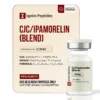
CJC/Ipamorelin

$100.00

In stock

- +

Disclaimer: This product is for laboratory research use only. It is not intended for human consumption or for medical, veterinary, or household applications. Researchers should handle our peptides with caution and follow all relevant safety protocols during experimentation.

Ignite Peptides quality peptides with holiday pricing crafted for consistency

Introduction

CJC/Ipamorelin are two research peptides that scientists often study together. This blend is known for its potential to support natural growth hormone release in research settings. Researchers are interested in how these peptides may affect muscle growth, recovery, and body composition during lab testing.

CJC-1295 is a synthetic peptide that acts as a growth hormone-releasing hormone (GHRH) analogue. Ipamorelin is a growth hormone-releasing peptide (GHRP). When studied together, they may work in a complementary way, helping to increase growth hormone levels for a longer time.

Both peptides are available for research use only. The product comes as a lyophilized powder that researchers can reconstitute with bacteriostatic water before experiments.

What Is CJC-1295 / Ipamorelin?

CJC-1295 without DAC and Ipamorelin are two peptides studied together. Researchers use them to explore growth hormone effects.

CJC-1295 without DAC is a synthetic peptide. It signals the pituitary gland to release growth hormone. Since it does not have a DAC, its effects are shorter and easier to control in studies.

Ipamorelin is a growth hormone–releasing peptide. It works like ghrelin, the natural hormone that triggers growth hormone. Ipamorelin mainly affects growth hormone. It does not raise other hormones like cortisol or prolactin.

When used together, CJC-1295 and Ipamorelin may create a stronger and steadier growth hormone response. Researchers often use this blend in studies on growth, recovery, and body composition.

Mechanism of Action

CJC-1295 and Ipamorelin work in different ways but share the same goal: to increase growth hormone (GH) release in research studies. Researchers often study how these two peptides may work together for stronger and longer GH pulses.

1. How CJC-1295 Works

  • CJC-1295 is a synthetic version of a natural growth hormone–releasing hormone (GHRH).
  • It binds to GHRH receptors in the pituitary gland. This action signals the gland to release more GH into the bloodstream.
  • CJC-1295 without DAC acts for a shorter time. This allows researchers to have more control over timing and dosing in lab studies.

By extending the natural GH pulse, it may help increase the duration of GH activity in research models.

2. How Ipamorelin Works

  • Ipamorelin is a selective growth hormone–releasing peptide (GHRP).
  • It activates the ghrelin receptor, also called the growth hormone secretagogue receptor (GHSR).
  • This process tells the body to release GH naturally, but gently and steadily.

Unlike older GHRPs, Ipamorelin does not affect cortisol, prolactin, or ACTH levels. This selectivity makes it an interesting choice for researchers studying clean GH stimulation.

3. Combined Action of CJC-1295 and Ipamorelin

  • When studied together, CJC-1295 and Ipamorelin may create a stronger GH pulse.
  • CJC-1295 supports GH production, while Ipamorelin helps release it more smoothly.
  • This dual action may lead to higher GH and IGF-1 activity in research models.

The CJC-1295 and Ipamorelin blend is often chosen for studies focused on recovery, body composition, and muscle research.

Together, they offer a balanced and controlled GH release pattern that researchers find valuable for testing and analysis.

Research Background & Studies

Scientists have studied CJC-1295 and Ipamorelin for many years. Both have been explored for how they affect growth hormone (GH) levels, recovery, and body composition in research models.

1. Studies on CJC-1295

CJC-1295 was first designed to act like natural GHRH. Early research showed it can increase GH and IGF-1 levels for a longer time than natural GHRH. Studies on CJC-1295 without DAC showed shorter action, giving researchers better control over GH release timing.

Other studies used CJC-1295 with DAC, which lasts longer in the system. The DAC version binds to proteins in the blood, helping it stay active for several days. Comparing CJC-1295 DAC vs no DAC, researchers often choose the no-DAC form when they want short, controlled GH pulses.

2. Studies on Ipamorelin

Ipamorelin has been studied for its selective GH-releasing effects. Research shows it can raise GH levels without affecting cortisol or prolactin. This makes it a clean peptide to study for hormone-specific pathways.

Some studies explored Ipamorelin’s role in tissue recovery, cell repair, and energy balance in lab models. Its mild and steady action makes it ideal for long-term hormone regulation studies.

3. Combination Research: CJC-1295 + Ipamorelin

Many scientists now study these peptides together. The CJC-1295 and Ipamorelin blend may produce a stronger and smoother GH response than either alone. Research data suggest that the mix supports steady GH pulses, higher IGF-1 levels, and better growth hormone balance in models.

Studies in both animal and clinical settings have shown promising results for metabolic and endocrine research. Researchers also explore this combination for ageing-related studies, energy balance, and muscle recovery.

The CJC-1295 Ipamorelin research peptide continues to gain interest as a model for understanding how controlled GH release may support multiple biological processes.

Product Specifications

Product NameCJC/Ipamorelin Blend
Peptide TypeResearch peptide blend
FormLyophilized powder
Purity≥ 98% (HPLC tested)
AppearanceWhite to off-white powder
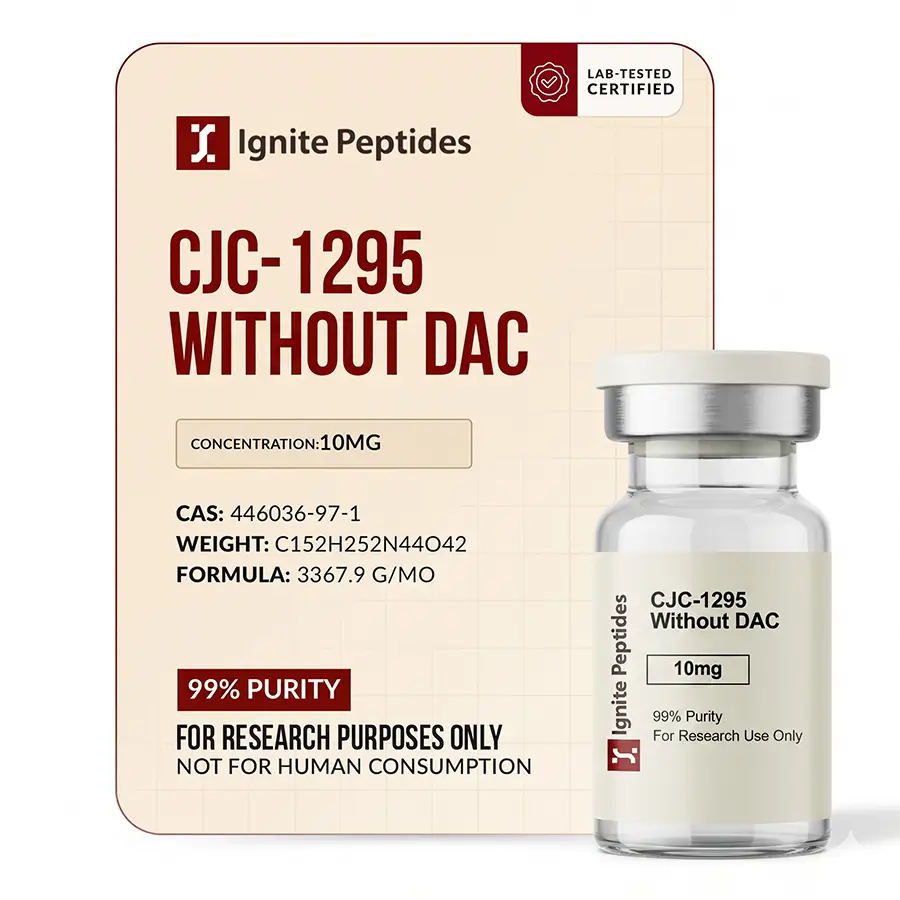
Molecular FormulaCJC-1295 (C152H252N44O42) / Ipamorelin (C38H49N9O5)
Molecular WeightCJC-1295: ~3367.9 Da / Ipamorelin: ~711.9 Da
StorageStore dry at -20°C. After reconstitution, keep refrigerated (2–8°C).
SolubilityReconstitute in bacteriostatic water for research use.
StabilityStable for up to 2 years when stored properly.
Packaging10mg vial (5mg CJC-1295 + 5mg Ipamorelin)
Intended UseFor laboratory research only. Not for human consumption.

Handling, Reconstitution & Storage

Proper handling helps maintain the quality of CJC-1295 and Ipamorelin peptides during research. Follow these general lab-use guidelines for best results.

Handling

  • Always wear clean gloves when handling the vial.
  • Avoid touching the inside of the cap or stopper.
  • Keep the vial tightly closed when not in use.
  • Handle peptides gently to prevent damage to the powder.

Reconstitution

  • Use bacteriostatic water or sterile water for injection.
  • Slowly add the water down the side of the vial.
  • Do not shake; swirl gently until the powder dissolves completely.
  • Once mixed, store the reconstituted solution in the refrigerator.
  • Label the vial with the date of mixing for lab records.

Storage

  • Store the dry peptide at -20°C (freezer) for long-term stability.
  • For short-term storage, keep at 2–8°C (refrigerator).
  • Avoid repeated freeze-thaw cycles.
  • Keep away from light, moisture, and heat.

These steps help maintain peptide purity and stability during lab testing. Researchers should follow standard laboratory safety procedures when preparing and storing all peptide products.

Conclusion

The CJC-1295 and Ipamorelin blend is widely studied in growth hormone research. These two peptides may support natural GH release in research models. They may also help create longer and steadier hormone pulses during studies.

CJC-1295 without DAC acts through the GHRH pathway. Ipamorelin works through the GHRP pathway. Together, they offer a balanced and reliable model for growth and recovery studies.

Researchers often use this blend to explore metabolism, muscle growth, and cell repair. The short and controlled action of CJC-1295 without DAC gives flexibility during lab work. Ipamorelin adds a smooth and selective GH release pattern.

References

FAQs About CJC/Ipamorelin 5mg/5mg

What is CJC-1295 Ipamorelin used for?
CJC-1295 and Ipamorelin are studied for their possible role in natural growth hormone release. Researchers explore them for models related to muscle repair, recovery, and metabolism.
Studies suggest these peptides may support steady GH pulses and balance hormone activity in research models. Scientists often study their effects on cell repair, recovery, and lean mass.
Research timing depends on study design. Some studies test them during specific phases of metabolic or recovery cycles. They are for laboratory use only and not for human or veterinary use.
Ipamorelin is studied for its selective effect on GH release, which may influence metabolism in test models. These findings are for research purposes and not medical use.
The time may vary by study type. Some research shows measurable GH responses within days of controlled trials. Long-term studies explore trends over several weeks.
CJC-1295 acts on the GHRH receptor, while Ipamorelin works on the GHRP receptor. When combined, they may create a more balanced GH pulse pattern in research models.
Some studies mention mild reactions such as redness at the test site or temporary tiredness in lab animals. All studies are done under controlled conditions and for research only.
Many peptides remain unapproved because they are still under scientific review. FDA approval requires clinical trials proving safety and effectiveness for medical use.
The CJC-1295/Ipamorelin blend is often prepared in a sterile lab setting. Mixing or handling should follow strict laboratory protocols to preserve quality and purity.
When stored properly in a cool, dry environment, lyophilized peptides may stay stable for extended periods. Once reconstituted, they should be used according to lab guidelines.

For laboratory research use only. Not for human or animal consumption, or for medical, veterinary, diagnostic, or household use.