Same Day Shipping Satisfaction Guarantee Free UPS 2nd Day Air on orders over $150

BPC-157 Dosage Calculator

Reconstitution reference tool for BPC-157 pre-clinical research protocols. Input vial strength, BAC water volume, and dose per injection. Get exact draw volumes, syringe units, and a full protocol schedule.

What size syringe are you using?

0.3 mL (30 units)
0.5 mL (50 units)
1.0 mL (100 units)
Calculator Syring

Vial Strength

BPC-157 per vial (mg)
Bac Water for Retatrutide

Reconstitution Solution

reconstitution volume
BPC-157

Dose per Injection

research dose (mcg)

⚠️ Syringe Capacity Exceeded

The calculated dose requires more volume than the selected syringe can hold. Please select a larger syringe size or adjust your concentration.

Results

Vial Strength: 5 mg
Water Volume: 2 mL
Concentration: 2500 mcg/mL
Dose per Injection: 250 mcg
Volume to Draw: 0.10 mL
Volume to Draw (IU): 10.00 units
Doses per Vial: 20
Remaining per Vial: 4750 mcg
Phase Week Weekly Dose Inj./Week Per Injection Volume (mL) Units (U-100)
Research Protocol: Loading phase (weeks 1-4) uses higher daily doses (500-1000 mcg/day). Maintenance phase reduces to 250-500 mcg/day.
Step 1:

What BPC-157 Dose to Enter?

BPC-157 is a synthetic pentadecapeptide derived from a gastric protective protein. Dose selection in pre-clinical settings is determined by the study protocol and subject body weight (mg/kg). Administration route, subcutaneous or intramuscular, also affects dose selection.

This calculator accepts dose input in milligrams. It computes the draw volume in mL and syringe units based on the reconstituted concentration. Dose consistency across replicate injections is critical for experimental reproducibility.

BPC-157 is most frequently studied between 200 mcg and 500 mcg per session. Values are entered in milligrams (e.g., 250 mcg = 0.25 mg). All dose inputs must reference the source protocol. Verification against the supplier’s COA is required before preparation begins.

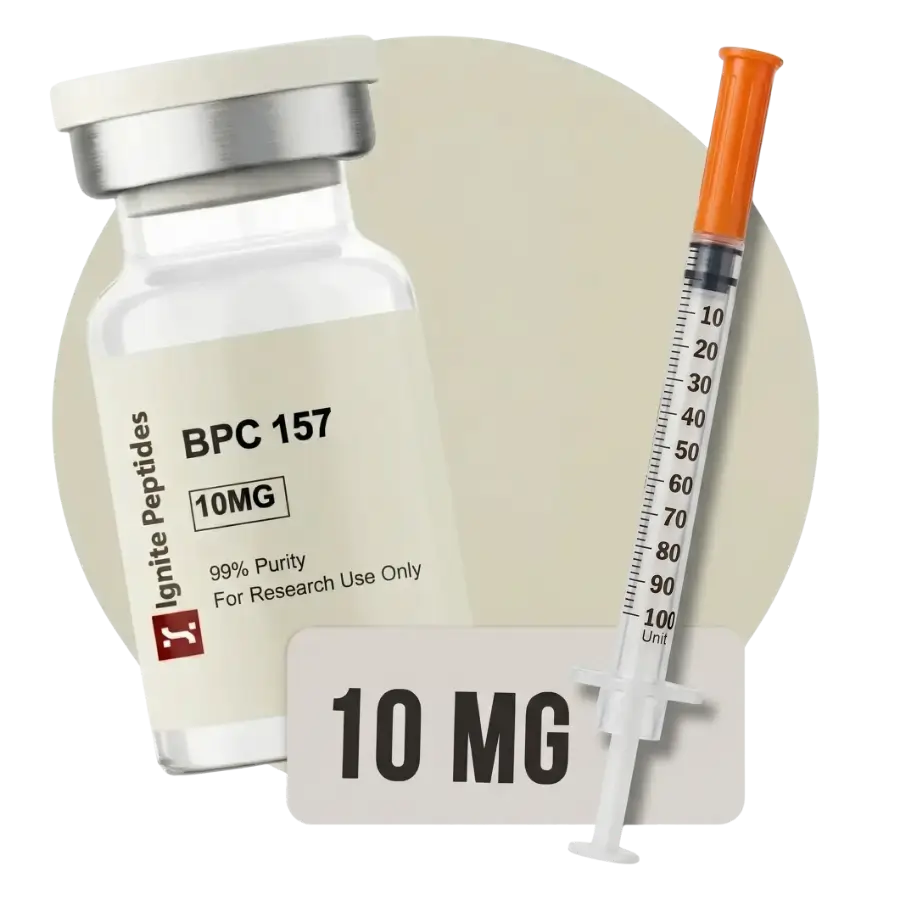
BPC-157 10mg lyophilized vial by Ignite Peptides placed next to a U-100 insulin syringe with a 10mg dose label, for research use only
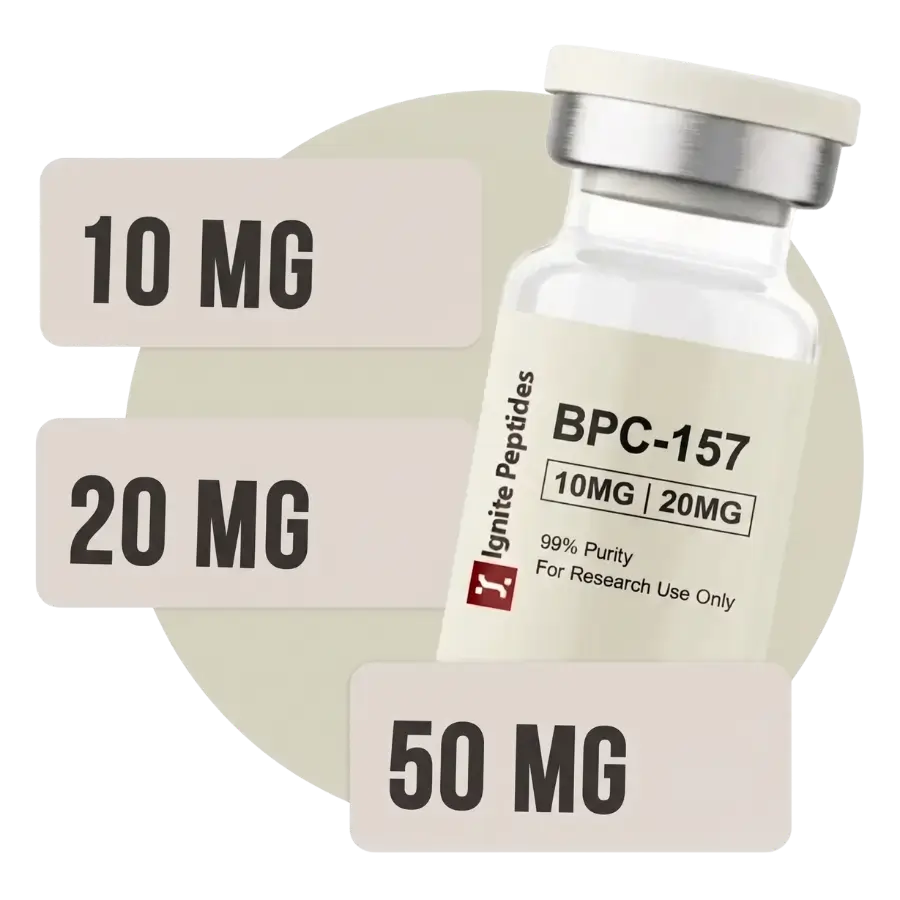
BPC-157 lyophilized vial labeled 10mg and 20mg by Ignite Peptides displayed alongside three dosage option labels showing 10mg, 20mg, and 50mg vial strengths
Step 2:

Which Vial Strength?

Select the total peptide mass declared on the lyophilised vial. This value appears on the product label. It is confirmed in the Certificate of Analysis (COA) issued by the supplier.

BPC-157 is commonly supplied in 5 mg and 10 mg lyophilised vials. Higher-strength vials yield higher concentrations when reconstituted in the same BAC water volume. This reduces the number of vials required across extended protocols.

As a reference: a 5 mg vial reconstituted with 2 mL BAC water produces 2.5 mg/mL. At a 0.25 mg dose, this equals a 0.10 mL draw (10 units on a U-100 syringe). Always cross-reference vial content with the COA before initiating reconstitution.

Step 3:

How Much BAC Water?

Enter the volume of bacteriostatic water introduced into the vial during reconstitution. This value determines the final working concentration. A lower BAC water volume produces a higher concentration and a smaller draw volume per dose.

BPC-157 protocols commonly use 1 mL to 2 mL of bacteriostatic water. A 1 mL volume yields 5 mg/mL. A 2 mL volume yields 2.5 mg/mL.

BAC water must be injected slowly along the inner vial wall via an angled needle. Direct contact with the lyophilised peptide cake is avoided. The vial is gently swirled until the solution is clear. Mechanical agitation is not used. Concentration is calculated automatically; no manual arithmetic is required.

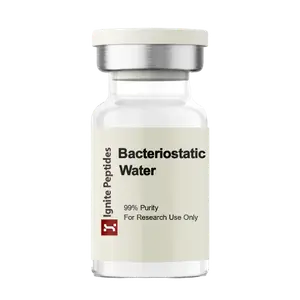
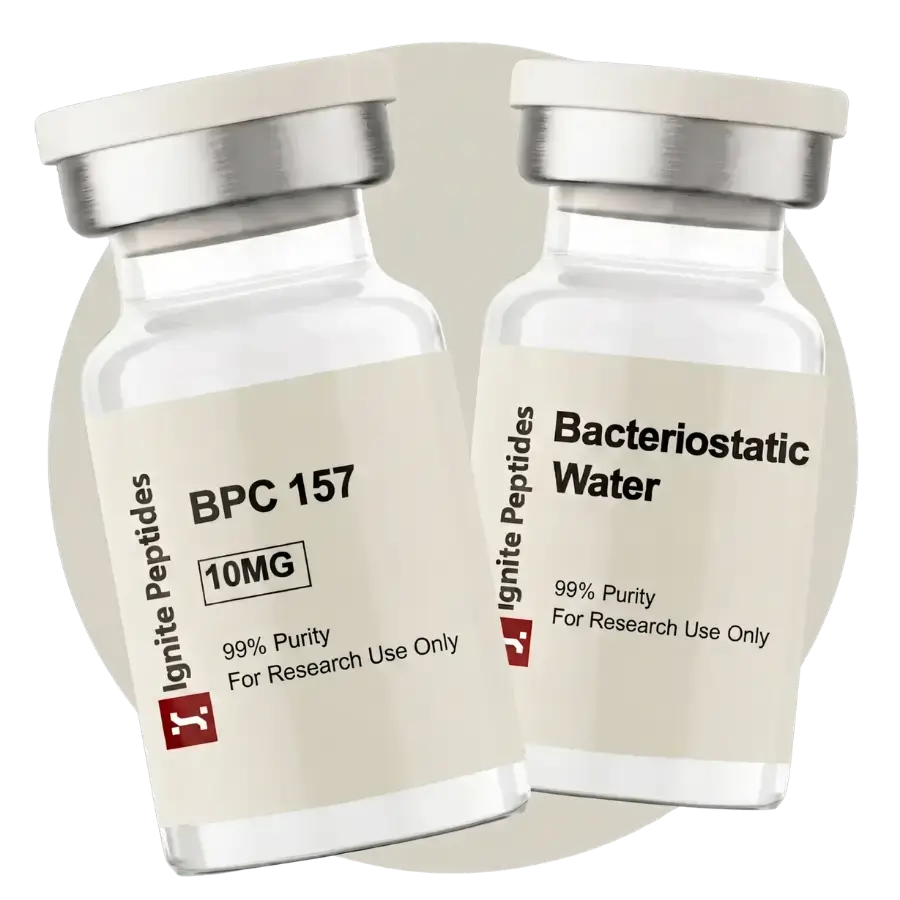
BPC-157 10mg lyophilized vial placed next to a Bacteriostatic Water vial, both labeled Ignite Peptides 99% Purity For Research Use Only
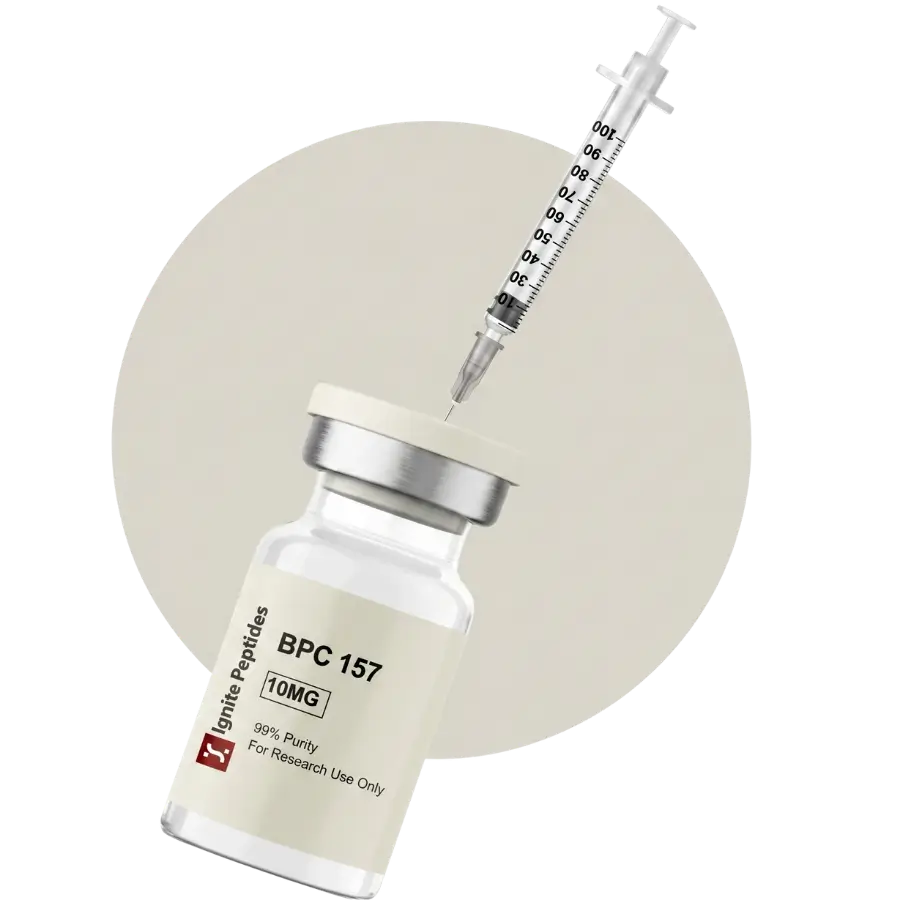
BPC-157 10mg lyophilized vial with insulin syringe inserted through the stopper for reconstitution, Ignite Peptides, for research use only
Step 4:

What Units to Draw?

After all inputs are entered, the calculator outputs the injection volume in mL and syringe units. Output is derived from three variables:

  • Reconstituted BPC-157 concentration (mg/mL)
  • Dose per injection (mg) specified by the protocol
  • Selected syringe capacity and graduation type (U-30, U-50, or U-100)

Results display as mL and unit marks. For example, 10 units on a U-100 syringe equals 0.10 mL. For sub-10-unit draws, a calibrated micropipette is recommended. Refrigerated post-reconstitution storage is required to maintain solution stability.

BPC-157 Dosage Calculator Summary

The BPC-157 Dosage Calculator computes all key preparation variables from minimal inputs. Outputs include dose in mg, draw volume in mL, concentration in mg/mL, and syringe units. Automated calculation removes manual arithmetic errors. It standardises injection volumes across subjects. This supports consistent, reproducible pre-clinical study outcomes.

For studies using both recovery peptides, see the TB-500 Dosage Calculator, or explore the Klow80 Blend containing both compounds.

FAQs

Commonly Asked Questions About BPC-157 Peptide Calculations

How is reconstitution volume determined in BPC-157 research?

Reconstitution volume depends on vial peptide mass and the target concentration. BPC-157 protocols commonly use 1 mL to 2 mL of bacteriostatic water. A higher BAC water volume decreases concentration and increases draw volume per dose. This calculator recalculates draw volume automatically when inputs are adjusted.
At 2.5 mg/mL (5 mg vial + 2 mL BAC water), a 0.25 mg dose requires a 0.10 mL draw. This equals 10 units on a U-100 syringe. At 5 mg/mL (1 mL BAC water), the same dose requires 0.05 mL (5 units). Draw volume adjusts automatically based on the BAC water input.
A 5 mg vial is most commonly reconstituted in 1 mL or 2 mL of bacteriostatic water. 1 mL produces 5 mg/mL, suited for lower draw volumes. 2 mL yields 2.5 mg/mL, preferred for 200–500 mcg dose ranges. Draw volumes at this concentration fall within measurable U-100 syringe increments.
BPC-157 is supplied as a lyophilised powder in sealed, nitrogen-purged vials. Bacteriostatic water is introduced slowly along the inner vial wall via an angled needle. The vial is gently rotated until the solution is clear and homogeneous. Agitation is not used. Post-reconstitution storage is maintained at 2–8°C. Stability is retained for up to 28–30 days under these conditions.
BPC-157 is administered via subcutaneous or intramuscular injection. Protocols commonly follow once- or twice-daily schedules. Administration records document injection site, draw volume, lot number, reconstitution date, and dose per session. Injection site rotation is observed to minimise localised tissue changes across repeated administrations.
Draw volume is calculated using: Dose (mg) ÷ Concentration (mg/mL) = Draw Volume (mL). At 2.5 mg/mL, a 0.25 mg dose requires 0.10 mL. This calculator performs the computation automatically. Manual calculation is not required. Preparation errors from arithmetic are eliminated.
BPC-157 is introduced via subcutaneous injection into soft tissue sites. Intramuscular injection is used in specific study models. Preparation logs record dose, draw volume, administration time, reconstitution date, and vial lot number. Complete documentation supports protocol replication and audit requirements.
Researchers apply the concentration formula: C = mass ÷ volume. Peptide calculators, laboratory spreadsheets, and ELN systems are standard reference tools. Calibrated micropipettes handle volumetric precision. COA documents from the supplier confirm peptide purity and concentration. These must be verified against labelled vial quantities before any preparation is initiated.
Still need help? Contact us.
Ready to place your order?

Buy BPC-157 with Confidence

All BPC-157 batches are sourced for pre-clinical research applications. Each lot is third-party tested for purity, concentration, and sterility. Certificate of Analysis documentation is available for every batch.
A clean, modern laboratory with microscopes, flasks, and test tubes filled with blue liquid, showcasing advanced research equipment
Or
Remember me

Lost your password? | Don’t have an account? Register

Or
Name
Password
Note: If you did not receive the confirmation email, please check your spam folder.
Or
Remember me

Lost your password? | Don’t have an account? Register

Or
Name
Password
Note: If you did not receive the confirmation email, please check your spam folder.