

Enter the peptide dose required per experimental aliquot. This value is defined by the laboratory study protocol. The calculator uses this input to determine the recommended reconstitution volume and post-reconstitution concentration. Accurate dose entry ensures reproducible compound preparation across experimental replicates.
This calculator does not recommend research doses. Dose parameters should be based on peer-reviewed literature. This literature should match the specific compound and study model being used.


Select the total declared lyophilised mass of the peptide vial. This value determines the post-reconstitution concentration at a given solvent volume. Always cross-reference against the Certificate of Analysis (COA) before entering this value.
Standard laboratory reconstitution reference volumes:
For protocols requiring low-volume, high-frequency aliquot preparation, 1 mL or less is typically sufficient. This range is commonly referenced for:
Standard preclinical protocols often require about 20 aliquots per vial. For this setup, a reconstitution volume of 2 to 3 mL is commonly used.
Highly potent compounds are used at low concentrations. In these cases, 0.5 to 1 mL is enough for accurate aliquots.
Solvent volume should always be determined by the concentration range specified in the study protocol.
Both insufficient and excessive solvent volumes introduce preparation variables that affect experimental reproducibility. Selecting the correct volume is essential for accurate, consistent compound preparation.
Effects of insufficient solvent volume:
Effects of excessive solvent volume:
Choose a reconstitution volume that gives a measurable aliquot size. It should fit the syringe and target dose range
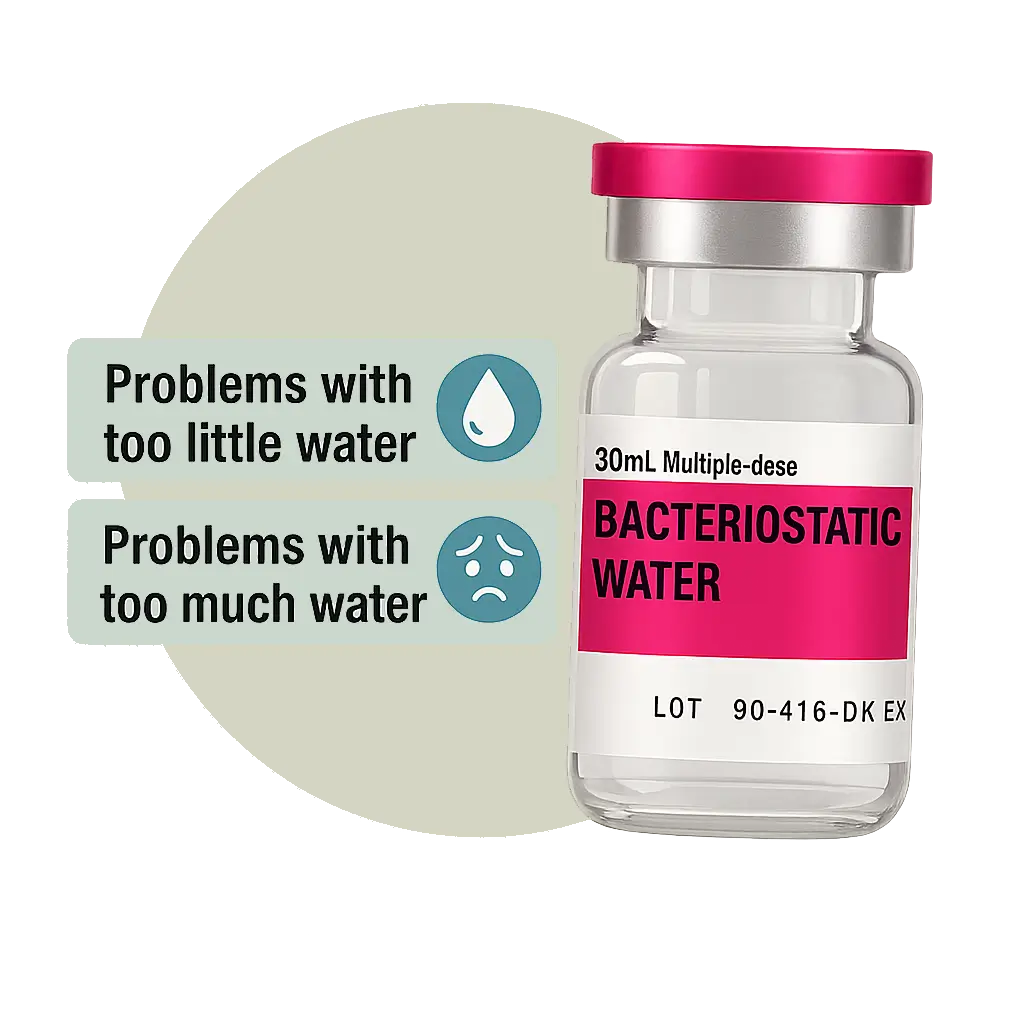
Everything you need to know about BAC water and peptide reconstitution.
Bacteriostatic water is sterile water preserved with 0.9% benzyl alcohol. The benzyl alcohol prevents bacterial growth, making it safe for multiple withdrawals from the same vial. It keeps reconstituted peptides stable for up to 28–30 days when refrigerated. Plain sterile water has no preservative and is single-use only.
Most lyophilised peptide compounds reconstituted in bacteriostatic water remain stable for 28–30 days. Storage at 2–8°C, protected from light, is required. Discard the solution if it is cloudy, discoloured, or has visible particles. Any of these signs may suggest possible degradation or contamination. Unreconstituted lyophilised peptide should be stored at −20°C until required for use.

At Ignite Peptides, we provide a secure and reliable way to source high-quality research peptides online. As a trusted U.S.-based peptide supplier, we focus on lab-verified products, full transparency, and consistent quality. With fast shipping and responsive support, we’re committed to advancing safe, dependable research you can trust.
This helps us maintain strict standards for regulatory compliance, researcher verification, and responsible product access.
 Sign In to Google