Same Day Shipping Satisfaction Guarantee Free UPS 2nd Day Air on orders over $150

Retatrutide Dosage Calculator

The Retatrutide Dosage Calculator helps you quickly find the correct injection measurement after peptide reconstitution. It uses your vial strength, target dose, and bacteriostatic water volume to calculate accurate results in seconds. This saves time, reduces errors, and ensures consistent dosing during research.

What size syringe are you using?

Choose the syringe that matches what you have at home. If you are not sure, 1 mL is the most common for peptide use.

0.3 ml syringe
0.3 mL (30 units)

Best for low-volume, high-concentration doses

0.5 ml syringe
0.5 mL (50 units)

Good mid-range option for most doses.

1.0 ml syringe
1.0 mL (100 units)

Most versatile, works for the widest dose range.
Retatrutide for Calculator

How much Retatrutide is in your vial?

Bac Water for Retatrutide

How much bacteriostatic water did you add?

dose illustration

How much Retatrutide do you want per dose?

Concentration
10000 mcg/mL
From 10 mg reconstituted with 1 mL.
Volume per dose
0.2 mL
= 20 units on a U-100 syringe
Approx. doses per vial
5
(floor of total mcg / dose)
To have a dose of 2000 mcg, pull the syringe to 20 units (0.2 mL) on a 1 mL syringe.
0
.
.
.
.
.
.
.
.
.
10
.
.
.
.
.
.
.
.
.
20
.
.
.
.
.
.
.
.
.
30
.
.
.
.
.
.
.
.
.
40
.
.
.
.
.
.
.
.
.
50
.
.
.
.
.
.
.
.
.
60
.
.
.
.
.
.
.
.
.
70
.
.
.
.
.
.
.
.
.
80
.
.
.
.
.
.
.
.
.
90
.
.
.
.
.
.
.
.
.
100
20
0100
This dose volume exceeds your current syringe capacity.

Research Dose Escalation Reference

This preview illustrates how study participants were escalated from lower starting doses up to their final weekly dose.

2 mgBased on published trial arms
Informational only mirrors study-arm starting doses. Not dosing advice.

Disclaimer: This escalation schedule is shown for reference only and mirrors dose ramp-ups used in published studies. This is not dosing advice.
Step 1:

What Retatrutide Dose to Enter?

Begin by entering the target Retatrutide dose required per experimental aliquot in your research protocol. This value is the primary input for the calculation. The dose can be entered in micrograms (mcg) or milligrams (mg).

The calculator uses this value to determine the required volume of reconstituted solution. This ensures the correct dose at the final concentration.

Accurate dose input is essential for reproducibility. It ensures consistent compound preparation across experimental replicates.

Retatrutide Dose parameters should be based on peer-reviewed literature. They must relate to the compound and biological pathway being studied. This calculator does not recommend doses.

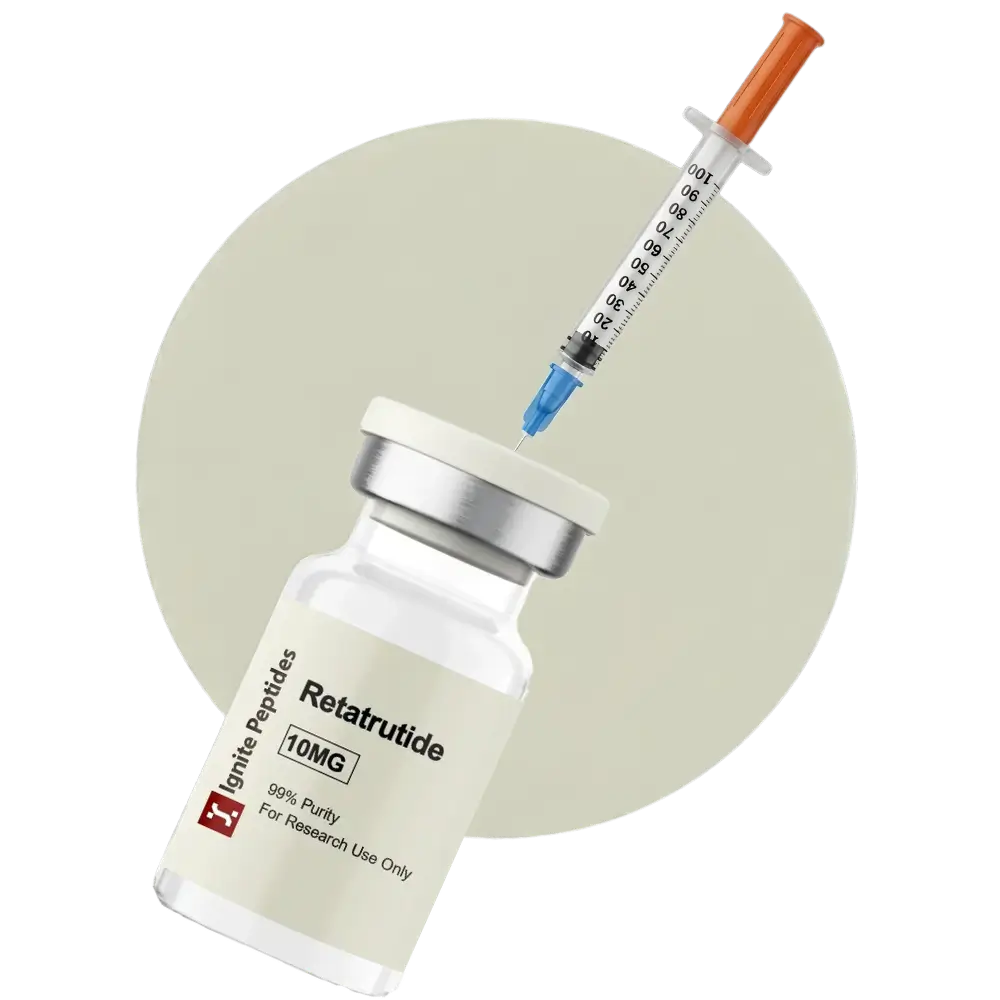
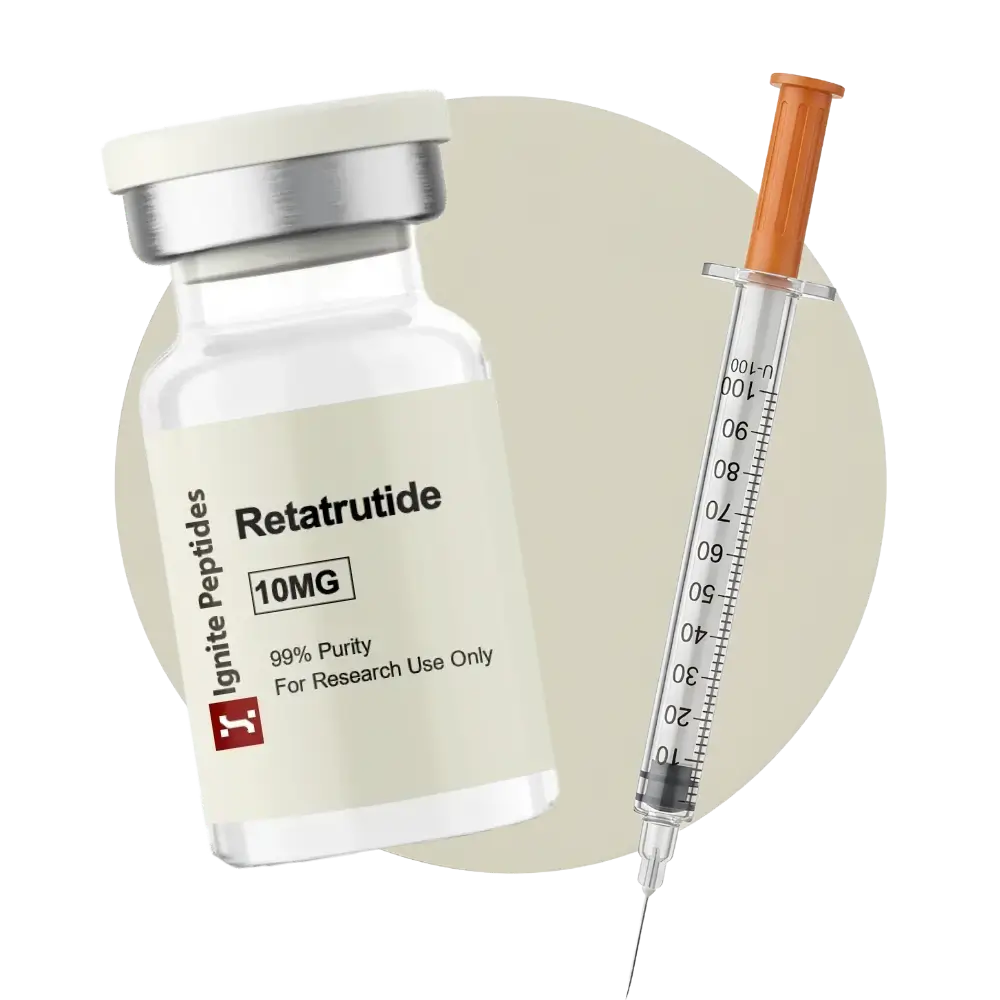
A 10mg vial of Retatrutide next to a standard U-100 insulin syringe with an orange plunger.
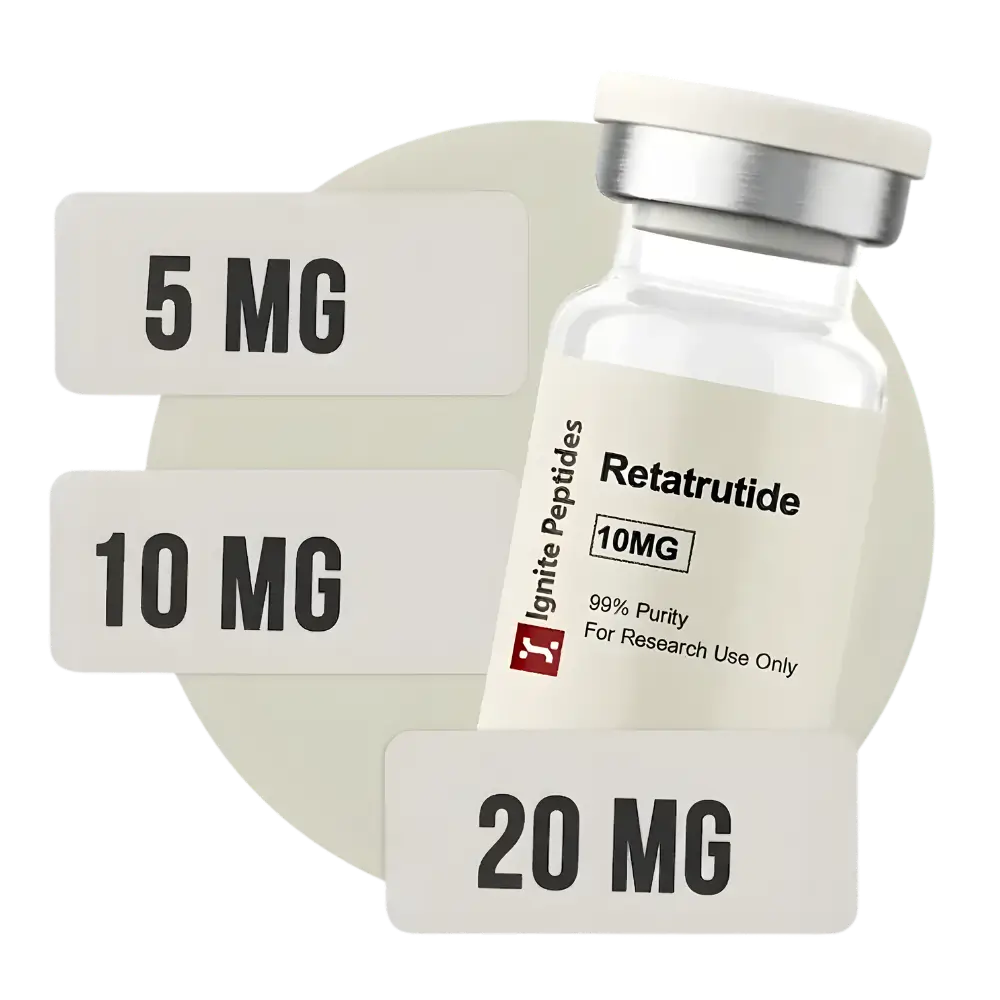
A 10mg vial of Retatrutide by Ignite Peptides displayed alongside labels for 5mg, 10mg, and 20mg dosage options.
Step 2:

Which Vial Strength?

Select the total declared mass of Retatrutide present in your vial before reconstitution. This value represents the lyophilised peptide content. It is confirmed in the Certificate of Analysis (COA).

Research vials are commonly available in standard lyophilised masses of 5 mg, 10 mg, and 20 mg. Each vial mass produces a different concentration after reconstitution. This depends on the solvent volume added.

For example, a 10 mg vial gives a higher concentration per mL than a 5 mg vial. This applies when the same solvent volume is used. Selecting the correct vial mass ensures accurate concentration results. This improves protocol accuracy.

Always cross-check the vial mass with the COA. Do this before starting reconstitution.

Step 3:

How Much BAC Water?

Enter the volume of bacteriostatic water added to the vial during reconstitution. This value directly determines the final concentration of the reconstituted solution. Lower solvent volume increases concentration per mL. Higher solvent volume decreases concentration per mL.

Bacteriostatic water is a sterile solution that includes 0.9% benzyl alcohol as a preservative. It is commonly used to reconstitute peptides in multi-dose research vials. Benzyl alcohol functions as a preservative. It helps keep the solution stable during multiple uses.

For reference: reconstituting 10 mg of Retatrutide in 2 mL of bacteriostatic water produces a solution concentration of 5 mg/mL (5,000 mcg/mL). The calculator uses this concentration to calculate draw volume. This ensures accurate dose delivery.

Solvent selection and volume should align with the stability requirements of the compound and the concentration range defined in your study protocol.

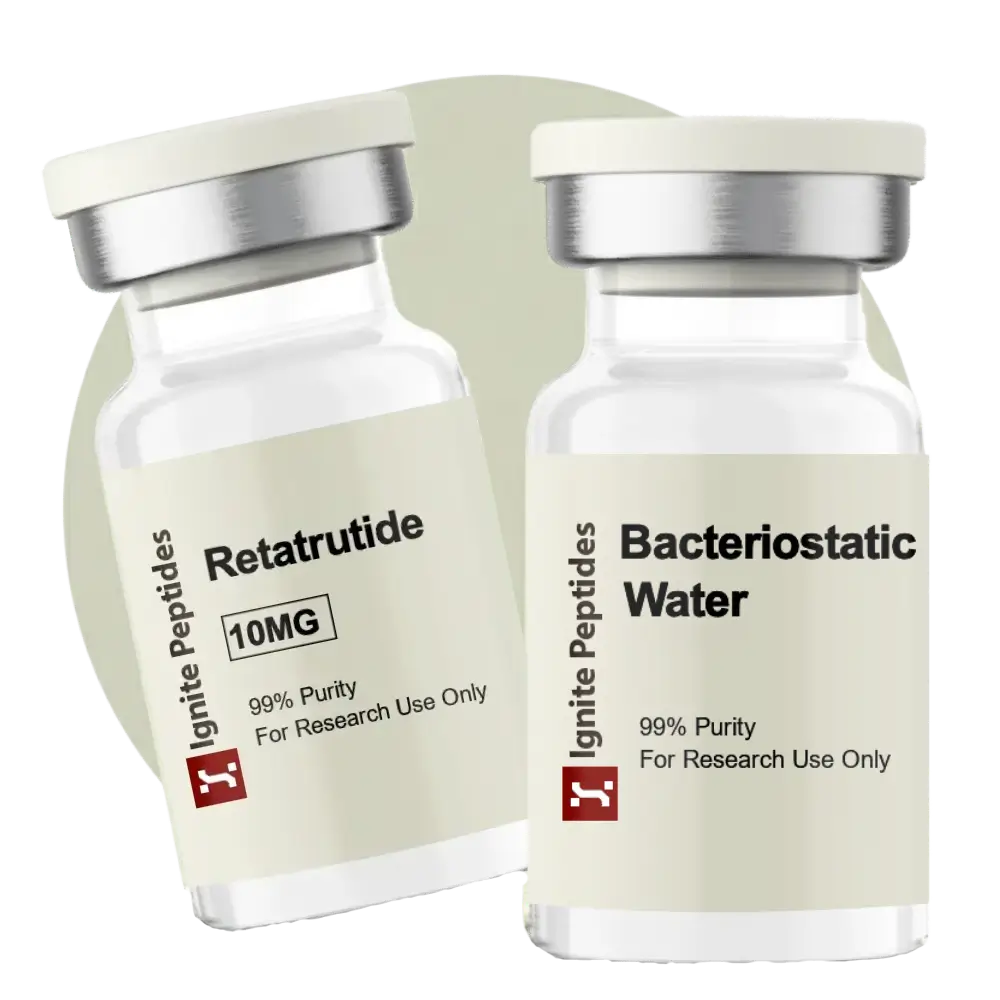
Two glass vials side-by-side: one containing 10mg Retatrutide and the other containing Bacteriostatic Water for research reconstitution.
An insulin syringe with a blue needle hub being inserted into the top of a 10mg Retatrutide vial to demonstrate the reconstitution process.
Step 4:

What Units to Draw?

After entering all values, the calculator determines the injection volume in mL. It then converts this into syringe unit markings.

The results display:

  • The target research dose (mcg)
  • The post-reconstitution concentration (mcg/mL)
  • The calculated draw volume (mL)
  • The corresponding syringe unit marking for laboratory aliquot preparation

U-100 insulin syringes are calibrated to 100 units per mL. Each unit equals 0.01 mL. The calculator converts volume into syringe units automatically. This helps ensure consistent aliquot preparation.

For high precision protocols, gravimetric verification is recommended. Calibrated micropipette transfer can also be used for validation.

Retatrutide Dosage Calculator Summary

The Retatrutide Dosage Calculator simplifies peptide preparation by providing fast, accurate dosing calculations in seconds. Instead of doing manual math, researchers can quickly determine solution concentration, injection volume, and exact syringe units with just a few inputs.

By entering your target dose, vial strength, and diluent volume, the tool removes guesswork and reduces the risk of measurement errors. This helps ensure consistent dosing, saves preparation time, and supports more reliable research outcomes.

FAQs

Common Questions About Retatrutide Dosage

Find quick answers to common questions about Retatrutide dosing, reconstitution, and syringe measurements. This section helps you understand how the calculator works and how to get accurate results for your research preparation.


How is retatrutide amount determined in research settings?

The amount of water depends on the peptide vial size and how concentrated you want the solution to be. Common reconstitution volumes range from 1 mL to 3 mL. Adding more water creates a more diluted solution, which changes how much liquid you draw per dose.

Concentration is expressed as mg/mL or mcg/mL. It is calculated after reconstitution. This helps standardize experimental conditions. It also ensures repeatability across studies.

The value depends on the final concentration. For example, 10 mg in 2 mL equals 5 mg/mL. In this case, 2.5 mg equals 0.5 mL. All values depend on the prepared solution.
Dilution volumes vary by study design. Common ranges are 1 mL to 3 mL. This changes the final concentration. Researchers choose volumes based on experimental needs.
The volume is selected based on target concentration. Less diluent increases strength. More diluent lowers concentration. This allows controlled variation in research settings.

Sterile diluent is added slowly to the vial. It is added along the vial wall. This reduces agitation. The solution is allowed to dissolve naturally under controlled conditions.

Total peptide mass is divided by total volume. This gives mg/mL concentration. The result is used for standardization. It ensures consistency across experiments.
Diluent volume depends on target concentration. Lower volume gives higher strength. Higher volume gives lower strength. This supports controlled experimental design.
Concentration is standardized using mass-to-volume ratios. These calculations define the final solution strength. Researchers use this for consistency across batches.
Researchers use calculation tools or formulas. These tools convert mass and volume values. They help standardize laboratory measurements. This improves accuracy in experimental setups.
Still need help? Contact us.
Ready to Start Your Research?

Buy Retatrutide with Confidence

Explore our full catalogue of peptides for sale and enjoy fast shipping, professional service, and COA-backed purity. Ignite Peptides is committed to being the most reliable peptide supplier in the USA for research professionals.

A clean, modern laboratory with microscopes, flasks, and test tubes filled with blue liquid, showcasing advanced research equipment
Or
Remember me

Lost your password? | Don’t have an account? Register

Or
Name
Password
Note: If you did not receive the confirmation email, please check your spam folder.
Or
Remember me

Lost your password? | Don’t have an account? Register

Or
Name
Password
Note: If you did not receive the confirmation email, please check your spam folder.