
GLP-1 Titration Schedule Week-by-Week Research Dosing Protocol for GLP-1(S)
Introduction Designing a precise GLP-1 titration schedule is one of
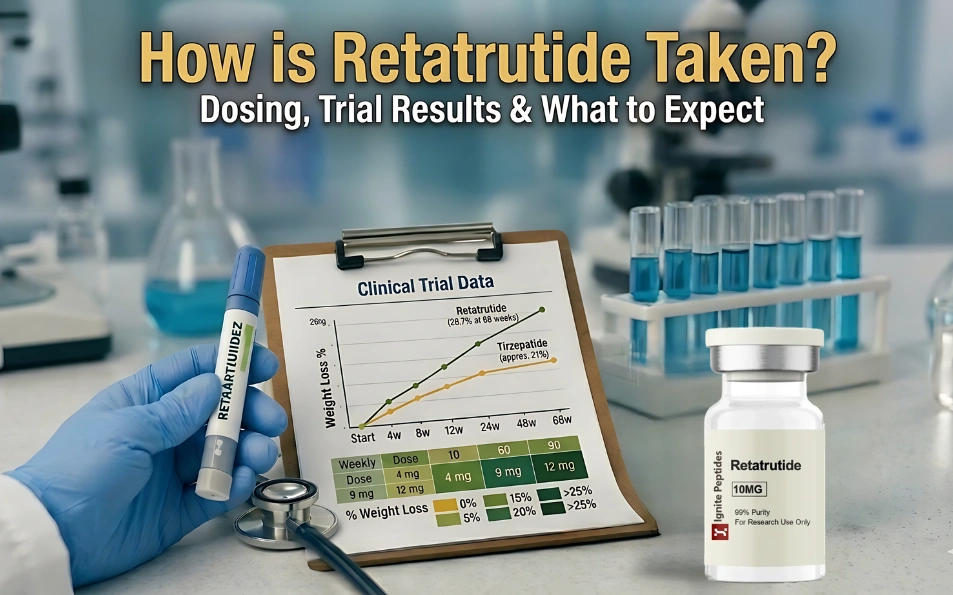
Retatrutide is making headlines for a reason. In Phase 3 trials, it produced an average body weight loss of up to 28.7% at 68 weeks. That is more than any approved weight loss drug has ever achieved. If you want to know how to take retatrutide, what dose is used, and how the schedule works, this guide covers it all.
Everything here is based on published clinical trial data and Eli Lilly’s official Phase 3 TRIUMPH announcements. No speculation. No community anecdote. Just the numbers.
Retatrutide is a triple hormone receptor agonist. It targets three receptors in the body at once:
Most weight loss drugs you have heard of only target one or two receptors. Semaglutide (Wegovy, Ozempic) hits GLP-1 only. Tirzepatide (Mounjaro, Zepbound) targets both GLP-1 and GIP receptors. Retatrutide adds the glucagon receptor on top of both.
That third receptor, glucagon, is the key difference. It increases energy expenditure. In simple terms, it helps the body burn more stored fat. That is one reason the weight loss figures are so much higher.
Retatrutide is typically given as a subcutaneous injection once per week. It is currently being studied by Eli Lilly under the TRIUMPH Phase 3 clinical trial program. It is not yet FDA-approved. Access is limited to participants in clinical studies.
The most reliable source for retatrutide dosage data is the clinical trials themselves.
The Phase 2 trial (Jastreboff et al., NEJM 2023) tested four active dose groups: 1 mg, 4 mg, 8 mg, and 12 mg weekly.
The Phase 3 TRIUMPH program expanded this. It is now testing five doses: 2 mg, 4 mg, 6 mg, 9 mg, and 12 mg. The primary maintenance doses being studied are 4 mg, 9 mg, and 12 mg.
All doses are given as once-weekly injections under the skin. Every participant starts at 2 mg and increases every four weeks.
| Weekly Dose | Mean Weight Loss at 48 Weeks | % Achieving ≥10% Weight Loss |
| Placebo | 2.1% | Low |
| 1 mg | 8.7% | 47% |
| 4 mg | 17.3% | 81% |
| 8 mg | 22.8% | 91% |
| 12 mg | 24.2% | 93% |
In December 2025, Eli Lilly reported topline data from the Phase 3 TRIUMPH-4 trial. The results showed positive outcomes
This study represents the first Phase 3 trial to release results. Participants had obesity and knee osteoarthritis.
| Dose | Average Weight Loss | Average Weight Lost (lbs) |
| 9 mg | ~20.0% | ~56 lbs |
| 12 mg | 28.7% | 71.2 lbs |
| Placebo | Minimal | — |
Nearly half of the participants on retatrutide achieved at least 25% weight loss. A meaningful subset exceeded 30%. These are numbers no approved obesity drug has matched.
Seven more Phase 3 studies are expected to publish results during 2026. Some analysts predict the 80-week TRIUMPH-1 trial could show weight loss exceeding 30%.
FDA approval is currently expected in 2027, pending successful Phase 3 results and regulatory review.
The dosing schedule is straightforward. But it is critical to follow it correctly.
Everyone starts at 2 mg per week. The dose increases every four weeks. This is called dose escalation or titration.
The reason for this slow ramp-up is simple. Your body needs time to adjust. Moving too fast causes severe nausea. Severe nausea leads most people to stop the medication. And stopping means zero weight loss.
| Phase | Weeks | Weekly Dose | What to Expect |
| Starting dose | Weeks 1–4 | 2 mg | Body adjusts; appetite may begin decreasing |
| Step up | Weeks 5–8 | 4 mg | Noticeable appetite suppression; early weight loss begins |
| Build | Weeks 9–12 | 6 mg | Weight loss becomes more consistent |
| Therapeutic | Weeks 13–16 | 9 mg | Significant weight loss; strong appetite control |
| Full dose | Weeks 17+ | 12 mg | Maximum efficacy dose from trial data |
Important: Not everyone needs to reach 12 mg. Many people achieve their goals at 9 mg or even 4 mg. Your prescriber will determine the right dose for your body.
If side effects are troublesome, do not push through to the next dose. Stay at your current dose for an extra two to four weeks. Your body will usually adapt.
The biological and clinical factors that determine why some participants need longer at each dose tier are covered in detail in the 8 key retatrutide dose factors in clinical studies.
If nausea is severe, your prescriber may temporarily drop you back to the previous dose level. This is completely normal.
The goal is to find the highest dose you can tolerate comfortably while still getting good results. That number is different for everyone.
If you are enrolled in a clinical trial or discussing retatrutide with a prescriber, you will see doses written in milligrams (mg).
Here is a simple reference for the five doses used in the TRIUMPH trials:
| Dose (mg) | Trial Phase Used In | Role in Protocol |
| 2 mg | All TRIUMPH trials | Universal starting dose for all participants |
| 4 mg | TRIUMPH-1, TRIUMPH-2 | First step-up; also a maintenance dose in some arms |
| 6 mg | TRIUMPH-1, TRIUMPH-2 | Intermediate escalation step |
| 9 mg | All TRIUMPH trials | Key therapeutic dose; 20% average weight loss in Phase 3 |
| 12 mg | All TRIUMPH trials | Highest dose; 28.7% average weight loss in Phase 3 |
These are the only doses that have been tested in clinical trials. There is no official data on doses above 12 mg or below 2 mg as a starting point.
For a step-by-step breakdown of how to convert these mg doses into the correct syringe volume, see the retatrutide dosing calculator guide.
Before starting any trial medication, you need to understand a few things clearly.
Retatrutide is not available at a pharmacy. It is not commercially sold. It is not FDA-approved.
At this time, clinical trial participation is the only way to receive retatrutide. You can find open trials at ClinicalTrials.gov.
Any product sold online as “retatrutide” is not the pharmaceutical-grade compound used in trials. The FDA has issued warnings that unapproved GLP-1 products sold online are not intended for human use and carry serious safety risks.
Based on the TRIUMPH trial inclusion criteria, candidates typically include:
Exclusion criteria generally include a personal or family history of medullary thyroid carcinoma, pancreatitis, and certain cardiovascular conditions. A prescriber or trial coordinator reviews your full medical history before enrollment.
| Weeks | Dose | What Most People Report |
| 1–4 | 2 mg | Appetite may start decreasing. Mild nausea possible. Small meals help. |
| 5–8 | 4 mg | Appetite suppression becomes more noticeable. Some early weight changes. GI effects may briefly increase then settle. |
| 9–12 | 6 mg | Weight loss often becomes measurable. Strong fullness signals. Energy levels vary. |
| 13–16 | 9 mg | Significant weight loss underway. Appetite well-controlled. Most GI effects have stabilised. |
| 17+ | 12 mg | Appetite suppression becomes more noticeable. Some early weight changes. GI effects may briefly increase, then settle. |
Side effects are real. But most are manageable when the dose is escalated correctly.
The most common side effects seen in the Phase 2 and Phase 3 trials were gastrointestinal. These include:
Most participants rated these effects as mild to moderate. They were most noticeable when the dose was being increased. Once the dose stabilised, patients generally saw a significant reduction.
Serious adverse events were rare. They occurred at similar rates in both the retatrutide and placebo groups in the Phase 2 trial.
One effect that is worth knowing about: retatrutide can increase resting heart rate. This is due to the glucagon receptor component. In the Phase 2 trial, heart rate increases peaked around week 24 and then declined. Cardiovascular monitoring was part of the trial protocol.
Some participants reported temporary hair thinning. This is a well-known response to rapid weight loss in general. This effect is not directly caused by the compound itself. It typically resolves on its own.
The single most effective strategy is slow escalation. Do not rush to higher doses. Other practical steps include:
It helps to put retatrutide’s numbers in context. Here is how it stacks up against the two leading approved weight loss drugs.
| Drug | Receptors Targeted | Highest Dose Studied | Mean Weight Loss | Timeframe |
| Semaglutide (Wegovy) | GLP-1 only | 2.4 mg weekly | ~15% | 68 weeks |
| Tirzepatide (Zepbound) | GLP-1 + GIP | 15 mg weekly | ~21% | 72 weeks |
| Retatrutide | GLP-1 + GIP + Glucagon | 12 mg weekly | 28.7% | 68 weeks (Phase 3) |
Retatrutide produced more weight loss, faster. That is the straightforward reading of the data.
However, semaglutide and tirzepatide are FDA-approved and commercially available. Retatrutide is not. If you need medication now, those are your current options.
If you are waiting for retatrutide approval, FDA review is expected to begin in late 2026 or 2027, following the completion of remaining Phase 3 trials.
More people are asking their doctors about retatrutide. That is a good thing. But walking into that conversation makes a big difference.
Here is how to approach it.
Tell your doctor that retatrutide is currently in Phase 3 clinical trials. The first Phase 3 results (TRIUMPH-4) were released in December 2025, showing 28.7% weight loss at 68 weeks. Seven additional trials are expected to report in 2026.
FDA approval is anticipated in 2027. It is not available by prescription yet.
The TRIUMPH trial program is ongoing. Ask your doctor if you might qualify for enrollment. You can also search ClinicalTrials.gov using the term “retatrutide” to find open studies near you.
Retatrutide requires weekly injections. Dosing typically begins at 2 mg and is increased every four weeks. Reaching the full therapeutic dose takes around four to five months. This is a long-term commitment, not a short course.
Ask your doctor if this kind of protocol fits your lifestyle and health situation.
Be open about your full medical history. Some medical conditions may affect whether retatrutide is appropriate. These include thyroid disorders, cardiovascular disease, or a history of pancreatitis.
Your doctor needs the full picture to advise you properly.
This point cannot be overstated. Do not attempt to source or self-administer any compound sold as retatrutide online. The FDA has been clear that such products are unregulated, potentially dangerous, and not the pharmaceutical compound used in trials.
The results in clinical trials came from a controlled environment with medical supervision. Self-administration removes every safety layer that produced those results.
The recommended dose depends on your doctor’s plan. Treatment often starts at a small dose to help your body adjust. The doctor increases it gradually over time. This approach balances effectiveness and safety. Always follow your healthcare provider’s instructions.
Any changes to your dose should be made under a doctor’s supervision. Adjustments are made slowly and carefully. Your doctor will monitor your weight and side effects. This ensures the treatment is safe and effective. Never change the dose without medical advice.
Doctors generally start with 2 mg per week. They may increase the dose every few weeks based on how well you tolerate it. Gradual increases help reduce side effects. Your doctor tailors the plan to your needs. Starting at a low dose is standard practice.
Yes, dosing may vary depending on your condition. Weight management and blood sugar control often require different schedules. Your doctor will determine the best plan for you. Side effects and health history also influence dosing. Follow the medical guidance closely.
Dosage information comes from clinical trial reports and scientific studies. Doctors and researchers use these sources to guide treatment. Some medical journals publish detailed protocols. Your healthcare provider can explain the recommended schedule. Always rely on verified sources.
The starting dose is typically 2 mg per week. Doctors increase the dose gradually. Gradual adjustments can lower the chance of side effects like nausea. The schedule may be adjusted based on your response. Never start at a higher dose without supervision.
Retatrutide is given once weekly. Taking the medication regularly improves its effectiveness. Your doctor will advise the best timing for your doses. Skipping injections may lower effectiveness. Always follow the prescribed schedule.
After starting at 2 mg, the dose usually increases every four weeks. Adjustments depend on how well you tolerate the medication. The goal is to reach the target dose safely. Your healthcare provider will track your response and progress. If side effects appear, the increase may be slower.
Official prescribing details are available in clinical trial publications and medical journals. Doctors also use pharmaceutical references. These sources help ensure safe dosing. Some trial data may be found online. Always talk to your doctor before changing your treatment.
Endocrinologists and obesity specialists often prescribe retatrutide. Some licensed doctors in metabolic or weight management care can also provide it. Your doctor will assess whether it is suitable for you. Health history and treatment goals are considered. Only qualified professionals should guide dosing.
Retatrutide is the most effective weight loss drug ever studied in clinical trials.
The Phase 3 data is real. The 28.7% average weight loss figure is based on a 68-week trial of over 400 participants.
The dosing protocol is clear. Start at 2 mg. Increase every four weeks. The available maintenance doses being tested are 4 mg, 9 mg, and 12 mg.
But the key point is this: retatrutide is not yet available. The road to FDA approval runs through the rest of the TRIUMPH trial program and a formal regulatory review process. That process is expected to be completed in 2027.
Use this guide to understand the science. This can help you ask the right questions during medical appointments. And wait for the legitimate, supervised path to this medication, because the trial results show that path is worth it.
Phase 2 Clinical Trial: Peer-Reviewed
Phase 3 TRIUMPH-4: Official Eli Lilly Announcements
Introduction Designing a precise GLP-1 titration schedule is one of

Introduction Research on the GLP-1 mechanism is one of the

Semaglutide is one of the most studied peptides in modern
Every peptide vial in a research laboratory is labelled in
 Sign In to Google