
Same Day Shipping Satisfaction Guarantee Free UPS 2nd Day Air on orders over $150

GLP-1 (S) Dosage Calculator

The most accurate resource built for research investigators. Instantly calculate concentration, dose volume, and syringe tick marks for your reconstituted GLP-1 (S) solution.

What size syringe are you using?

0.3 mL (30 units)
0.5 mL (50 units)
1.0 mL (100 units)
Dose

Dose of Peptide

0.1 mg = 100 mcg (µg)
Strength

Peptide Strength

 
Reconstitution Solution

Bacteriostatic Water

determines concentration

⚠️ Syringe Capacity Exceeded

The calculated dose requires more volume than the selected syringe can hold. Please select a larger syringe size or adjust your concentration.

Results

Peptide Dose: 0.5 mg
Concentration: 5.00 mg/mL
Volume to Draw: 0.10 mL
Volume to Draw (IU): 10.00 units
Week Dose Volume Units (U-100) Phase
Research Use Only. Laboratory reference tool.
Step 1:

What GLP-1 (S) Dose to Enter?

Begin by entering the target GLP-1 (S) dose required for your experimental protocol. This value is the primary input for the calculation. The dose you enter should correspond to the milligrams of lyophilized peptide in the reconstituted solution it represents the correct dose at the final concentration.

This calculator uses this value to determine the exact volume of reconstituted solution. All yield doses are essential for repeatability. It ensures the compound and dosage across experiment replicates.

Reconstituted doses are estimated based on referenced laboratory literature. They must match the compound and biological pathway being studied no calculator tool can be a substitute for that.

What GLP-1 (S) Dose to Enter
Which Vial Strength?
Step 2:

Which Vial Strength?

Select the total declared mass of GLP-1 (S) present in your vial before reconstitution. This value represents the lyophilized peptide content. It is printed on the Certificate of Analysis (COA). Researchers are commonly exposed to standard lyophilized masses of 5 mg, 10 mg, and 20 mg. Each mass produces a different concentration depending on how much bacteriostatic water is added during reconstitution. For example, a 10 mg vial gives a higher concentration per mL than a 5 mg vial reconstituted in the same volume of BAC water meaning each unit drawn delivers more compound. Choosing the correct vial mass ensures accurate concentration results. Use the labelled amount verified with the LOA/COA before starting reconstitution.
Step 3:

How Much BAC Water?

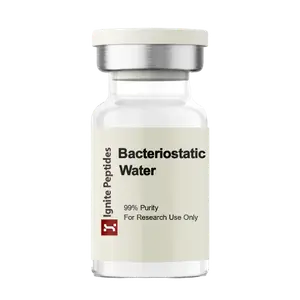
Enter the volume of bacteriostatic water added to the vial during reconstitution. This value directly determines the final concentration of the reconstituted solution. Lower solvent volume increases concentration per mL; higher solvent volume creates a more diluted preparation. Bacteriostatic water is a saline solution that contains 0.9% benzyl alcohol as a preservative. It is commonly used for reconstituting lyophilized peptides because it allows multi-dose drawing safely, while minimizing microbial growth during multi-use vial use. For reference, reconstituting 10 mg of GLP-1 (S) in 2 mL of bacteriostatic water creates a solution concentration of 5 mg/mL (5,000 mcg/mL). The calculator uses this concentration to calculate all drawn volumes. It ensures accurate dose delivery without the need for manual formula calculations. Always comply with the stability requirements of the compound and the concentration range defined in your future protocol.
How Much BAC Water?
What Units to Draw?
Step 4:

What Units to Draw?

After entering all values, the calculator determines the reaction volume in mL. Other columns like mL volume and IU markings follow automatically.

The results display:

  • The target research dose (mg)
  • The recommended draw volume (mL/units)
  • The calculated draw volume (mL)
  • The corresponding syringe tick marking for accurate liquid preparation
  • For a 0.3 mL (30-unit) insulin syringe, the calculated numeric volume (mL) syncs automatically with the syringe volume. This helps ensure accurate correspondence between liquid preparation and dose.

For additional accuracy, placement parameters are incremented in two-decimal places. The Peptide Intake Calculator can also be used for validation.

GLP-1 (S) Dosage Calculator Summary

The GLP-1 (S) Dosage Calculator simplifies peptide preparation by guiding the researcher through a precise calculation workflow. Instead of doing manual math, researchers can quickly determine solution concentration, exact draw volume, and syringe markings for each preparation step. By entering your target dose, vial strength, and volume of bacteriostatic water, the tool removes guesswork and reduces the risk of measurement errors in laboratory settings. It supports proper preparation data and supports reliable research protocols.
FAQs

Common Questions About GLP-1 (S) Dosage

A quick answer to common questions about GLP-1 (S) dosage, reconstitution, and syringe measurements to help you understand how the calculator works and get accurate results for your research preparation.

How is GLP-1 (S) amount determined in research settings?

The amount depends on the mass of the vial and how much diluent you’ve reconstituted it in. For research purposes, GLP-1 (S) concentration typically ranges from 1 to 5 mg/mL. Adding more water to the same vial dilutes the solution fewer milligrams per mL that you draw.

GLP-1 (S) is supplied as a lyophilized (freeze-dried) powder. Researchers reconstitute it by adding a precise volume of bacteriostatic water to the vial using a sterile syringe and needle. The vial is gently swirled never shaken until the powder is fully dissolved, producing a clear solution ready for use.

A 2.5 mg dose at a concentration of 5 mg/mL corresponds to 0.5 mL drawn volume, or 50 units on a standard 100-unit insulin syringe. At higher concentrations such as 10 mg/mL that same 2.5 mg dose would require only 0.25 mL or 25 units. Always verify your concentration before drawing.

Researchers most commonly reconstitute a 10 mg vial with 1 mL to 4 mL of bacteriostatic water. Using 2 mL produces a 5 mg/mL concentration; using 1 mL yields 10 mg/mL; and using 4 mL results in 2.5 mg/mL. The choice depends on the desired dose size and the syringe volume being used.
For a 12 mg vial, adding 2.4 mL of BAC water produces a concentration of exactly 5 mg/mL, which is a convenient working concentration for most insulin syringes. You may also choose 3 mL for a 4 mg/mL concentration or 1.2 mL for a 10 mg/mL concentration depending on your protocol’s required dose increments.
Reconstitution calculation follows a straightforward formula: Concentration (mg/mL) = Total peptide mass (mg) ÷ Diluent volume (mL). Once the concentration is known, the draw volume for any target dose is calculated as: Draw Volume (mL) = Target Dose (mg) ÷ Concentration (mg/mL). This tool automates both steps for you.
In experimental settings, concentrations are often standardized to 5 mg/mL or 10 mg/mL for consistency across study cohorts. Standardization ensures that the same unit draw volume delivers identical doses across multiple vials and experiment sessions, reducing dose variability within the study group.
Researchers typically use digital dosage calculators (like this one), laboratory pipettes for precise liquid measurement, analytical balances for mass verification, and Certificate of Analysis (COA) documentation to confirm peptide purity and potency. Combining these tools ensures accurate, reproducible preparation across experiments.
Still need help? Contact us.
Ready to Start Your Research?

Buy GLP-1 (S) with Confidence

Browse our catalogue of peptides for sale and lab-tested GLP-1 (S), compounded GLP-1 (S), and GLP-1 research-grade peptides. Ignite Peptides is committed to delivering the most accurate peptide supplies and supporting reliable research investigations with fast shipping and dedicated research support.
A clean, modern laboratory with microscopes, flasks, and test tubes filled with blue liquid, showcasing advanced research equipment
Or
Remember me

Lost your password? | Don’t have an account? Register

Or
Name
Password
Note: If you did not receive the confirmation email, please check your spam folder.
Or
Remember me

Lost your password? | Don’t have an account? Register

Or
Name
Password
Note: If you did not receive the confirmation email, please check your spam folder.