A precision research tool for investigators. Calculate concentration, draw volume, and syringe units for your reconstituted GLP-2 (TZ) solution. Enter three inputs, get your complete dose table instantly.
0.3 mL (30 units)
0.5 mL (50 units)
1.0 mL (100 units)
The calculated dose requires more volume than the selected syringe can hold. Please select a larger syringe size or adjust your concentration.
| Week | Dose | Volume | Units (U-100) | Phase |
|---|
Enter the target peptide mass in milligrams (mg) for your experimental protocol. This is the primary input that drives all downstream calculations.
GLP-2 (TZ) is a dipeptidyl peptidase IV (DPP-IV)-resistant analogue of native GLP-2. It features a substitution at position 2 (Ala → Gly) that extends its plasma half-life. Research doses are expressed in milligrams of lyophilised peptide per administration.
The calculator uses your entered dose to compute the exact draw volume. All values are returned at the milligram scale. Accurate mass entry is essential for correct volume output. Always verify the peptide mass against your vial label before proceeding.
Select the vial strength that matches the mass printed on your GLP-2 (TZ) vial. This value represents the total lyophilised peptide content per vial. Common research vial sizes are 5 mg, 10 mg, and 20 mg.
Vial strength does not determine potency. It determines concentration after reconstitution. The same peptide mass reconstituted in less solvent produces a higher concentration. For example: a 10 mg vial with 1 mL BAC water yields 10 mg/mL. The same vial with 2 mL yields 5 mg/mL.
Always confirm the vial mass against the certificate of analysis (COA). Use the printed lot-specific mass for maximum accuracy. Consistent vial selection ensures reproducible results across experimental replicates.

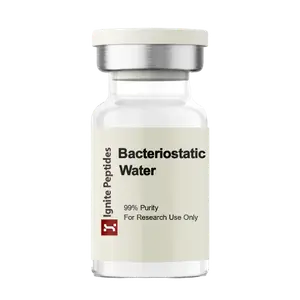
Bacteriostatic water (BAC water) is the standard diluent for lyophilised research peptides. It contains 0.9% benzyl alcohol as a preservative. This inhibits microbial growth and permits multi-dose use from a single vial.
The volume of BAC water you add directly sets the reconstituted concentration. Less water = higher concentration. More water = lower concentration. Researchers typically work within the 1–3 mL range. A 10 mg vial with 2 mL BAC water produces a 5 mg/mL solution.
Choose your BAC water volume based on the target dose and syringe accuracy. Smaller draw volumes can reduce measurement precision. Aim for a draw volume of at least 0.05 mL. Note the selected volume and repeat it consistently across all preparations in a study series.
Once all three inputs are set, the calculator outputs the exact draw volume. It converts the result into U-100 insulin syringe units automatically. This eliminates the need for manual unit conversion.
The GLP-2 (TZ) Dosage Calculator removes guesswork from peptide preparation. Enter three values, dose, vial strength, and BAC water volume. The calculator returns concentration, draw volume, and syringe units instantly. It also generates a full multi-week escalation table for structured research protocols. Every output is derived from established pharmaceutical calculation formulas.
A quick answer to common queries about GLP-2 (TZ) dosing, reconstitution, and how measurements are performed for your preparation. The Peptide Intake Calculator can also provide additional guidance.
The amount depends on the mass of the vial and how much diluent you’ve reconstituted it in. For research purposes, GLP-2 (TZ) concentration typically ranges from 1 to 5 mg/mL. Adding more water to the same vial dilutes the solution fewer milligrams per mL that you draw.
GLP-1 (S) is supplied as a lyophilized (freeze-dried) powder. Researchers reconstitute it by adding a precise volume of bacteriostatic water to the vial using a sterile syringe and needle. The vial is gently swirled never shaken until the powder is fully dissolved, producing a clear solution ready for use.
A 2.5 mg dose at a concentration of 5 mg/mL corresponds to 0.5 mL drawn volume, or 50 units on a standard 100-unit insulin syringe. At higher concentrations such as 10 mg/mL that same 2.5 mg dose would require only 0.25 mL or 25 units. Always verify your concentration before drawing.
Browse our catalogue of peptides for sale and lab-tested GLP-2 (TZ), compounded GLP-2 (TZ), and GLP-2 (TZ) research-grade peptides. Ignite Peptides is committed to delivering the most accurate peptide supplies and supporting reliable research investigations with fast shipping and dedicated research support.