
Calculate precise liquid volume, concentrations, and syringe tick marks for your L-Carnitine laboratory research protocols instantly.
0.5 mL (50 units)
1.0 mL (100 units / 1cc)
3.0 mL (300 units / 3cc)
The calculated dose requires more volume than your chosen syringe can hold. Please select a larger barrel syringe (e.g., 3.0 mL) or split your measurement targets.
| Typical Tier | Dose (mg) | Required Volume | Units (U-100 Equiv.) | Protocol Phase |
|---|
Follow the steps below to calculate accurate draw volumes and syringe tick marks for your L-Carnitine laboratory research protocol.
Begin by entering the target L-Carnitine dose (mg) for your experimental protocol. This value is the primary input for the calculation. The dose you enter should correspond to the milligrams of L-Carnitine to be delivered from the pre-made solution, it represents the correct dose at the measured concentration.
L-Carnitine is a naturally occurring quaternary ammonium compound biosynthesized from the amino acids lysine and methionine. It plays a critical role in the transport of long-chain fatty acids across the inner mitochondrial membrane for beta-oxidation and energy production. In research settings, it is studied for its role in metabolic regulation, lipid utilisation, and cellular energy pathways. All doses are essential for repeatability, they ensure the compound and dosage remain consistent across experimental replicates.
All dose values are entered at the milligram scale. Accurate mass entry is essential for correct volume output, always verify the dose against your study label before proceeding.
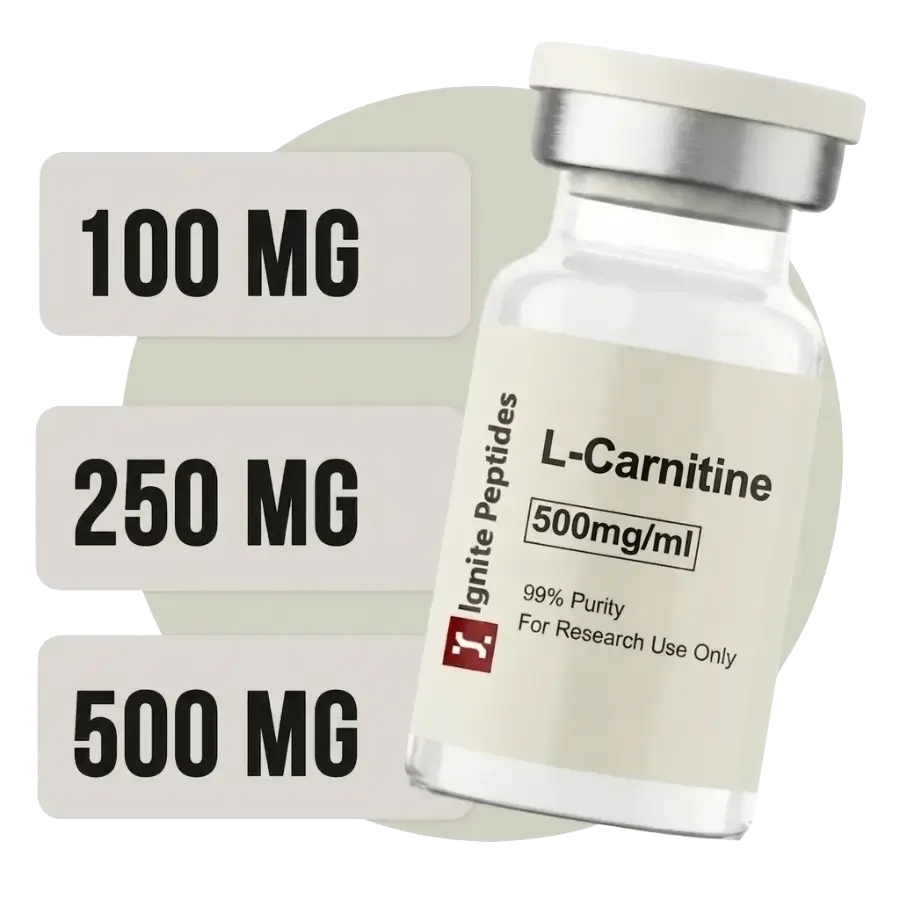
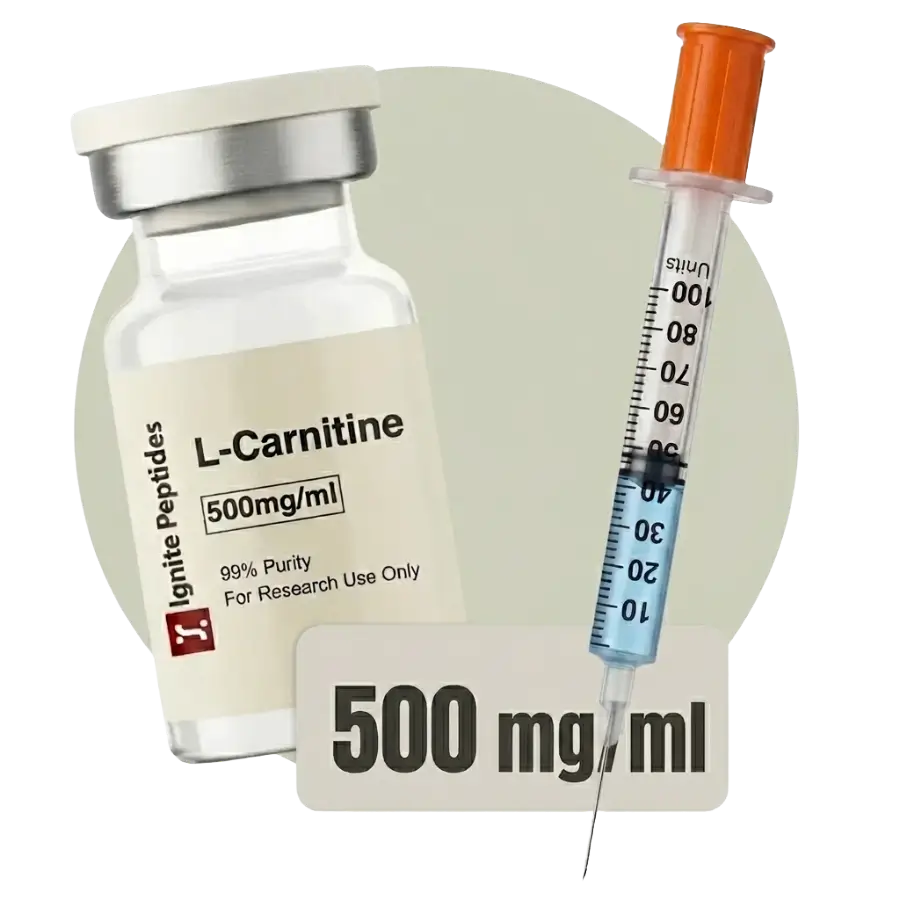
Select the concentration of your L-Carnitine solution as printed on the vial label or Certificate of Analysis (COA). Unlike lyophilized peptides that require reconstitution, L-Carnitine is commonly supplied as a pre-made injectable solution at standard concentrations of 200 mg/mL, 360 mg/mL, and 500 mg/mL.
Each concentration produces a different draw volume for the same target dose. For example, a 500 mg dose drawn from a 500 mg/mL solution requires 1.0 mL, while the same dose from a 200 mg/mL solution requires 2.5 mL. Choosing the correct concentration ensures your draw volume calculations are accurate and that the LOA/COA aligns with your preparation records. Always confirm the concentration printed on the vial before calculating.
Unlike lyophilized peptides, L-Carnitine injectable solution requires no reconstitution, it is supplied as a ready-to-use liquid preparation. However, correct handling and storage are critical to maintaining solution integrity across multi-dose research protocols.
L-Carnitine solution should be stored at room temperature or refrigerated at 2–8°C, protected from direct light and heat. Before drawing each dose, inspect the solution for visible particulate matter or discolouration, a clear, colourless to slightly yellow solution indicates proper condition. Each vial should be used within the manufacturer’s recommended period after opening, typically 28–30 days when stored correctly.
When drawing from a multi-dose vial, use a fresh sterile needle for each preparation. Document the opening date, concentration, and lot number alongside the COA for full traceability throughout your experimental workflow.
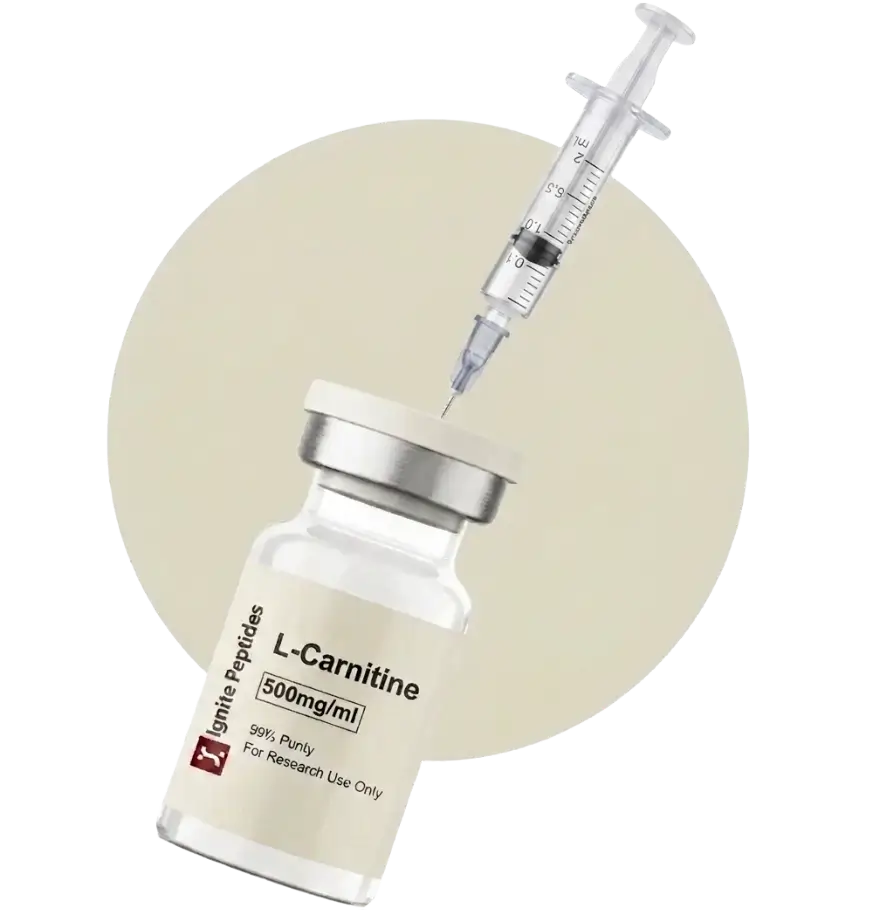
After entering the target dose and selecting the vial concentration, the calculator determines the exact draw volume in mL and converts it to syringe units automatically. This eliminates the need for manual volume calculations.
The results display:
For additional accuracy, precision parameters are incremented to two decimal places. The Peptide Intake Calculator can also be used for validation.
The L-Carnitine Dosage Calculator simplifies research preparation by guiding the researcher through a precise calculation workflow. Instead of doing manual math, researchers can quickly determine exact draw volume and syringe markings for each preparation step. By entering your target dose and vial concentration, the tool removes guesswork and reduces the risk of measurement errors in laboratory settings. It supports proper preparation data and supports reliable research protocols.
A quick answer to common questions about L-Carnitine dosage, solution handling, and syringe measurements to help you understand how the calculator works and get accurate results for your research preparation.
Key factors that influence L-carnitine dosage include body weight, health goal (fat loss vs. muscle gain), supplement form (liquid, capsule, or IV), and age. A dosage calculator uses these inputs to suggest an accurate daily L-carnitine dose.
An online L-carnitine dosage calculator based on weight typically recommends 15–20 mg per kg of body weight. Input your weight and objectives to receive a tailored dosage recommendation. Most adults need between 500 and 2,000 mg per day.
Yes. A body weight-based L-carnitine calculator uses the formula: body weight (kg) × 15 mg = daily dose. For a 70 kg person, that’s about 1,050 mg/day. Adjust based on your specific fitness or health goals.
A daily dose of 1,500–3,000 mg of L-carnitine is widely used for fat loss. Use an L-carnitine dosage calculator to find your optimal amount based on body weight and caloric intake. For optimal results, consume it 30–60 minutes before exercise.
Browse our catalogue of lab-tested L-Carnitine injectable solutions, available in 200 mg/mL, 360 mg/mL, and 500 mg/mL concentrations across multiple vial sizes, alongside complementary metabolic and mitochondrial support research compounds. Ignite Peptides is committed to delivering the most accurate solutions and supporting reliable research investigations with fast shipping and dedicated research support.