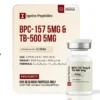
BPC-157 & TB-500 (5mg + 5mg) Research Peptide Blend
BPC-157 5mg & TB-500 5mg blend combines two research peptides commonly used in regenerative science. BPC-157 peptide is researched for repairing soft tissue and gut maintenance. TB-500 peptide is researched for cell migration and the formation of new blood vessels.
BPC-157 and TB-500 are commonly used alongside each other in laboratory research. They help researchers see how these peptides might speed up healing and reduce swelling. The product is supplied as a high-purity, freeze-dried powder for laboratory research only. Not for human or veterinary use.
What Are BPC-157 and TB-500?
BPC-157 is a small peptide made from a protein found naturally in the stomach. Researchers study it because it may support the body’s ability to repair muscles, tendons, and other soft tissues. In lab tests, it has shown effects related to cell growth, blood flow, and inflammation control. Because of these actions, it is often explored for its possible role in recovery and tissue health.
TB-500 (also known as Thymosin Beta-4 fragment) is another peptide that scientists study for tissue repair and recovery. It is linked to how cells move and grow. Research shows that TB-500 may help form new blood vessels and improve flexibility in tissue models. It is also being studied for its potential role in improving recovery speed in animal research.
Both peptides are studied separately, but together they may create a stronger effect in promoting faster and more complete tissue repair. This is why researchers often combine them in a single blend for study.
Synergy: Why Use the Blend?
When BPC-157 and TB-500 are studied together, researchers often note how their actions complement each other. Each peptide supports a different part of the body’s natural repair process, and together they may offer broader benefits in lab research.
BPC-157 has been linked in studies to blood vessel protection and tissue repair. It may support the rebuilding of muscle fibres, tendons, and ligaments. On the other hand, TB-500 is known for helping cells move to injury sites faster. It also plays a role in forming new blood vessels and improving oxygen flow in tissues.
When these two actions are combined, the result can be a more complete recovery process in laboratory tests. BPC-157 may help start and guide tissue repair, while TB-500 helps deliver the cells and nutrients needed for healing. This teamwork makes the blend a popular subject in research related to injury recovery, inflammation control, and tissue regeneration.
Together, they are often studied for:
- Faster tissue and muscle recovery in lab settings
- Reduced swelling and inflammation markers
- Better blood flow and oxygen supply to tissues
- Stronger support for wound and tendon repair
Mechanism of Action
The blend of BPC-157 and TB-500 supports several key repair processes. Each peptide works differently, and together they may help tissue recovery and repair in research studies.
1. Angiogenesis and VEGF
Angiogenesis is the process by which new blood vessels form. It helps deliver oxygen and nutrients to damaged tissue.
BPC-157 may increase the natural protein VEGF (Vascular Endothelial Growth Factor). This protein helps start the growth of new blood vessels.
TB-500 may also support this process by helping small capillaries develop. When both are used together, blood flow may improve in the studied tissue.
2. Actin Polymerization and Cell Movement
Tissue repair depends on how well cells can move to the damaged area.
TB-500 supports this step by working with actin, a protein that helps cells move and take shape. This may allow repair cells to reach the affected site faster.
BPC-157 supports healthy blood vessels and reduces local strain, creating a better environment for recovery.
3. Fibroblasts, Collagen, and Tissue Structure
The extracellular matrix (ECM) is the body’s natural framework that supports tissue strength and flexibility.
BPC-157 may help fibroblast cells produce more collagen. TB-500 supports the transport of nutrients needed for this process.
Together, they may promote stronger tissue rebuilding and smoother recovery in research models.
Research Applications & Use Cases
The BPC-157 and TB-500 blend is widely studied in laboratory settings for its potential role in tissue repair and recovery. Each peptide supports a different stage of the healing process, which makes the blend useful for many types of research.
1. Muscle and Tendon Recovery
Researchers often use this blend to study how muscles and tendons recover after damage. BPC-157 may help repair torn or strained fibres, while TB-500 supports cell movement to the affected site.
Together, they may speed up the recovery process and help tissues regain their normal structure in research models.
2. Wound and Skin Healing
The peptides are also used in studies focused on wound care. BPC-157 supports blood vessel growth, and TB-500 helps form new cells and smooth skin layers. This combination may improve tissue strength and reduce visible damage in laboratory conditions.
3. Joint and Ligament Support
Ligaments and joints are slow to heal because they receive less blood flow. Researchers study this blend to explore how it might improve nutrient delivery and tissue flexibility. BPC-157 may help protect the joint lining, while TB-500 supports elasticity and recovery of connective tissue.
4. Inflammation and Oxidative Stress
Both peptides are also being tested for their possible effects on inflammation. In research models, the blend may help balance inflammation markers and protect cells from oxidative stress. This area of study is useful for understanding how peptides could support long-term tissue health.
5. Nerve and Blood Flow Studies
Some research explores how this blend may affect nerve cells and circulation. BPC-157 supports nerve protection, while TB-500 helps maintain smooth blood flow. Together, they may promote recovery in nerve-related and vascular models.
Product Quality & Specifications
Purity and Batch Testing
Each vial of the BPC-157 + TB-500 blend is made with high standards. The peptides are over 99% pure, verified by HPLC and mass spectrometry tests. Every batch is individually tested to confirm identity, purity, and stability. This helps ensure that the product meets strict research-grade standards.
No fillers or unwanted additives are included.
Lyophilization and Format
The blend comes in lyophilized (freeze-dried) form to protect the peptides. This process keeps the structure stable during shipping and storage. When mixed with bacteriostatic water, the product becomes ready for research use. The vial is sealed to prevent contamination and maintain quality. This ensures long shelf life and consistent results.
Lot and COA Information
Each vial includes a lot number for tracking and quality control. A detailed Certificate of Analysis (COA) is available for every batch. The COA lists purity data, peptide identity, and test methods used.
Researchers can use this information to confirm reliability and consistency. This transparency helps build trust in product quality.
Storage, Handling & Preparation
Reconstitution Method
The BPC-157 and TB-500 blend is supplied as a freeze-dried powder. To prepare it, slowly add bacteriostatic water to the vial.
Let the liquid slide down the inside wall instead of pouring it directly on the powder. Allow the powder to dissolve on its own; gentle swirling is fine, but avoid shaking. When the solution turns clear, it is ready for research use.
Storage Guidelines
- Store the dry vial in a cool and dark place away from sunlight.
- For longer storage, keep it frozen at about –20°C.
- Once reconstituted, store it in a refrigerator (2–8°C).
- Avoid freezing the liquid form or exposing it to high temperatures.
- Always close the vial tightly after each use to protect stability.
Handling Precautions
- This peptide blend is for laboratory research only.
- It is not approved for human or veterinary use.
- Handle the vial with gloves and use clean, sterile tools.
- Discard any unused solution following your lab’s safety procedures.
- Keep it out of reach of untrained personnel.
Conclusion
BPC-157 and TB-500 are popular research peptides. They are studied for their role in healing, tissue repair, and recovery. These peptides may help support cell growth, new blood vessel formation, and collagen rebuilding. Together, they show strong potential in regeneration research.
At Ignite Peptides, every product is made with care and tested for purity. Each vial is prepared under strict quality control. Our goal is to provide trusted, high-quality peptides for laboratory research only.
References & Scientific Sources
- Sikiric, P., et al. “Stable Gastric Pentadecapeptide BPC 157: Discovery and Mechanisms.” Available at PMC: Stable Gastric Pentadecapeptide BPC 157 PMC
- Seiwerth, S., et al. “BPC 157 and Wound Healing.” Available at Frontiers: Stable Gastric Pentadecapeptide BPC 157 and Wound Healing Frontiers
- Goldstein, A. L., et al. “Thymosin β4: A Multi-Functional Regenerative Peptide.” Summary on PubMed: Thymosin β4: a multi-functional regenerative peptide PubMed
- Advances in the Basic and Clinical Applications of Thymosin β4. Review article on PubMed: Advances in Tβ4 PubMed
- “Progress on the Function and Application of Thymosin β4.” Full text at PMC: Progress on Thymosin β4 PMC
- Duzel, A., et al. “Stable Gastric Pentadecapeptide BPC 157 in the Treatment of Colitis and Ischemia-Reperfusion in Rats: New Insights.” Available at World Journal of Gastroenterology: BPC 157 in Colitis & Ischemia