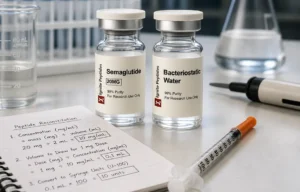
How to Calculate mg to mL for Peptide Research (Step-by-Step)
Every peptide vial in a research laboratory is labelled in
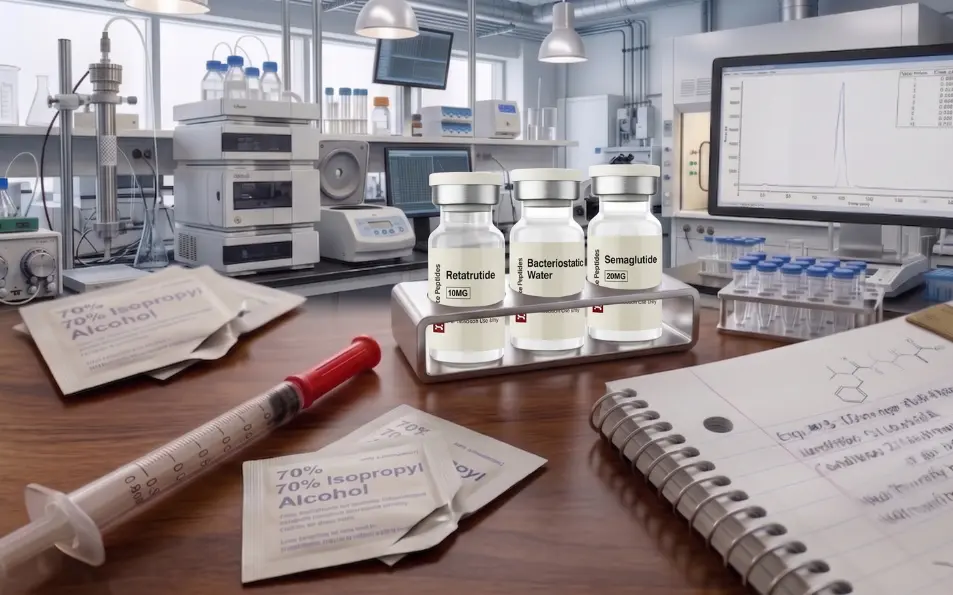
| The most common peptide mixing mistakes are reported in research settings. These include shaking the vial instead of swirling. Using the wrong solvent. Skipping sterile technique. Leaving the reconstituted solution at room temperature. Making concentration calculation errors. Opening a cold vial before it reaches room temperature. And failing to aliquot before freezing. Each mistake can reduce peptide potency, introduce contamination, or compromise experimental reproducibility. |
Peptide reconstitution is a straightforward process. But small errors at the mixing stage can destroy weeks of planned research. The peptide may lose biological activity. Concentration accuracy can drop. Contamination can render the entire vial unusable.
Understanding the most common peptide mixing mistakes protects both the sample and the integrity of the data. This guide covers each error in plain language, explains the science behind why it causes damage, and provides a clear fix for each one.
All recommendations are based on peer-reviewed biochemistry literature and authoritative technical documentation. For the complete reconstitution process step by step, see our guide on how to reconstitute peptides correctly.
Note: This article is written for research laboratory use only (RUO context). All information applies to in vitro research and scientific handling protocols.
Peptides are short chains of amino acids. Their biological activity depends on maintaining the correct three-dimensional structure. Once a peptide is dissolved in solution, it is far more vulnerable than in lyophilised (freeze-dried) form.
The aqueous environment exposes the peptide to hydrolysis, oxidation, deamidation, and aggregation simultaneously. Any error during reconstitution accelerates at least one of these pathways. The result is reduced potency, inconsistent results, or a completely degraded sample.
The table below shows how each mistake category links to a specific degradation mechanism.
| Mistake Category | Primary Degradation Risk | Key Affected Residues |
|---|---|---|
| Shaking / vortexing | Aggregation via shear-induced unfolding | Hydrophobic sequences generally |
| Wrong solvent | Hydrolysis, aggregation, precipitation | pH-sensitive sequences (Asp, Pro, Asn, Gln) |
| Contamination | Microbial degradation, protease activity | All sequences |
| Room temperature exposure | Oxidation, hydrolysis, microbial growth | Met, Cys, Trp residues |
| Opening cold vials | Moisture condensation initiates hydrolysis | All sequences |
| Concentration errors | Overdosing / underdosing experimental samples | Not applicable – accuracy error |
| No aliquoting before freezing | Aggregation from repeated freeze-thaw cycles | Hydrophobic sequences |
What happens: Shaking a peptide vial introduces air and creates shear forces within the solution. These mechanical forces physically stress fragile peptide molecules. Research published in PMC (PMID: 5665799 Interface Focus, Royal Society) confirms that agitation is a known driver of peptide aggregation, causing molecules to clump together and lose biological activity.
A separate study on carbetocin (ScienceDirect, 2017) recorded significant visible particle formation after just 4 hours of shaking stress. Vortexing creates even stronger turbulence and can unfold peptide structures a process called denaturation.
The fix: Swirl the vial gently in a circular motion or roll it slowly between your palms. Never use a vortex mixer on a peptide solution. If the powder does not dissolve within 5 minutes, allow the vial to rest at room temperature for a further 10-15 minutes, then swirl again gently. Patience produces a clear, stable solution.
What happens: Not all peptides dissolve in the same solvent. Using bacteriostatic water (BAC water) for a peptide that requires acetic acid can result in a cloudy suspension rather than a true solution. An undissolved peptide delivers inaccurate concentrations and unpredictable experimental results.
Using plain sterile water for a multi-use vial protocol removes the benzyl alcohol preservative that prevents microbial growth. Using PBS (phosphate-buffered saline) for copper-containing peptides, such as GHK-Cu, strips the copper ion from the complex, rendering it biologically inactive.
The fix: Match the solvent to the peptide sequence. Bacteriostatic water (0.9% benzyl alcohol) is the research standard for most sequences it inhibits microbial growth and supports multi-use vials for up to 28 days. Use acetic acid water (0.6%) for poorly soluble sequences such as GHK-Cu, IGF-1 LR3, GHRP-2, and GHRP-6.
Use sterile water for single-use protocols only. Always consult the peptide’s Certificate of Analysis (COA) and supplier documentation before choosing a solvent. For a full comparison, see our guide on bacteriostatic water vs sterile water.
| Solvent | Preservative | Multi-Use | Best For |
|---|---|---|---|
| Bacteriostatic water (BAC) | 0.9% benzyl alcohol | Yes – 28 days | Most research peptide sequences |
| Sterile water | None | No – single use only | Single-session experiments |
| Acetic acid water (0.6%) | None | No – single use only | Poorly soluble sequences (GHK-Cu, IGF-1 LR3) |
| PBS or phosphate buffer | None (varies) | No | Avoid copper-chelating peptides |
What happens: Peptide solutions are an ideal growth medium for bacteria and fungi, particularly at room temperature. Failing to clean the vial stopper with an alcohol swab before inserting a needle, reusing needles or syringes, or working on an unclean surface all introduce microbial contamination.
Once contaminated, a peptide solution cannot be recovered. Microbial proteases will further degrade the peptide, compounding the loss. Contamination is often invisible; the solution may still appear clear while the peptide is already compromised.
The fix: Always wipe rubber stoppers with a 70% isopropyl alcohol swab and allow to dry before needle insertion. Use a sterile syringe and needle for every draw. Work on a clean, disinfected surface. Wash your hands thoroughly before handling any vial.
Never touch the vial opening, needle tip, or syringe plunger. Keep all vials sealed when not in use. Replace the cap immediately after every withdrawal.
What happens: Room temperature (15-25 degrees C) significantly accelerates all four degradation pathways: hydrolysis, oxidation, deamidation, and aggregation. Many peptide solutions may lose potency over time at room temperature.
Methionine (Met), cysteine (Cys), and tryptophan (Trp) residues are especially vulnerable to oxidation at ambient temperature. Bacterial growth also accelerates rapidly above refrigerator temperature, even in BAC water solutions.
The fix: Return the vial to the refrigerator (2-8 degrees C) immediately after drawing each dose. Never leave a reconstituted vial on the bench for extended periods. For long-term storage, freeze single-use aliquots at -20 degrees C or -80 degrees C. For detailed temperature guidance, refer to our peptide storage guide.
What happens: When a vial is moved directly from a cold refrigerator or freezer to the warm laboratory environment and opened immediately, the temperature difference causes condensation on the inner vial surfaces. This introduces liquid water droplets that are outside the controlled reconstitution volume.
The result is an unintended dilution of the solution. The extra water can also initiate localised hydrolysis before the researcher has even begun the mixing step. This mistake is subtle and frequently overlooked, even by experienced researchers.
The fix: Remove the vial from cold storage and allow it to sit, still sealed, at room temperature for 5-10 minutes before opening. This equilibration step eliminates condensation risk. The same principle applies to the solvent vial; both should reach the same ambient temperature before use.
What happens: Calculating the wrong solvent volume or confusing mg with mcg in unit conversion produces an incorrectly concentrated solution. A solution that is too concentrated can be difficult to measure accurately with a standard insulin syringe.
A solution that is too dilute may not deliver a sufficient amount per aliquot for the experimental protocol. Both errors directly compromise the reproducibility of research results. This is one of the most common mistakes and one of the most preventable.
The fix: Use the standard reconstitution formula: Concentration (mg/mL) = Peptide mass (mg) divided by solvent volume (mL). For example, dissolving a 5 mg vial in 2 mL of BAC water gives a concentration of 2.5 mg/mL.
Use our Peptide Reconstitution Calculator to calculate exact concentrations, draw volumes, and syringe units in seconds. Double-check unit conversions: 1 mg = 1,000 mcg. Always verify the calculation against the COA before proceeding.
Concentration errors are directly tied to the reconstitution calculation. If you need a full breakdown of the formula, read the guide on how to calculate mg to mL for peptide research.
| Formula: Concentration (mg/mL) = Peptide mass (mg) ÷ BAC water volume (mL). Example: 5 mg vial + 2 mL BAC water = 2.5 mg/mL. Use the Peptide Reconstitution Calculator at ignitepeptides.com/peptide-calculator for instant results. |
What happens: Squirting solvent directly onto the lyophilised peptide powder at high speed creates a turbulent impact zone at the surface of the powder. This can cause foaming, introduce air bubbles, and generate localised shear stress similar to vortexing.
The peptide molecules in the direct impact zone may aggregate or adsorb to the vial wall before full dissolution. Foaming also makes it impossible to accurately assess whether the peptide has fully dissolved, leading to dose uncertainty.
The fix: Insert the syringe needle through the vial stopper and angle the vial so the tip of the needle points at the inner glass wall, not at the peptide powder. Slowly release the solvent so it runs down the inner wall and contacts the powder gently from the side. This approach prevents direct impact, minimises foam, and produces a homogeneous solution.
What happens: Reconstituting a full vial and then freezing the entire vial as a single unit means that every time the researcher needs a sample, the entire vial must be thawed. Each freeze-thaw cycle generates mechanical stress from ice crystal formation and promotes aggregation. Research suggests about 5–15% bioactivity loss per freeze–thaw cycle, depending on the peptide and formulation.
A study referenced by PMID: 31126321 specifically documents structural degradation of synthetic peptides under repeated freeze-thaw conditions. After three cycles, a peptide solution may have lost a significant fraction of its original potency.
The fix: Immediately after reconstitution, divide the solution into single-use aliquots using sterile borosilicate glass vials. Typical aliquot volumes are 0.1 to 1.0 mL. Label each aliquot with peptide name, concentration, date, solvent, and aliquot number.
Freeze immediately at -20 degrees C or -80 degrees C. Thaw one aliquot per experiment and discard any unused portion. Never refreeze a thawed aliquot. Use our BAC Water Calculator to plan the correct volume per aliquot before reconstitution.
What happens: Researchers sometimes proceed with a partially dissolved peptide solution, usually out of impatience or because the remaining solid particles are very small and difficult to see. An incompletely dissolved peptide delivers an inaccurate concentration per draw.
Particulate matter can also block fine-gauge needles and damage microfluidic or analytical instruments. In some cases, the solid particles are aggregated peptide rather than undissolved powder, meaning the active compound has already lost its structure.
The fix: After adding the solvent, hold the vial up to a bright light source and inspect the solution carefully. It should be completely clear with no visible particles, cloudiness, or floating material. If solid material remains after 5 minutes of gentle swirling, allow the vial to rest for a further 10-15 minutes before swirling again.
Do not proceed until the solution is fully clear and homogeneous. If cloudiness persists after 30 minutes, consult the supplier COA for solubility data and consider switching to acetic acid water.
| Mistake | Root Cause | Consequence | Fix |
|---|---|---|---|
| Shaking / vortexing | Shear force | Aggregation, denaturation, loss of activity | Swirl gently; never vortex |
| Wrong solvent | pH or chemical mismatch | Precipitation, degradation, inactive solution | Match solvent to peptide sequence + COA |
| No sterile technique | Contamination | Microbial growth, protease degradation | Alcohol swab, sterile tools, clean surface |
| Room temp exposure | Thermal acceleration of degradation | Oxidation, hydrolysis, bacterial growth | Return to 2-8 deg C immediately after use |
| Opening cold vials early | Condensation | Unintended dilution, hydrolysis initiation | Allow 5-10 min room temp equilibration first |
| Concentration errors | Unit confusion / wrong formula | Inaccurate dosing, poor reproducibility | Use Peptide Calculator; verify with COA |
| Fast direct solvent injection | Turbulence/shear at powder surface | Foaming, aggregation, and wall adsorption | Inject slowly down the inner vial wall |
| No aliquoting before freezing | Repeated freeze-thaw cycles | 5-15% bioactivity loss per cycle | Aliquot immediately after reconstitution |
| Incomplete dissolution | Impatience / poor solubility match | Inaccurate concentration, blocked needles | Inspect under light; wait for full clarity |
Before beginning reconstitution, verify each of the following:
Shaking introduces shear forces that physically stress peptide molecules. This promotes aggregation, a process where individual peptide chains clump together and lose their biological structure. Research confirms that agitation accelerates aggregation kinetics in peptide solutions (PMC, Interface Focus). The fix is to swirl gently or roll the vial between your palms.
Sterile water has no preservative. Once opened and exposed to a needle, microbial contamination can begin. Use sterile water only if the entire reconstituted volume will be consumed in a single experiment session. For multi-use protocols, bacteriostatic water (0.9% benzyl alcohol) is the correct choice. Read our detailed comparison: Bacteriostatic Water vs Sterile Water.
Hold the vial against a bright light source. The solution should appear completely clear with no visible particles, cloudiness, or floating material. If any solid material remains, swirl gently and wait a further 10-15 minutes. Never proceed with a cloudy solution; incomplete dissolution means inaccurate concentration per aliquot.
Concentration (mg/mL) = Peptide mass (mg) divided by solvent volume (mL). For example, a 5 mg vial dissolved in 2 mL of BAC water gives a concentration of 2.5 mg/mL. Use the Reconstitution Calculator to automate this calculation and convert the result into syringe units.
Room temperature accelerates oxidation, hydrolysis, and bacterial growth. Methionine, cysteine, and tryptophan residues are particularly vulnerable to oxidative degradation at ambient temperatures. Even in BAC water, a reconstituted peptide left at room temperature for extended periods will lose measurable potency. Return vials to 2-8 degrees C immediately after every use.
Research (PMID: 17299814) shows each freeze-thaw cycle reduces peptide bioactivity by 5-15% and purity by approximately 2-5%. Even two or three cycles can result in significant cumulative loss. Proper aliquoting eliminates this risk by ensuring each frozen portion is thawed only once.
Avoiding common peptide mixing mistakes is not about complex technique it is about consistent, disciplined handling at each step of the reconstitution process. The most damaging errors are also the most preventable: shaking instead of swirling, using the wrong solvent, skipping sterile technique, and leaving solutions at room temperature.
Every common peptide mixing mistake in this guide has a straightforward fix. Apply the correct solvent, use a gentle technique, maintain sterile conditions, calculate accurately, and aliquot immediately. These five habits will protect potency, improve reproducibility, and ensure that research data reflects the peptide, not a handling error. For a complete step-by-step reconstitution protocol, visit our guide on how to reconstitute peptides correctly. For storage best practices after mixing, see our reconstituted peptide storage guide.
All peptides available through Ignite Peptides are supplied with a Certificate of Analysis (COA) confirming purity. Use the COA as your primary reference for sequence-specific solubility and storage requirements.
Every peptide vial in a research laboratory is labelled in
Knowing how to store reconstituted peptides correctly is critical for
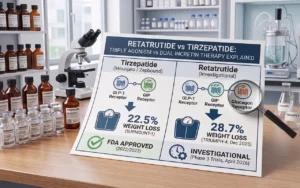
Retatrutide is a triple hormone receptor agonist. It works by
For decades, metabolic pharmacology focused on one goal: reducing calorie

At Ignite Peptides, we provide a secure and reliable way to source high-quality research peptides online. As a trusted U.S.-based peptide supplier, we focus on lab-verified products, full transparency, and consistent quality. With fast shipping and responsive support, we’re committed to advancing safe, dependable research you can trust.
This helps us maintain strict standards for regulatory compliance, researcher verification, and responsible product access.
 Sign In to Google