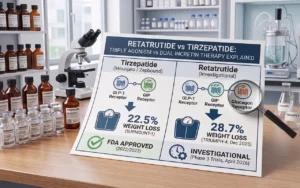
Retatrutide vs Tirzepatide: Triple Agonism vs Dual Incretin Therapy Explained
Retatrutide is a triple hormone receptor agonist. It works by
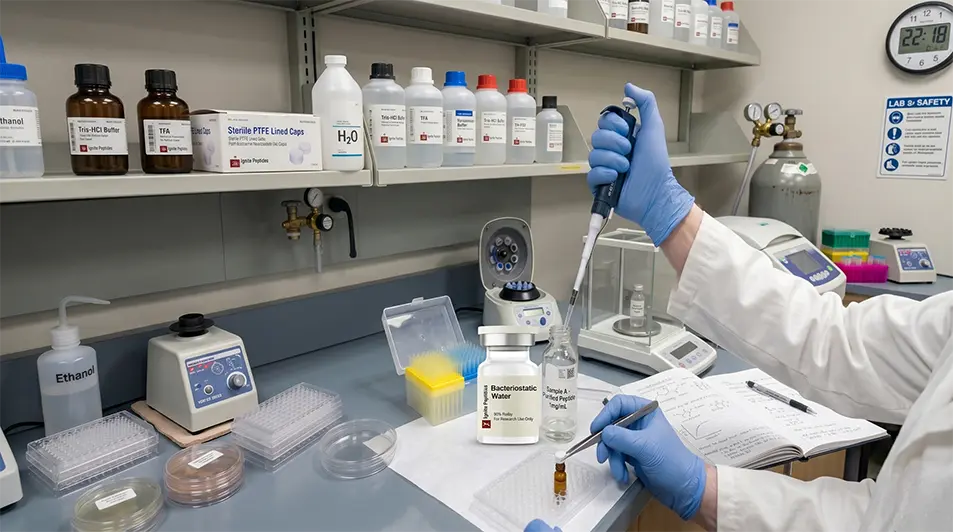
| Knowing how to store reconstituted peptides correctly is critical for preserving their potency. Keep reconstituted peptide solutions at 2-8 degrees C for short-term use of up to 4-8 weeks. For long-term storage, freeze single-use aliquots at -20°C or -80°C. Always use sterile borosilicate glass vials. Protect samples from light and oxygen. Avoid repeated freeze-thaw cycles. |
Once you dissolve a lyophilised peptide in solution, its stability drops significantly. The aqueous environment activates chemical reactions that slowly break down the peptide structure. Without proper storage, a high-purity peptide can lose activity within days.
Understanding how to store reconstituted peptides is one of the most important skills in peptide research. This guide covers every key factor: temperature, container choice, solvent selection, pH, and environmental protection. Peer-reviewed biochemistry literature and authoritative technical documentation from established research suppliers form the basis for all recommendations.
Note: This article targets research laboratory use only (Research Use Only / RUO context). All information relates to in vitro research and scientific handling protocols.
Lyophilised (freeze-dried) peptides are stable solids. They have minimal water activity. This means chemical reactions that destroy peptide structure almost completely stop.
In contrast, water dissolves reconstituted peptide solutions. Water is an active participant in most degradation pathways.
Research identifies four main ways that reconstituted peptides break down in solution. Understanding each one helps researchers apply the right storage strategy.
The table below shows the key differences between the two storage states.
| Property | Lyophilised (Dry) Peptide | Reconstituted (Solution) Peptide |
| Stability period | Months to years at -20 degrees C | Days to weeks (refrigerator) or months (frozen aliquots) |
| Water activity | Very low – reactions nearly halted | High, all degradation pathways are active |
| Temperature sensitivity | Moderate | High, rapid degradation above 8 degrees C |
| Light sensitivity | Low to moderate | High for Met, Trp, Tyr, His-containing sequences |
| Freeze-thaw risk | Low (dry format is forgiving) | High, each cycle reduces purity by 2-15% |
| pH dependence | Low | High, extreme pH accelerates hydrolysis and deamidation |
Temperature is the single most important storage variable. Higher temperatures accelerate all four degradation pathways simultaneously. Lower temperatures slow molecular motion and extend stability windows significantly.
Reconstituted peptide solutions stored in a refrigerator (2-8°C) stay stable for about 4-8 weeks.
Stability depends on the peptide sequence. Research published with PMID: 24074396 supports this stability window for the most common research peptides.
Refrigerator storage suits active experiments where you use the peptide regularly. Keep vials sealed and protected from light. Store them away from the refrigerator door. This helps avoid temperature changes from opening and closing.
For storage beyond 4-8 weeks, freeze reconstituted peptides at -20 degrees C. This temperature dramatically slows all degradation reactions. Most research peptide sequences remain stable for several months under these conditions.
Critical warning: Do not use a frost-free (auto-defrost) freezer. The automatic defrost cycles cause repeated temperature fluctuations that destroy peptide stability. Use a manual-defrost freezer only.
Store peptides with sensitive residues (Met, Cys, Trp), or peptides for long-term studies, at -80°C. This provides the maximum stability window and is the gold standard for critical research samples.
| Temperature | Stability Window | Best Use Case |
|---|---|---|
| 2-8 degrees C (refrigerator) | 4-8 weeks | Active experiments with regular use |
| -20 degrees C (freezer) | Several months | Standard long-term storage for most peptides |
| -80 degrees C (ultra-low) | Extended (months to over a year) | Sensitive sequences; long-duration studies |
| Room temperature (15-25 degrees C) | Hours to a few days only | Do not store, drawing doses only |
Aliquoting means dividing the reconstituted solution into small, single-use portions immediately after reconstitution. This is the single most effective way to preserve peptide potency over time. It eliminates the damage caused by repeated freeze-thaw cycles.
Each time a frozen peptide solution is thawed and refrozen, ice crystals form and then melt. This mechanical process physically stresses the peptide structure. It also promotes aggregation, particularly in peptides with hydrophobic amino acid sequences.
Research cited in PMID: 17299814 shows that each freeze-thaw cycle can cut peptide bioactivity by 5% to 15%.
The exact loss depends on the peptide sequence. The Lone Star Peptide research database notes a purity reduction of 2-5% per cycle. These losses accumulate rapidly across multiple cycles.
Follow this protocol immediately after reconstituting the master vial:
Borosilicate glass is the recommended container material for all reconstituted peptide storage. Glass is chemically inert. It does not interact with the peptide solution and does not leach plasticisers.
Plastic containers carry two significant risks. First, hydrophobic peptides can adsorb onto plastic surfaces, reducing the effective concentration of the solution. Second, some plastics leach chemical compounds into the solution over time. Both issues compromise experimental reproducibility and peptide potency.
Use the original manufacturer’s vial where possible. Someone made it for this peptide. It has a rubber stopper and an aluminium crimp seal. These parts keep it sterile.
Before dividing your solution into aliquots, calculate your exact concentration first. Use the Reconstitution Calculator to get your post-reconstitution concentration and draw volume instantly. This keeps every aliquot accurately labelled and your results reproducible.
Solvent choice directly impacts how long a reconstituted peptide remains stable. The correct solvent depends on the peptide sequence, its charge at neutral pH, and the experimental protocol.
Bacteriostatic water is sterile water with 0.9% benzyl alcohol to stop microbial growth. The benzyl alcohol inhibits microbial growth. This makes a vial of BAC water safe for repeated use for up to 28 days after opening.
BAC water is the standard reconstitution medium for most research peptides (supported by PMID: 22482898). It works with most peptide sequences and offers easy reuse for research protocols that need repeated sampling.
Important research note: Benzyl alcohol at higher concentrations acts as a denaturant. For conformationally sensitive peptides, verify compatibility before use. Consult supplier stability data and the peptide certificate of analysis (COA).
Sterile water contains no preservative. Once opened, microbial contamination can begin immediately. Use sterile water only if you will consume the entire reconstituted vial in a single experiment session. Not suitable for multi-use storage scenarios.
Some peptide sequences are poorly soluble at neutral pH. These include GHK-Cu, IGF-1 LR3, AOD-9604, GHRP-2, and GHRP-6. For these sequences, use a 0.6% glacial acetic acid solution in sterile water. The pH is about 3.0. Use this solution for reconstitution.
Acetic acid water contains no preservative, so treat it as single-use. If a peptide fails to dissolve within 5 minutes of gentle swirling in acetic acid water, do not add more acid. Consult the product-specific reconstitution documentation.
Never use tap water, boiled water, or distilled water from a laboratory sink. These lack sterility and have uncontrolled ionic content that can compromise both solubility and stability.
| Solvent | Preservative | pH | Multi-Use | Best For |
|---|---|---|---|---|
| Bacteriostatic water (BAC) | 0.9% benzyl alcohol | ~5.7 (near neutral) | Yes – up to 28 days | Most research peptide sequences |
| Sterile water | None | ~7.0 | No – single use only | Single-session experiments |
| Acetic acid water (0.6%) | None | ~3.0 (acidic) | No – single use only | Poorly soluble peptides (GHK-Cu, IGF-1 LR3) |
The pH of the storage solution has a major impact on peptide stability. Research consistently shows that mildly acidic conditions (pH 4-6) reduce the risk of both deamidation and aggregation. At pH above 7.5-8.0, deamidation of asparagine and glutamine residues accelerates sharply.
A 2021 PMC study on exenatide, a 39-amino acid peptide, found it stayed fairly stable at pH 4.5. We incubated the sample at 37°C. Oxidation increased as pH rose.
Deamidation also increased after oxidation at higher pH levels. When choosing a buffer for storing reconstituted peptides, avoid extremes. Keep the pH between 4.5 and 6.5 when possible. Only change this if the peptide sequence needs it.
Practical tip: Always avoid prolonged exposure to a pH above 8.0. It accelerates backbone hydrolysis, disulfide bond scrambling, and deamidation simultaneously.
Ultraviolet (UV) light drives photooxidation reactions in peptides. Tryptophan (Trp), methionine (Met), tyrosine (Tyr), and histidine (His) residues are particularly sensitive. Even ambient laboratory light can cause measurable degradation over time in sensitive sequences.
Use amber-coloured glass vials or wrap clear vials with aluminium foil. Store vials inside a box or drawer when not in use. Keep light exposure to a minimum during all handling steps.
Oxygen dissolved in the solution and present in the headspace of the vial drives oxidation of cysteine and methionine residues. Every time a vial is opened, it is re-exposed to atmospheric oxygen.
Try to limit how often the vial is opened to reduce contamination risk. After drawing a sample, reseal the vial immediately. For long-term storage, flushing the headspace with inert gas (nitrogen or argon) before sealing provides additional protection. This is standard practice for peptides containing Cys or Met residues.
Moisture is an especially important concern when moving vials from cold storage to room temperature. When a cold vial is opened immediately, condensation forms on the inner surfaces. This introduces liquid water into the vial, which can trigger degradation.
Always allow a frozen or refrigerated vial to reach room temperature before opening it. This typically takes 5-10 minutes. Store any lyophilised peptides with desiccant packets to prevent moisture absorption before reconstitution.
The following protocol consolidates current research best practices into a clear, reproducible workflow for laboratory use. It aligns with technical guidance from Sigma-Aldrich, GenScript, JPT, Bachem, and the NIBSC peptide handling documentation.
Recognising degradation early prevents wasted experiments and unreliable data. Several visual and analytical indicators signal that a reconstituted peptide sample may no longer be viable.
In research settings, degradation often **appears** as unexpected results before it becomes visually apparent. Loss of biological activity, poor reproducibility in repeated experiments, or dose-response curves that differ from past data suggest peptide degradation.
When results seem inconsistent, check the storage conditions and solution age before other experimental variables. Peptide degradation is one of the most common causes of irreproducibility in peptide-based research.
High-performance liquid chromatography (HPLC) is the gold standard for confirming peptide purity after storage. Liquid chromatography-mass spectrometry (LC-MS) provides additional confirmation of molecular weight and can identify specific degradation products.
The peptide certificate of purity (COA) provided at purchase serves as the baseline for purity. Any significant drop from the starting purity level indicates degradation has occurred. Consult supplier-provided stability data for sequence-specific guidance.
Reconstituted peptide solutions stored at 2-8 degrees C are generally stable for 4-8 weeks. Research evidence (PMID: 24074396) supports this window for the most common peptide classes. However, peptides with inherently unstable residues (Met, Cys, Trp, Asn, Gln) may have shorter stability windows. Always check the supplier COA and sequence-specific stability data.
Yes. Freezing reconstituted peptides at -20 degrees C or -80 degrees C extends the stability window to several months. The key requirement is to freeze in single-use aliquots before the first freeze event. Never refreeze a thawed aliquot. Use a manual-defrost freezer to avoid temperature cycling from auto-defrost systems.
Research suggests that each freeze-thaw cycle reduces bioactivity by 5-15% (PMID: 17299814) and purity by approximately 2-5%. This means that even three cycles can result in meaningful potency loss. Proper aliquoting eliminates this risk by ensuring you thaw each aliquot only once.
Sterile borosilicate glass vials with PTFE-lined caps are the best choice. Glass is chemically inert and does not adsorb peptides to its surface. Avoid polypropylene and other plastics, particularly for hydrophobic peptide sequences.
Yes, significantly. A mildly acidic pH range of 4.5-6.5 is generally optimal for stability.
At pH above 7.5-8.0, deamidation and aggregation rates increase sharply. Avoid buffers that push pH to extreme levels unless the specific peptide sequence requires it.
Knowing how to store reconstituted peptides correctly is not optional for reliable research. Once a peptide dissolves in solution, hydrolysis, oxidation, deamidation, and aggregation can affect it. Proper storage slows all these processes and protects the potency of the sample.
The five non-negotiable principles are:
Stability windows vary by peptide sequence. The supplier-provided certificate of verification and sequence-specific stability data remain the primary authority for each peptide. Consistent documentation of storage conditions, dates, and aliquot use supports experimental reproducibility and ensures data integrity across research programmes.
The following authoritative sources informed this article:
Retatrutide is a triple hormone receptor agonist. It works by
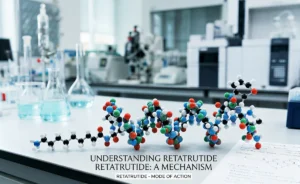
For decades, metabolic pharmacology focused on one goal: reducing calorie
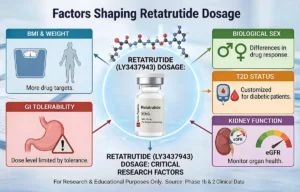
Several factors shape retatrutide dosage in clinical research. These include
Introduction Retatrutide is a triple-receptor agonist; it activates GLP-1, GIP,

At Ignite Peptides, we provide a secure and reliable way to source high-quality research peptides online. As a trusted U.S.-based peptide supplier, we focus on lab-verified products, full transparency, and consistent quality. With fast shipping and responsive support, we’re committed to advancing safe, dependable research you can trust.
This helps us maintain strict standards for regulatory compliance, researcher verification, and responsible product access.
 Sign In to Google