Same Day Shipping Satisfaction Guarantee Free UPS 2nd Day Air on orders over $150
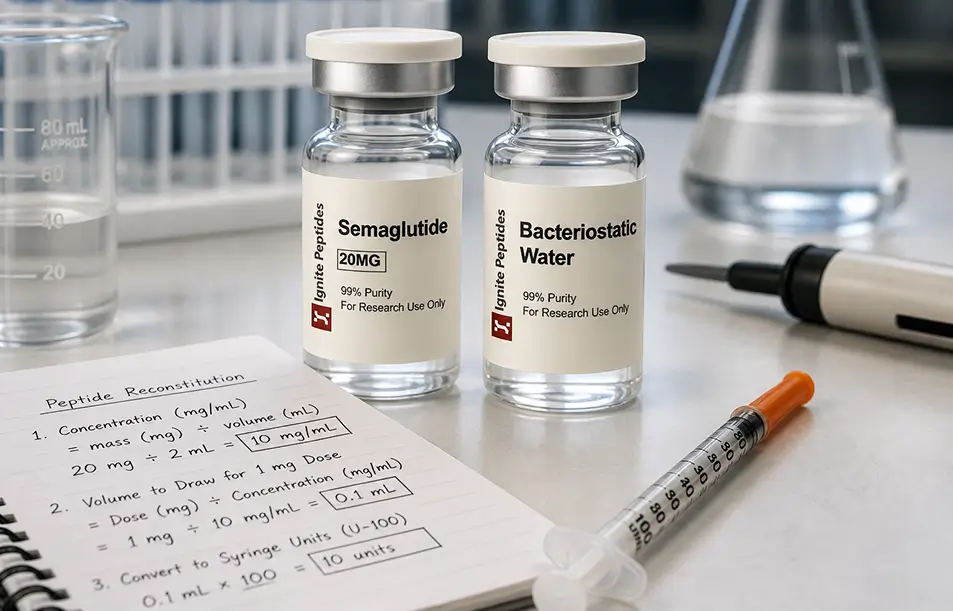
A close-up view of two 'Ignite Peptides' vials labeled Semaglutide and Bacteriostatic Water, next to an insulin syringe, lab beakers, and a handwritten notebook showing three steps on how to calculate mg to mL and dose volume.

How to Calculate mg to mL for Peptide Research (Step-by-Step)

Every peptide vial in a research laboratory is labelled in milligrams (mg). But the moment you add a diluent, you work in...

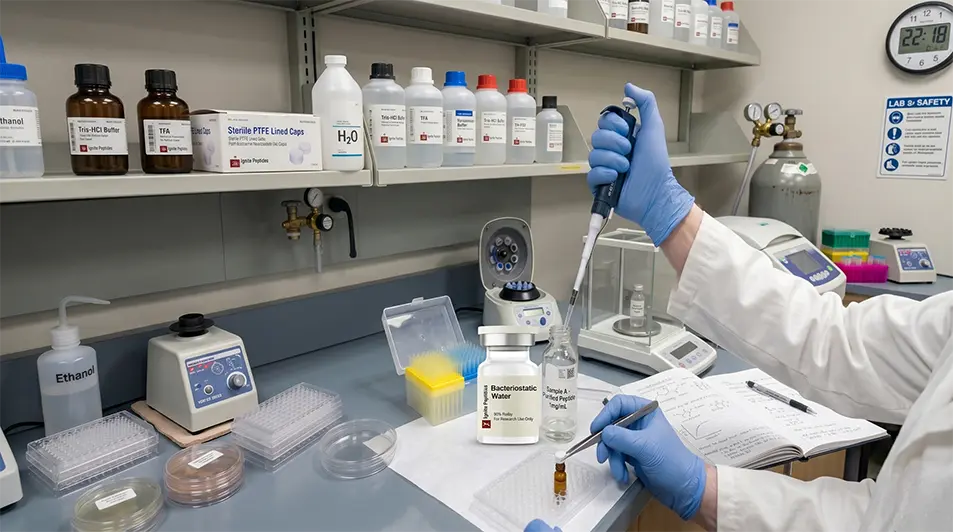
Researcher demonstrating how to store reconstituted peptides by pipetting aliquots into sterile PTFE-lined vials using Ignite Peptides bacteriostatic water on a laboratory bench

How to Store Peptides After Reconstitution Without Losing Potency

Knowing how to store reconstituted peptides correctly is critical for preserving their potency. Keep reconstituted peptide solutions at 2-8 degrees C for...

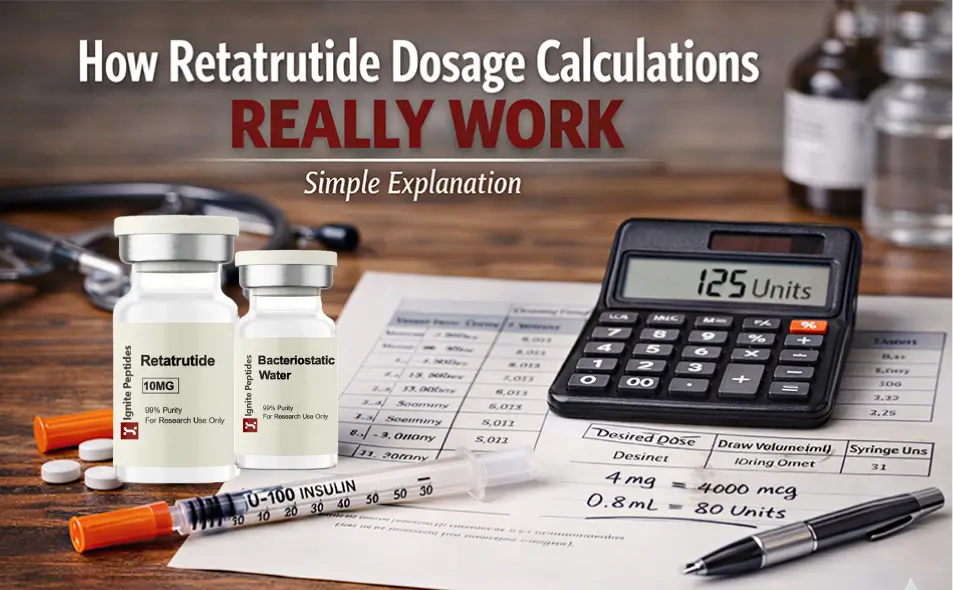
Ignite Peptides infographic featuring a retatrutide dosing calculator with a 10mg peptide vial, bacteriostatic water, and U-100 insulin syringe for precise research measurements.

How Retatrutide Dosage Calculations Really Work (Simple Explanation)

Introduction Retatrutide is a triple-receptor agonist; it activates GLP-1, GIP, and glucagon receptors simultaneously. It comes as a freeze-dried powder inside a...

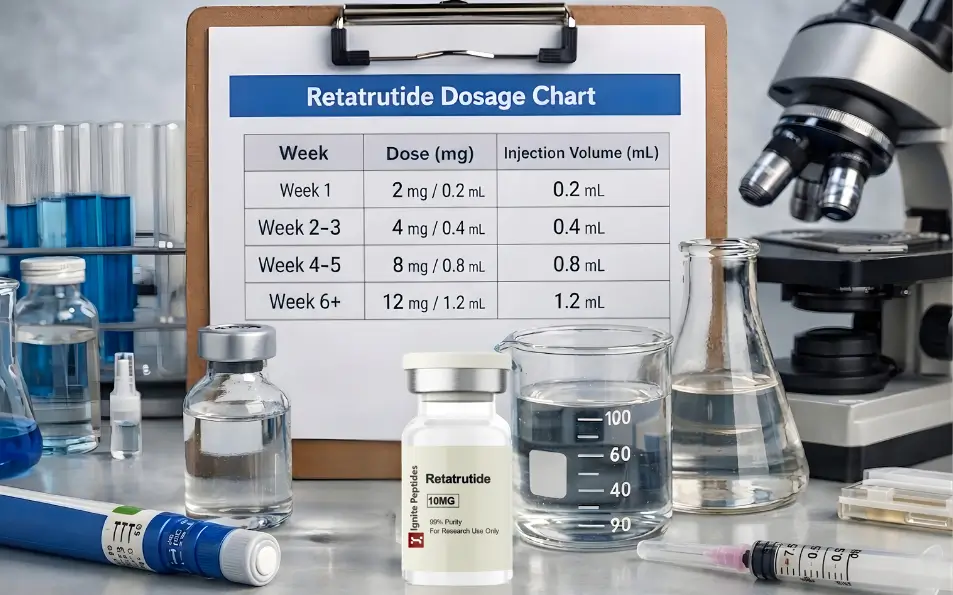
A detailed Retatrutide dosage chart displayed on a clipboard in a laboratory setting next to a vial of Retatrutide and scientific equipment.

How Often Should a Retatrutide Dosage Chart Be Reviewed?

A Retatrutide dosage chart is used in research settings to track dosing levels and convert milligram values to injection volumes. The chart...

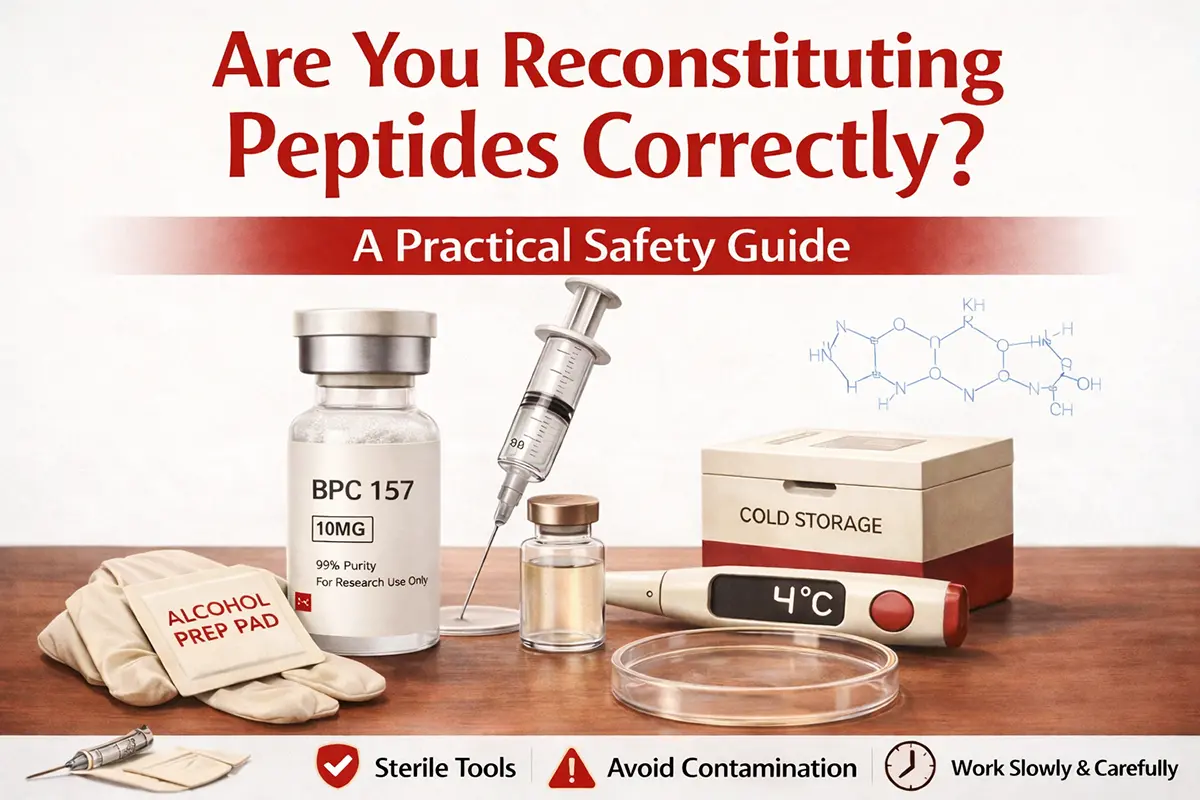
BPC 157 10mg peptide vial with syringe, alcohol prep pad, cold storage box and thermometer showing 4°C for proper reconstitution and storage safety.

Are You Reconstituting Peptides Correctly? A Practical Safety Guide

Peptide reconstitution is the process of turning a dry peptide powder into a liquid solution. Peptides are supplied in powder form to...

Bacteriostatic vs Sterile Water comparison for peptides with two medical vials side by side

Bacteriostatic vs Sterile Water: The Peptide Mixing Mistake You Can’t Afford

Introduction Peptides are sensitive compounds. They require careful handling to remain safe and effective. Many people have been asking about Bacteriostatic vs...

How to Reconstitute Retatrutide with vial, syringe, and alcohol swabs for safe mixing

How to Reconstitute Retatrutide (With Calculator Examples)

Introduction Retatrutide is a research peptide supplied as a lyophilized (freeze-dried) powder. Retatrutide must be reconstituted before use. The solvent is usually...

Peptide dosage calculator with notes, vials, and syringe on a lab table

How to Calculate Peptide Dosage Accurately for Research

Accurate peptide dosing is essential for reliable research. Small measurement errors can affect results. They can also waste valuable peptide products. A...

Illustration showing vials labeled “Bacteriostatic Water” and “Lyophilized Peptide,” alongside a filled syringe, used for peptide reconstitution.

How to Reconstitute Lyophilized Peptides with Bacteriostatic Water

Many people wonder how to reconstitute lyophilized peptides with bacteriostatic water. It might appear tricky, but it’s easy to handle. When conducting...

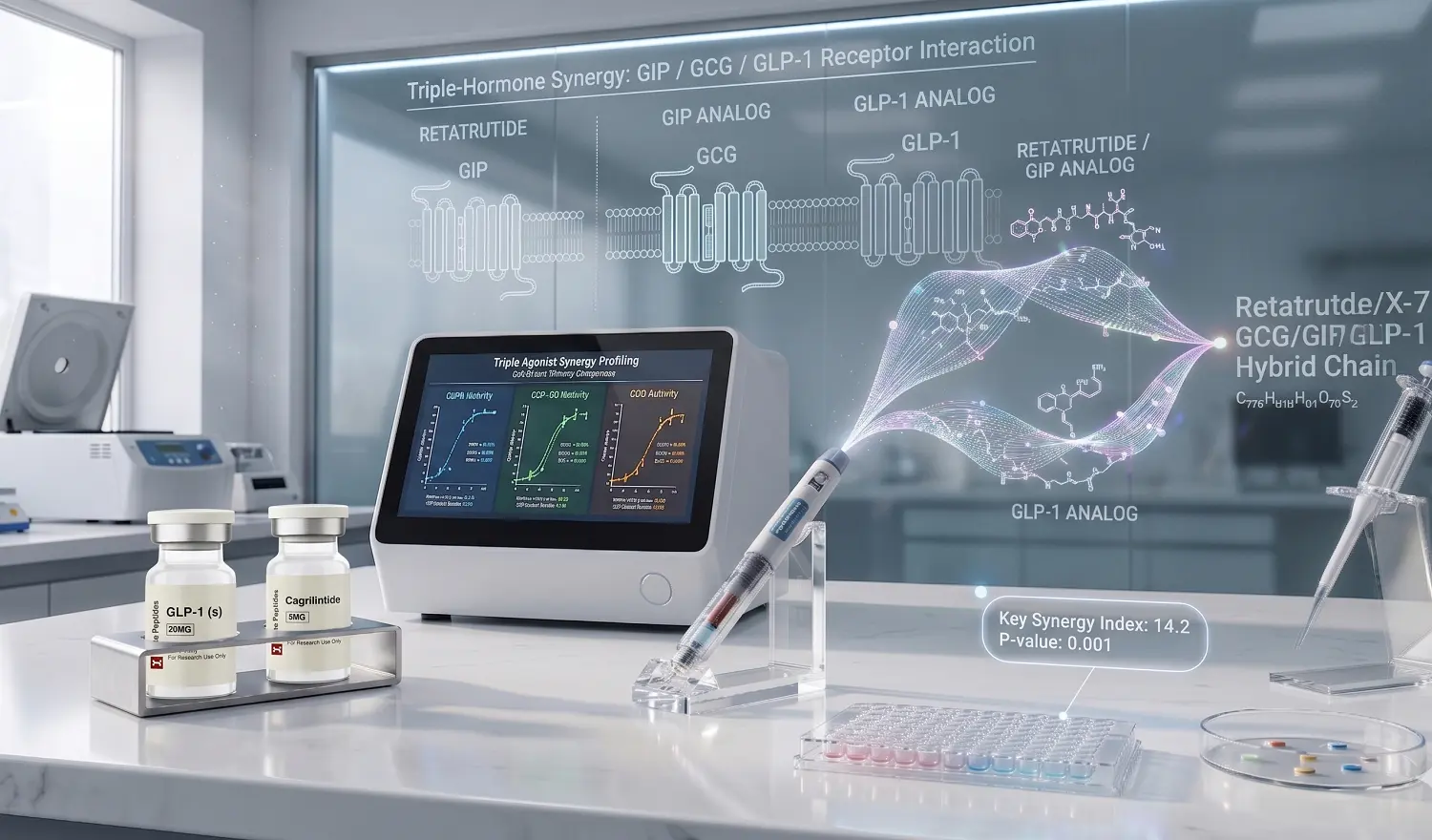
Lab desk displaying CagriSema research vials, a syringe pen, and digital peptide synergy graphs.

CagriSema is Novo Nordisk’s investigational fixed-dose combination of cagrilintide 2.4 mg (an amylin analogue) and semaglutide 2.4 mg (a GLP-1 receptor agonist),...

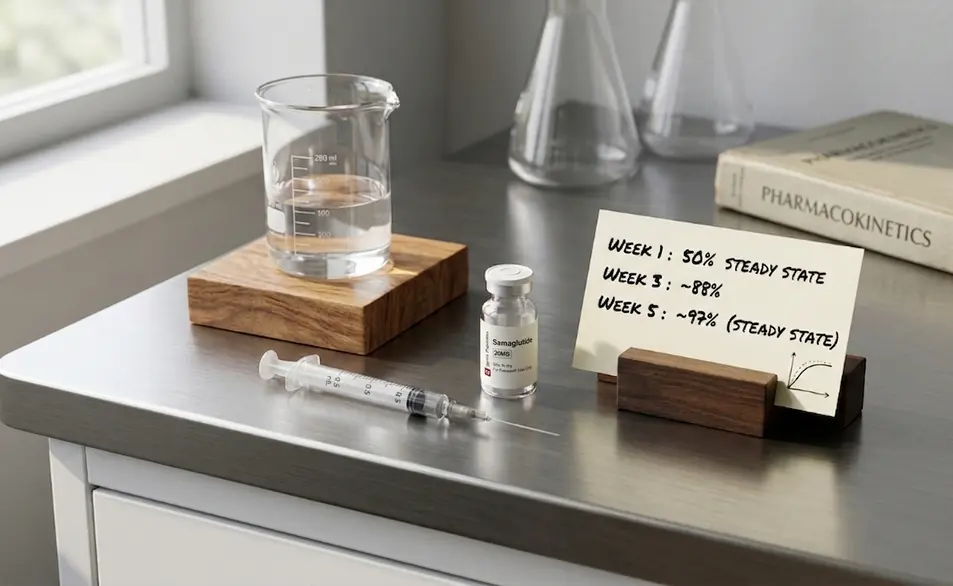
Lab desk displaying half-life of semaglutide notes, a medical syringe, vial, and pharmacokinetics book.

Semaglutide is one of the most studied GLP-1 receptor agonists in research today. Scientists and researchers often note that its effects take...

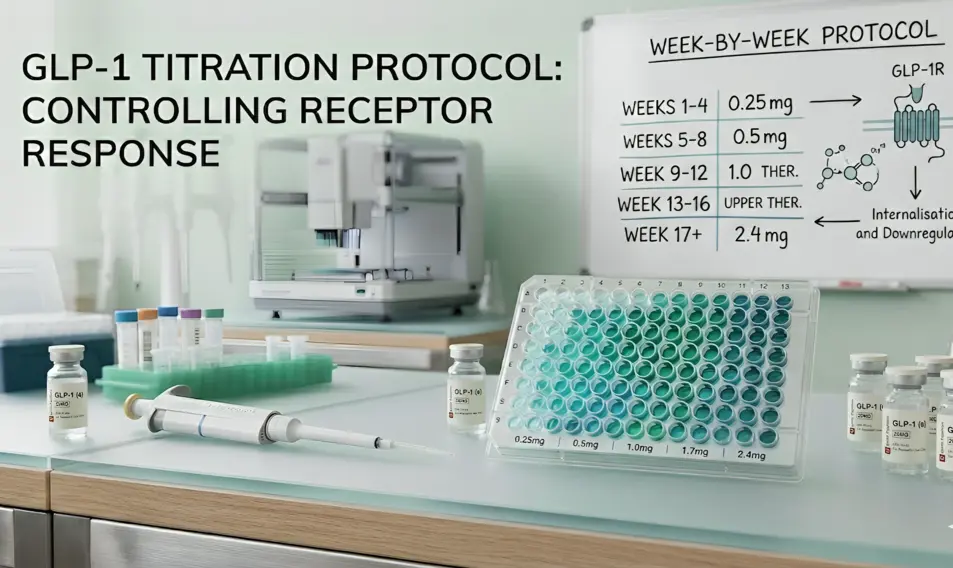
Laboratory setup showing a GLP-1 titration schedule whiteboard with a week-by-week dosing protocol from 0.25mg to 2.4mg, alongside labeled vials, a syringe, and a multi-well assay plate.

Introduction Designing a precise GLP-1 titration schedule is one of the most critical variables in any research protocol involving research-grade GLP-1(S) (semaglutide...

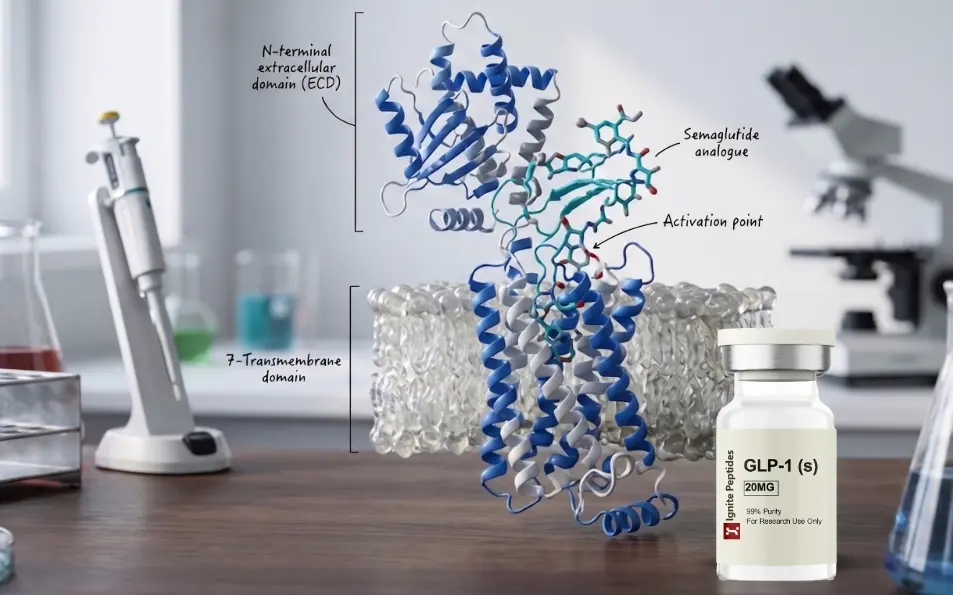
3D molecular model illustrating the GLP-1 mechanism — semaglutide analogue docking at the activation point of the GLP-1 receptor, showing the N-terminal extracellular domain (ECD), 7-transmembrane domain, and a GLP-1 (S) 20mg research vial from Ignite Peptides in a lab setting

Introduction Research on the GLP-1 mechanism is one of the fastest-growing areas in molecular biology. GLP-1 stands for glucagon-like peptide-1. It is...

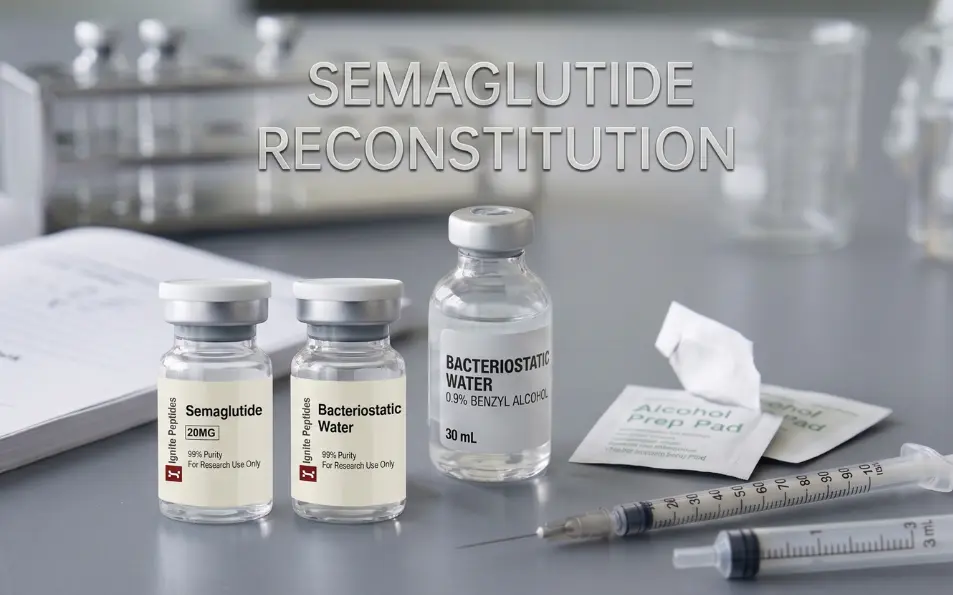
Supplies needed to mix semaglutide for research, including a 20mg lyophilized semaglutide vial, bacteriostatic water with 0.9% benzyl alcohol, alcohol prep pads, and sterile syringes on a lab surface

Semaglutide is one of the most studied peptides in modern metabolic research. It belongs to a class of compounds called GLP-1 receptor...

A close-up view of two 'Ignite Peptides' vials labeled Semaglutide and Bacteriostatic Water, next to an insulin syringe, lab beakers, and a handwritten notebook showing three steps on how to calculate mg to mL and dose volume.

Every peptide vial in a research laboratory is labelled in milligrams (mg). But the moment you add a diluent, you work in...

Or
Remember me

Lost your password? | Don’t have an account? Register

Or
Name
Password
Note: If you did not receive the confirmation email, please check your spam folder.
Or
Remember me

Lost your password? | Don’t have an account? Register

Or
Name
Password
Note: If you did not receive the confirmation email, please check your spam folder.