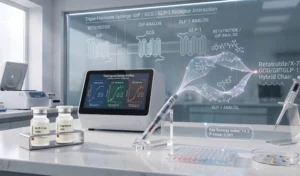
CagriSema Research: Combining Cagrilintide and Semaglutide Dosing
CagriSema is Novo Nordisk’s investigational fixed-dose combination of cagrilintide 2.4


PT-141 (Bremelanotide) 10 mg is a research peptide. It targets brain pathways that affect sexual desire. This offers a new way to study sexual dysfunction. PT-141 is different from traditional treatments like Viagra. While Viagra boosts blood flow, PT-141 acts on the central nervous system. This unique approach has sparked scientific interest in its potential to influence arousal and desire.
Researchers found PT-141 during studies on tanning, developing it from Melanotan II Peptide. Researchers noticed its unexpected effects on sexual behaviour and began further investigations.
PT 141, or Bremelanotide, is a synthetic peptide. It resembles alpha-melanocyte-stimulating hormone (α-MSH). Researchers created it to study the melanocortin receptor system. This system controls functions such as pigmentation, energy balance, and sexual behaviour.
Derived from Melanotan II, PT-141 targets melanocortin receptors associated with sexual arousal. This focus allows researchers to explore its impact on sexual desire and performance.
Researchers provide PT-141 (Bremelanotide) in 10 mg lyophilized vials for controlled laboratory research. Studies have looked at its effects on sexual dysfunction in both men and women. They highlight its unique action.

PT-141 (Bremelanotide) connects with melanocortin receptors MC3R and MC4R in the hypothalamus. This area of the brain controls sexual behavior and desire. By activating these receptors, PT-141 stimulates pathways linked to arousal and libido.
Unlike Viagra or Cialis, which improve blood flow, PT141’s action is neurological. This makes it a valuable tool for studying the brain’s role in sexual function.

Research on PT-141 10 mg studies sexual dysfunction in controlled settings. These findings show how it may affect desire and arousal.
Researchers have studied PT-141 for erectile dysfunction and low libido. Unlike PDE5 inhibitors, which target blood flow, PT-141 works on central melanocortin pathways. This may allow it to influence arousal at the brain level. Research suggests it could benefit cases with limited responses to traditional treatments.
In studies on female hypoactive sexual desire disorder (HSDD), PT141 showed promising results. Trials showed increased sexual desire and satisfaction. This helps us understand female arousal better. Its effects are neurological, not vascular.
PT-141 research also suggests psychological and neural implications. Studies indicate it may shed light on sexual motivation and connections to mood, anxiety, and dopamine pathways. This broadens the understanding of how neurochemical signaling influences desire.
This makes PT-141 useful for studying non-vascular causes of sexual dysfunction.
| Feature | PT-141 (Bremelanotide) | PDE5 Inhibitors |
| Primary Action | Central nervous system (melanocortin receptors) | Peripheral blood vessels (nitric oxide pathways) |
| Mechanism | Activates brain pathways linked to desire and arousal | Increases blood flow to the genitals |
| Focus Area | Sexual motivation and arousal response | Erectile function and performance |
| Effect Onset | Linked to neural activation | Dependent on vascular dilation |
| Research Use | Studied for both male and female dysfunction models | Primarily studied in male erectile dysfunction |
PT-141 targets neural pathways, helping to study the biology behind sexual behavior.
PT-141 (Bremelanotide) 10 mg is a lyophilized powder designed exclusively for research purposes. In labs, researchers reconstitute it with bacteriostatic water for controlled applications.
Common administration routes include:
Qualified professionals should perform all preparations under controlled laboratory conditions.
In controlled settings, PT-141 (Bremelanotide) has shown a generally favorable safety profile. Most effects have been mild and short-term.
Research shows that Bremelanotide does not affect hormones or fertility. This makes it useful for studying sexual dysfunction in men and women. Researchers must handle PT-141 carefully under strict lab protocols, like all research compounds.
PT-141 (Bremelanotide) is notable in sexual medicine and neurobiology for its unique effects. The FDA approved Vyleesi for female low sexual desire. This shows its scientific importance. This Peptide for research is only for labs.
Studies show it can affect desire and satisfaction in men and women. PT 141 works on MC3R and MC4R in the brain to influence libido and motivation.
Key studies provide insights into:
Research is still looking into PT 141’s role in sexual medicine, neuroscience, and behavioral biology. This work boosts its value as a research compound.
As we learn more about melanocortin receptors, bremelanotide remains a key research focus. Its ability to influence brain pathways makes it valuable for future applications.
The melanocortin receptor pathway is key in neuroendocrine and behavioral research. It helps study how brain chemistry affects sexual health, desire, and emotions.
PT-141 (Bremelanotide) and Melanotan II both come from the same scientific source. They are synthetic versions of alpha-melanocyte-stimulating hormone (α-MSH). Both compounds were first studied for how they affect the melanocortin receptor system. This system plays a role in pigmentation, energy balance, and sexual function.
Researchers designed Pt 141 for better receptor selectivity, despite its shared lineage. It primarily targets sexual response rather than pigmentation. This refined targeting greatly reduces the tanning effects that often accompany Melanotan II.
| Feature | PT-141 (Bremelanotide) | Melanotan II |
| Origin | α-MSH analog derived from Melanotan II | Synthetic analog of α-MSH |
| Primary Focus | Sexual arousal and libido research | Pigmentation and tanning response |
| Receptor Selectivity | Targets MC3R and MC4R (sexual response) | Broader activity including MC1R (pigmentation) |
| Observed Effects | Central nervous system stimulation of desire | Melanin production and tanning |
| Research Application | Studied in sexual dysfunction and neural pathways | Studied in pigmentation and photoprotection |
A peptide has selective receptor activity. This makes it a precise tool for studying sexual function and neuroendocrine signaling.
PT-141 (Bremelanotide) 10 mg is a melanocortin receptor agonist. It works in the brain and may boost sexual desire and arousal. PT-141 works on brain pathways, not blood vessels. This offers a new way to study sexual dysfunction and libido.
It targets MC3R and MC4R receptors. Researchers can study how the brain and body control sexual motivation. This is different from traditional blood flow approaches. This helps labs and research centres improve studies on sexual and neuroendocrine health.
Disclaimer: PT-141 and Melanotan II are for research use only. Not for human consumption.
It’s used to study how brain pathways affect sexual desire and motivation. It helps researchers understand the neural control of arousal.
It’s known to activate melanocortin receptors in the brain. These receptors influence behavior, arousal, and mood balance.
It’s designed to act on brain chemistry rather than on blood flow. This creates a new research angle for studying sexual function.
It’s supplied as a 10 mg lyophilized powder. This form keeps the peptide stable for lab use.
It’s shown to influence sexual desire and motivation. Studies suggest it may enhance arousal through brain signalling.
It’s sometimes linked to mild nausea or flushing. These effects are short-term and fade immediately.
It’s made for laboratory research only. It’s not approved for human or animal consumption.
CagriSema is Novo Nordisk’s investigational fixed-dose combination of cagrilintide 2.4
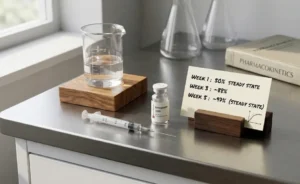
Semaglutide is one of the most studied GLP-1 receptor agonists
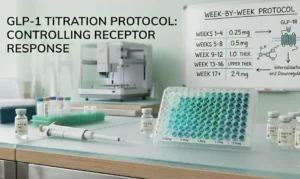
Introduction Designing a precise GLP-1 titration schedule is one of
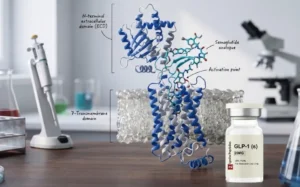
Introduction Research on the GLP-1 mechanism is one of the
 Sign In to Google