
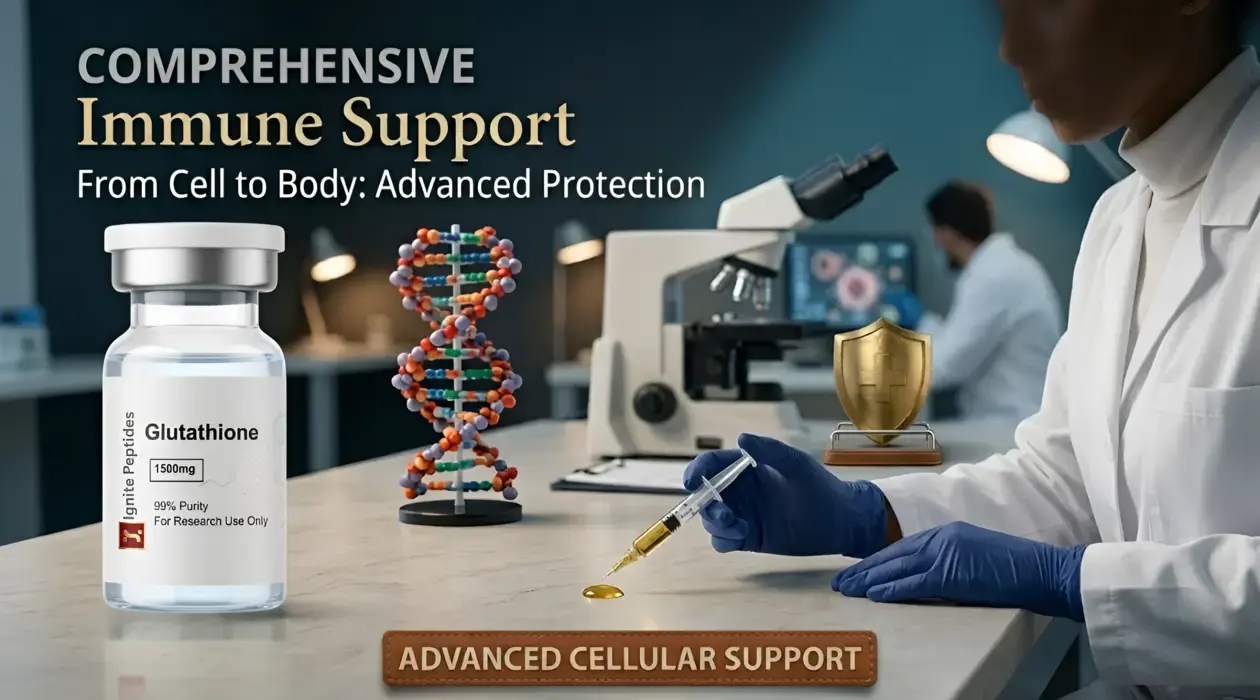
Reviewed by a licensed functional medicine clinician | Research use only | Consult your healthcare provider before use
Your body makes glutathione naturally. It is a vital antioxidant in the human body. It supports many important functions at the cellular level. Production slows with age. Illness, stress, and toxin exposure all speed up depletion. At low levels, immune function and cellular repair become less efficient.
Glutathione injections deliver it directly into the bloodstream. This bypasses the poor absorption that limits oral supplements.
This guide explains how injections work, what peer-reviewed studies say about their benefits and risks, and what to consider before using them.
Glutathione is one of the most studied antioxidants in the body. Your cells make it every day. It protects them from damage, supports your immune system, and helps your liver process toxins.
The problem is that glutathione levels decline with age. Stress, poor diet, illness, and pollution all deplete it. When levels drop, the immune system weakens, and oxidative damage accumulates.
Glutathione injections bypass the digestive system entirely. They deliver the compound straight into the bloodstream. This means faster, more complete absorption than oral supplements.
Glutathione (also called GSH or reduced glutathione) is a tripeptide. It is built from three amino acids: cysteine, glycine, and glutamic acid. Your liver produces most of it. Every cell in your body contains it.
Researchers and clinicians often refer to it as the “master antioxidant.” It does things no other antioxidant can do. It recycles vitamins C and E, so they keep working. It protects DNA from oxidative damage. It helps immune cells function at full capacity.
Key point: Glutathione exists in two forms, reduced (active, GSH) and oxidised (inactive, GSSG). Only the reduced form provides antioxidant protection. Injectable glutathione delivers the active reduced form directly.
Several common factors reduce glutathione in the body:
When you take glutathione by mouth, stomach enzymes break most of it down before it reaches your cells. Only a small fraction makes it through. Injections skip this process completely.
The compound enters the bloodstream directly. From there, it reaches tissues and cells intact. This is called high bioavailability. It means you get more of the active compound where it’s needed.
Glutathione injections come in three main formats. Each one works differently and fits different needs.
| Factor | IV Drip | IM Injection | SubQ Injection |
| Speed of action | Fastest | Moderate | Slowest |
| Setting | Clinic only | Clinic or home | Home-friendly |
| Convenience | Lower | Moderate | Higher |
| Risk profile | Highest | Low | Lowest |
| Typical dose | 600–1,200 mg | 200 mg | 100 mg |
IV (Intravenous): Delivered directly into a vein, usually through a drip. It works the fastest. It requires a clinical setting and trained staff. Session time is typically 15–60 minutes.
IM (Intramuscular): Injected into a large muscle, usually the glute or deltoid. Absorbed more slowly than IV. You can do it at a clinic or at home with a doctor’s guidance, a common choice for ongoing wellness protocols.
SubQ (Subcutaneous): Injected just under the skin. Slowest absorption rate. Most convenient for home use. Suitable for lower doses and consistent, gradual replenishment.
The immune system runs on antioxidants. It needs them to fight pathogens, manage inflammation, and clear damaged cells. Glutathione is central to all three functions.
T cells are white blood cells that identify and destroy threats. Natural killer (NK) cells attack infected and cancerous cells. Both cell types need adequate glutathione to function.
A 2013 study published in Molecules (PMID: 24191232) found that glutathione supports the proliferation and activity of both T cells and NK cells. When GSH levels are low, these cells perform poorly.
Inflammation is a normal immune response. But chronic inflammation damages healthy tissue. Glutathione helps regulate this balance.
Research published in The Journal of Clinical Investigation (PMID: 17476346) showed that GSH plays a key role in controlling the inflammatory response. It helps switch off excess inflammation once a threat is cleared.
Lymphocytes are the white blood cells that coordinate the entire immune response. They produce antibodies and direct other immune cells.
Glutathione supports optimal lymphocyte activity. When levels are low, lymphocyte function is impaired. This can lead to slower recovery from illness and higher susceptibility to infection.
A review published in Frontiers in Pharmacology (PMC10075255) examined the role of GSH in metabolic liver disease. Researchers found that IV and IM administration reduced liver enzyme levels in patients with liver conditions. Further large-scale studies are ongoing.
For people with high exposure to toxins, through work, environment, or medication, maintaining GSH levels is especially important.
Free radicals are unstable molecules formed during normal body processes. When too many build up, they can harm cells by damaging membranes, proteins, and DNA.
Glutathione neutralises free radicals directly. It also regenerates vitamins C and E, allowing them to continue functioning. This layered antioxidant system helps protect every cell in the body.
Glutathione can reduce tyrosinase activity, an enzyme that catalyses melanin production. Lower melanin levels result in a more even skin tone. Many users report brighter, clearer skin with regular use.
A 2025 systematic review in the International Journal of Dermatology (PMID: 39444151) reviewed multiple forms of glutathione for skin lightening. Oral and topical forms showed moderate, consistent results. IV use showed rapid effects but also carried a higher risk of adverse events. The authors noted that IV use should be restricted to closely monitored clinical settings.
It is important to note: IV glutathione is not FDA-approved for skin lightening. Any skin-related use is off-label.
Intense exercise increases oxidative stress. Muscles generate high levels of free radicals during training. This contributes to soreness and slower recovery.
Glutathione helps clear these free radicals. Athletes and active researchers report reduced muscle fatigue and faster recovery between sessions. Some protocols use GSH alongside vitamin C to further enhance antioxidant capacity.
Mitochondria, the energy-producing structures in every cell, are highly sensitive to oxidative damage. Glutathione protects mitochondrial function.
When mitochondria work efficiently, energy production improves. Some users report better mental focus, reduced brain fog, and more sustained physical energy with regular GSH replenishment.
Low glutathione levels have been observed in patients with Parkinson’s disease and other neurodegenerative conditions. Researchers are actively studying whether GSH supplementation can protect nerve cells from oxidative damage.
This is an emerging area of research. Results are preliminary. No firm clinical conclusions have been established yet.
There is no single standard dose. Protocols vary based on goals, health status, and the route of administration. The ranges below reflect commonly reported research and clinical practice guidelines.
| Goal | Format | Typical Dose | Frequency |
| General wellness | IM or SubQ | 200 mg | 1–2× weekly |
| Fatigue/recovery | IM or IV | 400–600 mg | 2–3× weekly |
| Liver support | IV | 600–1,200 mg | 1–2× weekly |
| High oxidative stress | IV | 600–1,200 mg | Per clinician |
Note: These ranges are for reference only. Dosing must be determined by a licensed clinician based on individual health needs.
To simplify your Glutathione research preparation, the Glutathione dosage calculator converts your vial concentration and target dose into a precise draw volume within seconds.
Glutathione injections are generally well-tolerated when administered by qualified professionals using high-purity material.
More serious adverse events are rare but documented, especially with IV use:
Important: Always speak with a licensed healthcare provider before beginning any injection protocol. Never self-administer without professional guidance.
Vitamin C and vitamin E work primarily in the bloodstream and in the fluid between cells. They are water-soluble and fat-soluble, respectively. They neutralise free radicals in those environments.
Glutathione works inside cells, including the mitochondria. It can access places that these other antioxidants cannot. It also recycles both vitamin C and vitamin E, restoring their antioxidant capacity after use.
This makes glutathione functionally complementary to other antioxidants, not a replacement. Pairing glutathione with vitamin C is a common clinical strategy. Vitamin C helps maintain glutathione in its active (reduced) form for longer.
Research and clinical experience suggest glutathione injections may be worth exploring for people with:
Healthy individuals also use glutathione injections as part of anti-ageing and general wellness routines. In research, the compound is evaluated across a wide range of clinical scenarios.
Injections are one tool. Lifestyle habits also play a major role in maintaining healthy GSH levels. These natural strategies work alongside clinical protocols, not instead of them. Ur-rich foods: broccoli, cauliflower, kale, garlic, and onions all provide glutathione precursors.
Injectable glutathione quality varies widely. Contaminated or low-purity products pose health risks.
The FDA issued a safety warning after a pharmacy used oral-grade glutathione powder to produce injectable preparations. Several patients required hospitalisation due to bacterial endotoxins in the product.
At Ignite Peptides, all glutathione is manufactured in ISO 9001:2015 and cGMP-certified laboratories. Each batch undergoes third-party testing for purity and is verified to contain more than 99% reduced glutathione. We maintain full batch tracking and supplier audit records.
When sourcing any injectable compound for research, verify:
Dr Gustavo Bounous, a leading researcher in glutathione science, has described it as critical to immune function. His work demonstrated that GSH levels directly affect immune cells’ ability to proliferate and respond.
Multiple peer-reviewed reviews have linked low glutathione levels to:
Ongoing research is examining glutathione’s potential role in cancer supportive care, neurodegeneration, metabolic disease, and infection response. Science is evolving. Not all applications are fully established in clinical evidence. Researchers and clinicians should review the primary literature in their areas of interest.
Glutathione is classified as Generally Recognised as Safe (GRAS) by the FDA for use in food products. However, injectable glutathione is not FDA-approved for any specific therapeutic indication.
Use of glutathione injections for wellness, detoxification, immune support, or skin lightening is considered off-label. Off-label use is a common and legal medical practice in which a clinician prescribes a compound for a purpose supported by scientific evidence but not formally approved.
In the US, most injectable glutathione is prepared by compounding pharmacies. These are not mass-manufactured FDA-approved drugs. The product’s safety depends entirely on the standards of the individual compounding facility.
FDA Disclaimer: Ignite Peptides’ glutathione is a chemical reagent intended for research use only. It is not for human use. This product is not meant to diagnose, treat, cure, or prevent any disease, and the FDA has not reviewed these statements.
Glutathione is the body’s primary intracellular antioxidant. It protects cells, supports immune function, aids liver detox, and regulates inflammation.
Injections deliver glutathione directly into the bloodstream. This bypasses digestive breakdown and allows faster, more complete absorption than oral supplements. IV, IM, and SubQ formats each offer different speed, convenience, and risk profiles.
Research supports its role in immune cell function, reducing oxidative stress, supporting liver health, promoting athletic recovery, and improving skin health. Emerging work continues in neuroprotection and metabolic disease.
Safety depends on product quality and proper clinical oversight. Always source from cGMP-certified, third-party tested labs and work under the guidance of a licensed healthcare provider.
Ignite Peptides offers research-grade glutathione at over 99% purity, manufactured in accordance with ISO 9001:2015 and cGMP standards. Each batch is third-party tested and batch-tracked for full traceability.
Glutathione injections boost the immune system and help remove toxins. They support liver health and reduce oxidative stress. Many people notice clearer skin and improved energy. They may also aid in muscle recovery and mental clarity.
Your body begins to detox more efficiently. Antioxidant levels increase, potentially reducing inflammation. Some users feel more alert and energetic. Some people notice brighter skin and a better mood.
Results usually last a few days to a week. With regular use, benefits may become more noticeable. These include brighter skin and better overall wellness. Results are different for each individual.
People with asthma should use caution. Women who are pregnant or nursing should speak with a healthcare provider first. Those with chronic illness must speak with a healthcare provider first. It’s not recommended for self-use without guidance.
Side effects are rare but possible. These include skin rashes, stomach cramps, or breathing issues. Trained professionals must give injections. Always monitor how your body reacts.
They may lighten the skin over time, but the results are not permanent. Continued use is needed to maintain the effects. Once stopped, skin may return to its natural tone. It is not FDA-approved for skin lightening.
Daily use is not always necessary. Overuse may affect your body’s production. It’s best to follow a proper schedule set by a medical professional. Long-term safety data are still limited.
When you stop taking glutathione, your levels slowly return to normal. The body keeps making its own, but in smaller amounts. You may notice a decrease in energy or dull skin after some time. Regular use keeps the antioxidant levels high.
The timing depends on your needs and your doctor’s advice. Some people get it once a week, while others do it every two weeks. It’s best not to take it too often. Let your body rest between doses.
Yes, glutathione helps protect the kidneys and liver from stress and toxins. It supports the liver’s natural detox process. Still, people with kidney or liver disease should ask a doctor before using.
Avoid smoking and drinking too much alcohol. These lower the benefits of glutathione. Also, try to eat healthy foods and drink water. Avoid taking it with strong medicines unless approved by your doctor.
You may feel more energy and notice clearer skin. Some people say they sleep better and recover faster. Blood tests can also show higher antioxidant levels. The results take time, so be patient and consistent.

CagriSema is Novo Nordisk’s investigational fixed-dose combination of cagrilintide 2.4

Semaglutide is one of the most studied GLP-1 receptor agonists
Introduction Designing a precise GLP-1 titration schedule is one of
Introduction Research on the GLP-1 mechanism is one of the
At Ignite Peptides, we provide a secure and reliable way to source high-quality research peptides online. As a trusted U.S.-based peptide supplier, we focus on lab-verified products, full transparency, and consistent quality. With fast shipping and responsive support, we’re committed to advancing safe, dependable research you can trust.
This helps us maintain strict standards for regulatory compliance, researcher verification, and responsible product access.
 Sign In to Google