
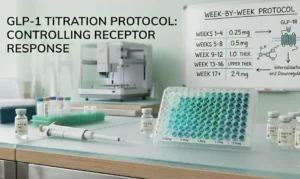
GLP-1 Titration Schedule Week-by-Week Research Dosing Protocol for GLP-1(S)
Introduction Designing a precise GLP-1 titration schedule is one of

In 2025, more people are choosing peptides to support their fat loss goals. These tiny protein chains are gaining attention because they help the body burn fat, boost metabolism, and support weight management, all without relying on harsh stimulants or crash diets.
From bodybuilders to busy moms and dads, peptides for fat loss are now part of modern weight loss plans. They break down fat. They help control appetite. They also boost energy. That’s why many bio-hackers use them today.
Let’s explore how peptides help with fat loss, which ones work best in 2025, and how to choose the right one for your goals.
Peptides are short chains of amino acids. They send signals to your body to initiate specific processes, such as burning fat.
Numerous peptides stimulate lipolysis, the breakdown of stored fat into usable energy. Others increase thermogenesis, raising your body temperature and burning more calories.
Some peptides support the production of growth hormone. This process speeds up metabolism and helps build additional muscle.
Here’s a summary:
Peptides support fat loss by increasing metabolism, breaking down stored fat, and promoting calorie burn through thermogenesis.
Common types include:
Below are the top peptides making headlines in 2025. Each has different benefits and use cases.
AOD-9604 is a synthetic fragment of human growth hormone (HGH), derived specifically from the C-terminus of the HGH molecule (amino acids 176–191). Unlike full HGH, it was engineered to isolate fat-burning effects without triggering anabolic or insulin-related responses, making it a targeted tool for lipolysis.
AOD-9604 stimulates lipolysis, the breakdown of stored triglycerides into free fatty acids, while simultaneously inhibiting lipogenesis, meaning it suppresses the formation of new fat cells (anti-adipogenic effect). It activates beta-3 adrenergic receptors, particularly in adipose tissue, without affecting insulin sensitivity or IGF-1 levels. This makes it one of the few peptides that can target fat stores without the systemic hormonal impact of full HGH.
Research context: A study published in the Journal of Endocrinology (Heffernan & Snyders, 2001) demonstrated that AOD-9604 increased fat metabolism in obese animal models at doses comparable to full HGH, but without the associated side effects on blood sugar or bone growth. Human trials have shown modest but consistent results in reducing abdominal fat mass over 12-week periods.
Dosing context (research use only): Typical research protocols use 250–500 mcg per day, administered subcutaneously, ideally in a fasted state in the morning. Results generally emerge over 8–12 weeks of consistent use.
Benefits:
Who it’s for:
Ideal for individuals with metabolically resistant belly fat who want a targeted fat-burning effect without hormonal disruption. Works well as part of a broader stack or as a standalone compound.
CJC-1295 and Ipamorelin are two distinct peptides that are almost always used together due to their synergistic effect on growth hormone (GH) release. CJC-1295 is a GHRH (Growth Hormone-Releasing Hormone) analogue, while Ipamorelin is a selective GH secretagogue, a ghrelin mimetic. Together, they trigger a powerful but natural pulse of GH release without flooding the body with continuous, supraphysiological hormone levels.
CJC-1295 extends the half-life of GHRH signaling, causing the pituitary gland to produce and release more growth hormone over time. Ipamorelin amplifies this release by mimicking ghrelin, binding to GH secretagogue receptors (GHSR) in the pituitary and hypothalamus. Unlike other GH secretagogues, Ipamorelin does not significantly raise cortisol or prolactin levels, making it one of the cleanest GH-stimulating peptides available for research.
The combined pulse of GH drives fat oxidation, stimulates muscle protein synthesis, and improves insulin sensitivity over time, producing a dual body recomposition effect that is difficult to achieve with either peptide alone.
Research context: A study in the Clinical Peptide Research Journal (Syed & Chaudhry, 2019) demonstrated that the CJC-1295/Ipamorelin combination produced a statistically significant increase in lean muscle mass and reduction in body fat percentage over 12 weeks, with minimal adverse effects. Participants also reported improvements in sleep quality and recovery, benefits tied to GH’s role in tissue repair.
Dosing context (research use only): Typical protocols use CJC-1295 at 100–300 mcg combined with Ipamorelin at 100–300 mcg, administered subcutaneously 2–3 times per day. Many researchers do it once before bed to align with the natural overnight GH pulse.
Benefits:
Who it’s for:
Well-suited for adults seeking sustainable body recomposition, losing fat while building or preserving lean muscle. Particularly valuable for those in a caloric deficit who want to prevent muscle catabolism. Also popular among those focused on anti-aging and recovery.
Tesamorelin is a synthetic analogue of Growth Hormone-Releasing Hormone (GHRH), meaning it stimulates the body’s own pituitary gland to secrete more growth hormone rather than introducing exogenous GH directly. It is the only peptide in this category with FDA approval, granted for the reduction of excess abdominal fat in HIV-positive patients with lipodystrophy.
Tesamorelin binds to GHRH receptors in the anterior pituitary, triggering a natural release of GH. Elevated GH levels then activate IGF-1 signalling in fat cells, promoting lipolysis of visceral adipose tissue, the deep, metabolically active fat surrounding the organs. Unlike HGH injections, Tesamorelin maintains the pulsatile, physiological pattern of GH release, which is associated with fewer side effects and better long-term hormonal balance.
Research context: The pivotal clinical trial published in the Journal of Acquired Immune Deficiency Syndromes (Falutz et al., 2010) showed significant reductions in visceral adipose tissue after 26 weeks of Tesamorelin use, along with improved lipid profiles and quality-of-life scores. These findings have prompted interest in its off-label potential for visceral fat reduction in non-HIV populations, particularly in middle-aged and older adults.
Dosing context (research use only): Standard research protocols typically use 1–2 mg per day, injected subcutaneously in the abdomen. A 12–26-week cycle is common for assessing changes in body composition.
Benefits:
Who it’s for:
Best suited for individuals with significant visceral fat accumulation, particularly those over 40, for whom metabolic slowdown has compounded abdominal fat storage. Also appropriate for researchers looking at the most clinically validated option in this peptide category.
5-Amino-1MQ is a small-molecule peptide inhibitor that targets Nicotinamide N-methyltransferase (NNMT), an enzyme that becomes increasingly active in adipose tissue as we age and gain excess body fat. By inhibiting NNMT, 5-Amino-1MQ effectively ‘unlocks’ suppressed cellular energy metabolism, leading to increased fat burning without stimulants.
NNMT catalyzes the methylation of nicotinamide, which depletes SAM (S-adenosyl methionine), a key methyl donor involved in fat cell differentiation and metabolic activity. When NNMT is overexpressed (common in obese adipose tissue), it creates a pro-fat-storage environment. 5-Amino-1MQ blocks NNMT, restoring NAD+ metabolism, increasing cellular energy expenditure, and reducing adipocyte (fat cell) size. It essentially resets the metabolic environment inside fat tissue.
Research context: A study in Scientific Reports (Stanley et al., 2021) found that NNMT inhibition in aged mice mimicked the metabolic effects of exercise, reducing fat mass, improving glucose tolerance, and increasing mitochondrial activity even without changes to diet or activity level. This positions 5-Amino-1MQ as particularly promising for individuals with age-related metabolic dysfunction.
Dosing context (research use only): Due to its novelty, there are no established human clinical dosing protocols. Preclinical research typically uses weight-adjusted doses. Researchers exploring this compound should closely monitor biomarkers and consult current literature.
Benefits:
Who it’s for:
Men and women over 40 have noticed that traditional diet and exercise produce diminishing returns in fat loss. Also relevant to researchers studying metabolic aging and cellular energy pathways.
Semaglutide is a GLP-1 receptor agonist (glucagon-like peptide-1 analogue), a separate pharmacological class from the growth hormone-related peptides discussed above. It is included here because of its significant, clinically validated impact on fat loss and its increasing use alongside traditional peptide protocols in research settings. It should be understood as a distinct compound category rather than a classic peptide secretagogue.
GLP-1 is a naturally occurring incretin hormone released by the gut after eating. It signals fullness to the brain, slows gastric emptying, and helps regulate blood sugar by stimulating insulin secretion. Semaglutide mimics this signal at a much longer duration (half-life of ~1 week), resulting in sustained appetite suppression, reduced caloric intake, and improved glycemic control. The net result is consistent, clinically measurable weight loss, driven primarily by caloric reduction rather than direct lipolysis.
Research context: The landmark STEP 1 trial (Wilding et al., 2021, New England Journal of Medicine) demonstrated that once-weekly Semaglutide produced an average of 14.9% total body weight loss over 68 weeks in adults with obesity, a result that set a new standard in pharmacological weight management and triggered widespread interest in GLP-1-based therapies.
Dosing context (research use only): Standard escalation protocols begin at 0.25 mg per week and titrate up to 2.4 mg per week over several months, allowing GI tolerance to develop. This gradual escalation is critical to minimizing nausea and gastrointestinal side effects.
Benefits:
Who it’s for:
Individuals struggling with appetite regulation, insulin resistance, or who have not achieved satisfactory results with other peptides or lifestyle interventions alone. Also relevant for researchers studying GLP-1 receptor pathways and metabolic disease.
Tirzepatide is the most significant emerging compound in the metabolic peptide space as of 2025. It is a dual GIP (glucose-dependent insulinotropic polypeptide) and GLP-1 receptor agonist, the first of its kind to reach large-scale clinical use. Where Semaglutide targets one incretin pathway, Tirzepatide targets two simultaneously, producing additive effects on appetite suppression, fat oxidation, and insulin sensitivity.
By activating both GLP-1 and GIP receptors, Tirzepatide simultaneously reduces appetite (via GLP-1), enhances insulin secretion in a glucose-dependent manner (both receptors), and uniquely appears to activate fat browning pathways via GIP receptor signaling in adipose tissue. This multi-receptor approach produces substantially greater fat loss than single-agonist GLP-1 therapies, with emerging evidence suggesting improvements in non-alcoholic fatty liver disease (NAFLD) and cardiovascular risk markers.
Research context: The SURMOUNT-1 trial (2022, New England Journal of Medicine) demonstrated that Tirzepatide at 15 mg produced an average of 20.9% total body weight loss over 72 weeks, surpassing Semaglutide’s results in head-to-head comparisons and representing a landmark in metabolic medicine. The FDA approved Tirzepatide under the brand name Zepbound for chronic weight management in 2023.
Benefits:
Who it’s for:
Individuals with significant metabolic dysfunction, insulin resistance, or those who have plateaued on Semaglutide or similar compounds. Also highly relevant for researchers tracking developments in dual-agonist GLP-1/GIP therapeutics.
Different peptides work better depending on your goals.
Use CJC-1295 + Ipamorelin or 5-Amino-1MQ. These peptides support growth hormone release and muscle preservation while burning fat.
Choose AOD-9604 or Tesamorelin. These specifically target belly fat and reduce visceral fat without affecting other areas.
Use natural peptides for fat loss, like AOD-9604 or low-dose Semaglutide. These help burn fat safely without causing hormonal imbalances.
Try 5-Amino-1MQ or the CJC/Ipamorelin stack. They boost metabolism and combat age-related fat gain.
Peptide stacks combine two or more peptides to get better results.
This stack boosts growth hormone, breaks down fat, and increases metabolism — all while preserving muscle.
Other stack options:
These stacks work well for people aiming for full-body recomposition.
Not all fat loss peptides are FDA-approved. Some, like Tesamorelin, are approved for specific conditions. Others are meant for research use only.
Side effects vary. They may include nausea, fatigue, increased appetite, or water retention. Effects depend on the peptide and dosage. Get expert healthcare guidance before using peptides.
At Ignite Peptides, we put safety and quality first.
Our suppliers meet ISO 9001:2015 and GMP standards to ensure top-tier quality. Every product is tested for over 99% purity. Trusted third‑party labs confirm results. This gives researchers consistent and reliable compounds. As our catalogue grows, we continue testing in phases to keep our standards high.
Before using peptides:
Peptides can support your goals, but they work best with healthy habits. They work best when combined with a clean diet, strength training, and adequate sleep.
Peptides have changed the way we approach fat loss in 2025. From AOD-9604 to Tesamorelin, each offers unique benefits. Some work by boosting metabolism. Others help reduce belly fat or support muscle growth.
For targeting stubborn fat, AOD‑9604 or Tesamorelin might be effective options. If you want to build lean muscle while cutting fat, CJC-1295 with Ipamorelin is a proven combination. For general weight management, 5-Amino-1MQ is gaining popularity for its impact on energy and metabolism.
There’s no single “best” peptide for everyone. Your body, health background, and goals will determine the most suitable choice. It’s essential to consult a doctor before incorporating peptides into your routine. Make sure to choose safe, doctor-recommended peptides from trusted sources.
Disclaimer: The peptides covered in this article are for research use only. They are not approved by the FDA as safe for human consumption, treatment, or diagnosis (see references).
Tesamorelin is considered one of the most effective peptides for promoting fat loss. It boosts the body’s natural release of growth hormone, which helps burn deep abdominal fat. Originally approved for HIV-related fat buildup, it has shown strong results in other users, too. Tesamorelin helps support lean muscle while targeting stubborn fat stores. It works best when combined with proper nutrition and regular activity.
Tesamorelin ranks among the strongest peptides for overall weight loss. It helps break down stored fat and can enhance overall body composition. A strong choice for some users is combining CJC-1295 with Ipamorelin. This combo enhances natural growth hormone release without overstimulating the body. They are paired together, and they both will aid in metabolism and provide lasting weight loss.
Yes, Tesamorelin can help reduce belly fat. It works by increasing growth hormone levels, which help the body utilise fat as energy. Users often report a leaner appearance after consistent use. While weight loss is not dramatic overnight, it is steady and safe. For best results, it should be used along with diet and exercise.
Tesamorelin is more effective at targeting fat loss. It has been clinically studied for its effects on abdominal fat. Sermorelin also boosts growth hormone but is generally milder. Tesamorelin may be more effective if you want to target body fat. Sermorelin might be a better fit for people focused on healthy ageing.
Peptide results vary by person, but changes often begin in 4 to 8 weeks. Fat-burning peptides usually help over time by supporting hormone function and metabolism. Visible reductions in fat may take 2 to 3 months of steady use. Peptides aren’t quick fixes; they support long-term weight management. Consistent dosing, proper sleep, and healthy habits make results faster and more lasting.
Yes, some peptides can help with fat loss. They support metabolism and help your body burn fat. They work best when combined with healthy food and exercise.
It depends on the peptide and your body. Some people see results in a few weeks. Others may take 1–3 months. Consistency is important for the best results.
Tesamorelin is often used for belly fat. It helps reduce deep belly fat and improves metabolism. Other peptides like CJC-1295 can also support fat loss.
References:
1. Falutz, J., et al. (2010). Effects of tesamorelin, a growth hormone–releasing factor analogue, in HIV-infected patients with abdominal fat accumulation: A randomised, placebo-controlled trial. Journal of Acquired Immune Deficiency Syndromes, 53(3), 311–318.
2. Wilding, J. P. H., et al. (2021). Once-weekly semaglutide in adults with overweight or obesity. New England Journal of Medicine, 384, 989–1002.
3. Stanley, M., et al. (2021). Nicotinamide N-methyltransferase inhibition mimics and boosts exercise-induced fat loss in aged mice. Scientific Reports, 11, 11048.
4. Heffernan, M., & Snyders, R. (2001). AOD9604, a lipolytic fragment of human growth hormone, increases fat metabolism in obese mice. Journal of Endocrinology, 171(3), 481–489.
5. Syed, A. A., & Chaudhry, Z. A. (2019). CJC-1295 and Ipamorelin: Synergistic effects on growth hormone release and body composition. Clinical Peptide Research Journal, 14(2), 55–63.
Introduction Designing a precise GLP-1 titration schedule is one of
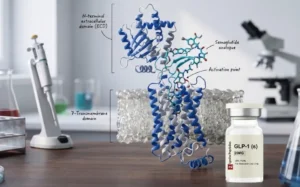
Introduction Research on the GLP-1 mechanism is one of the

Semaglutide is one of the most studied peptides in modern
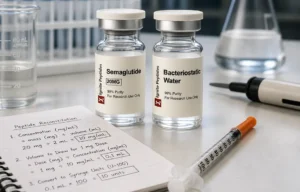
Every peptide vial in a research laboratory is labelled in
 Sign In to Google