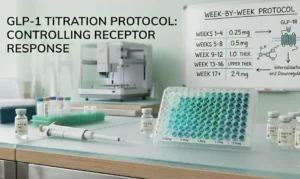
GLP-1 Titration Schedule Week-by-Week Research Dosing Protocol for GLP-1(S)
Introduction Designing a precise GLP-1 titration schedule is one of


Researchers are learning more about how Semaglutide works every year. A man-made version of the GLP-1 hormone exists.
This hormone is active in both the brain and the digestive tract. The brain sends a message to the body that it is full. In the gut, it slows the movement of food after eating. These combined effects help regulate appetite and maintain steady blood sugar levels.
For a broader comparison between Semaglutide and other next-generation peptides like Retatrutide, see our detailed guide on Semaglutide vs Retatrutide
Semaglutide is a synthetic version of the GLP-1 hormone. GLP-1 stands for glucagon-like peptide-1. This hormone helps regulate blood sugar and appetite.
As a GLP-1 receptor agonist, Semaglutide mimics the action of natural GLP-1. It binds to specific receptors in the brain and digestive system. Studies observe two main effects: appetite regulation and delayed gastric emptying.
It also plays a role in blood glucose balance through the incretin effect. This means it increases insulin release when glucose levels are high. At the same time, it reduces glucagon secretion, which lowers unnecessary sugar production.
In research, these combined actions make Semaglutide a subject of interest in metabolic and endocrine studies.
Semaglutide has several documented effects in controlled trials. Researchers have studied these actions for metabolic research purposes, and they are not intended for personal use.

Semaglutide influences appetite through the brain’s hunger control centres. When activation of GLP-1 receptors in the brain’s control centre occurs, hunger signals drop. This effect helps naturally regulate calorie intake.
It may also affect dopamine-related reward pathways. This reduces the emotional drive to eat, especially for high-calorie foods.
Hormones like leptin and peptide YY (PYY) work alongside GLP-1. Together, they create a strong satiety signal. Researchers have observed:
In the digestive tract, Semaglutide binds to GLP-1 receptors. This action slows the movement of food from the stomach into the small intestine. Delayed gastric emptying results.
This process:
Researchers have noted that slower digestion also reduces hunger between meals. This dual benefit, fullness and stable glucose, makes it a focus in metabolic studies.
Semaglutide uses the incretin effect to regulate glucose. It stimulates insulin release only when blood sugar is high. This prevents unnecessary insulin spikes.
It also suppresses glucagon, a hormone that raises blood sugar. Together, these actions help maintain balance after meals.
In research, these effects are especially important for type 2 diabetes studies.
Researchers measure:
| Mechanism | Primary Action | Observed Research Outcome |
| Appetite Control | Activates satiety centres | Reduced caloric intake |
| Digestion Control | Slows gastric emptying | Maintained fullness, stable glucose |
This table highlights how Semaglutide targets two key areas in research: brain appetite centres and digestive speed.
Semaglutide has gained attention for multiple research applications. These include:
Other research investigates how Semaglutide may enhance nerve cell protection. This is because of its anti-inflammatory and metabolic effects in preclinical models.
Accurate dosing is vital in peptide research. Ignite Peptides offers an online Peptide Calculator tool for this purpose.
The calculator allows researchers to:
This tool serves only for research calculations. Not for clinical or personal dosing use.
Ignite Peptides partners only with ISO 9001:2015 and GMP-certified manufacturers. This ensures strict quality control at every stage.
Key points in our quality process:
This commitment helps ensure researchers receive consistent, reliable products for their work.
Semaglutide operates through two main mechanisms of action. It regulates appetite via brain satiety centres and slows digestion via receptors in the stomach and gut.
Both effects contribute to improved glucose control in research settings. The combined impact makes it an important subject in metabolic and endocrine studies.
To understand how Semaglutide compares directly with Retatrutide in terms of appetite, digestion, and metabolic pathways, check out Semaglutide vs Retatrutide.
With proper measurement tools like the Peptide Calculator and strict quality sourcing from Ignite Peptides. Researchers can study these mechanisms with confidence.
Semaglutide works by mimicking a natural hormone called GLP-1. This hormone tells your brain that you are full. It slows the emptying of food from your stomach.
You feel satisfied for longer after meals. This can lead to eating fewer calories over time.
It targets the brain’s hunger control. When GLP-1 receptors activate, cravings drop.
You naturally eat less without feeling deprived. Lower calorie intake helps create a calorie deficit. This deficit is what leads to weight loss. Semaglutide for weight loss works by reducing appetite and helping control food intake.
Weight loss from semaglutide happens gradually. When you burn more calories than you eat, your body uses fat stores. The body breaks down stored fat into energy. The byproducts are excreted through breathing, urine, and sweat. This is the same process as with any calorie deficit.
It activates GLP-1 receptors in areas of the brain that control appetite. These areas include the brain control centre.
Signals reduce hunger and cravings. It may also affect the brain’s reward pathways. This can make high-calorie foods less tempting.
Some people notice changes in appetite within the first week. However, visible weight loss often takes several weeks.
The speed depends on diet, activity, and dosage. Most studies show steady results over months. Not an instant fat-loss drug.
For some, appetite drops within days. For others, it may take a week or two. The body needs time to adjust to the medication.
People often see the full effects after several doses. A gradual process, not instant.
Semaglutide substantially acts on the brain and digestive system. In the pancreas, it prompts insulin release when blood sugar is high.
The liver also reduces glucagon release. Stomach emptying slows, helping maintain steady glucose levels. These combined goods contribute to metabolic regulation.
When you inject semaglutide, it helps your body feel full faster. It slows down digestion and lowers hunger. This can lead to reduced eating and weight loss over time.
Semaglutide can help reduce appetite, but it works best with a healthy diet. You may lose some weight without strict dieting, but combining it with better food choices gives faster results.
Yes, semaglutide can help reduce belly fat. It lowers overall body fat by making you eat less and burn more calories. Results vary depending on diet and activity.
Eating sugar can slow down your weight loss. Semaglutide helps control appetite, but sugary foods may cause cravings and reduce its effect. Try to limit sugar for the best results.
You can speed up results by eating healthy and staying active. Drink water, avoid sugary foods, and follow your meal plan. Semaglutide works faster when combined with lifestyle changes.
Compliance Disclaimer
Semaglutide is intended for laboratory research use only. Authorities do not approve it for human consumption or therapeutic use. Information provided is for educational and scientific purposes only.
Introduction Designing a precise GLP-1 titration schedule is one of

Introduction Research on the GLP-1 mechanism is one of the

Semaglutide is one of the most studied peptides in modern

Every peptide vial in a research laboratory is labelled in
 Sign In to Google