How to Store Peptides After Reconstitution Without Losing Potency
Knowing how to store reconstituted peptides correctly is critical for

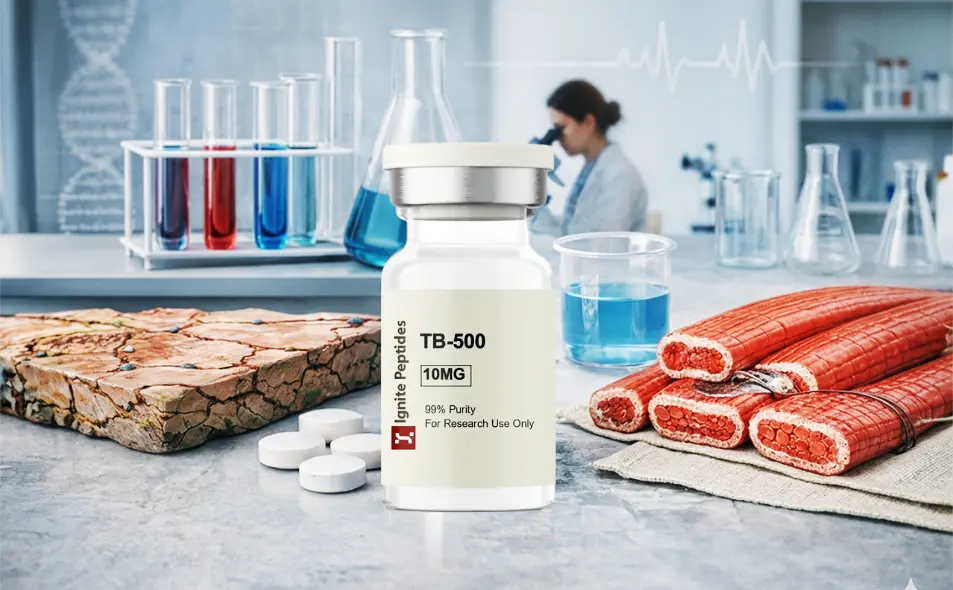
TB-500 peptide is a synthetic peptide used in scientific research. Researchers link it to a natural protein called thymosin beta-4. Researchers study TB-500 for its role in cell repair and tissue healing.
This peptide has gained attention in laboratory studies focused on regeneration and recovery. Early research suggests it may support cell movement, tissue repair, and blood vessel formation. Most of this evidence comes from preclinical and animal studies.
The FDA has not approved TB-500. Researchers classify it as a research-only peptide. Limited human clinical data are available. For this reason, researchers primarily discuss TB-500 in a scientific context, not as a medical treatment.
In this article, we explore the TB-500 Peptide, how it works, what research says about its healing effects, and what we know about its safety and regulations.
Researchers developed TB-500 as a laboratory-made peptide derived from thymosin beta-4. Thymosin beta-4 is a naturally occurring protein found in many tissues in the body. Researchers developed TB-500 to study the protein’s key actions in a controlled research setting.
Researchers know this peptide for its ability to move easily through tissues. Because of this, researchers are studying TB-500 for its role in cell repair and regeneration. It does not act on one specific area. Instead, it may influence multiple tissues at the same time in research models.
Researchers classify TB-500 as a research peptide. The FDA has not approved it for medical purposes. Scientists use it in experimental and laboratory studies to better understand how cells respond during healing and recovery.
TB-500 helps cells move and repair damaged tissue. It also supports the growth of new blood vessels and may reduce excessive inflammation during healing.
One key area of TB-500 research focuses on actin. Actin is a protein found inside cells. It helps cells keep their shape and move when needed.
Studies suggest TB-500 may bind to actin. This interaction can support cell movement during tissue repair. Cell movement is important when the body responds to injury in research models.
TB-500 is also studied for its role in angiogenesis. Angiogenesis is when new blood vessels grow. Blood vessels deliver oxygen and nutrients to tissues.
Research shows that TB-500 may support this process. Better blood flow can help tissues recover in laboratory settings. This is why angiogenesis is a key focus in TB-500 Peptide studies.
Inflammation is part of the natural healing process. However, too much inflammation can slow recovery.
Some studies suggest TB-500 may help balance the inflammatory response. Researchers have observed this effect in preclinical research models. Scientists need more research to understand it completely.
Research on TB-500 is mostly conducted in laboratories and animal models. Scientists study it to see how it affects tissue repair and cell movement. They also look at its impact on blood vessel growth and inflammation. Most studies focus on injuries, wounds, and tissue regeneration.
Most TB-500 research comes from animal studies. In these studies, TB-500 has shown the ability to:
These studies suggest TB-500 may play a role in repairing a variety of tissues. However, these findings are from studies and might not apply to humans.
Research on TB-500 in humans is extremely limited. Researchers have not conducted most studies in clinical trials. As a result, researchers do not fully know the safety, effectiveness, and proper use in humans. Researchers emphasize that scientists should use TB-500 only for research purposes, as it remains experimental.
ScientResponses can vary by tissue type, injury, and individual biology. Researchers need to conduct more controlled human studies to confirm the effects seen in animal models.

TB-500 is studied for its potential to help repair and regenerate different tissues. Most research so far comes from animal and lab studies. Researchers are exploring its effects on wounds, muscles, tendons, and ligaments.
TB-500 Peptide may support faster wound repair in research models. Animal studies suggest it can help tissues close and recover more effectively. Possible effects observed include:
TB-500 may assist muscle recovery and tissue regeneration. Studies in animals show it could help muscles heal after injury. Potential effects include:
Tendons and ligaments are slow to heal. Research suggests TB-500 may help improve repair in these connective tissues. This subject is covered in more detail in our guide on peptides for joint pain. Observed effects in studies include:
TB-500 may also help tissue repair indirectly by supporting other healing processes. Research findings show:
TB-500 is mostly studied in animals and laboratory models. Researchers do not completely understand its effects on humans. Researchers stress that TB-500 is for research purposes only.
While animal studies suggest TB-500 Peptide is generally well-tolerated. Some possible effects include:
Because human studies are limited, long-term risks are unclear. Key points include:
The quality of TB-500 can vary between suppliers. Important research considerations include:
Researchers classify TB-500 as a research peptide. Most studies limit themselves to laboratory and animal research.
TB-500 and BPC-157 are both studied for tissue repair. They come from different proteins. Researchers base TB-500 on thymosin beta-4, a natural protein in the body.
BPC-157 comes from a protein in the stomach. Researchers mainly study TB-500 for cell movement, tissue repair, and new blood vessel formation. Researchers study BPC-157 more for tendons, ligaments, and gut healing. For a side-by-side comparison of both peptides in a joint health context, see our guide on joint and bone repair research. They work in different ways in research models.
TB-500 mimics a fragment of thymosin beta-4. It affects cell migration and angiogenesis across many tissues.
BPC-157 has a different structure. Its effects are more focused on connective tissues and the digestive system. These differences guide researchers on which peptide to study for specific tissue types.
Some studies look at TB-500 and BPC-157 together. Researchers want to see if they can work in a complementary way. Each peptide acts through different pathways. Combining them may improve overall tissue repair in lab studies.
Research compares the peptides to understand how each works alone and together. Scientists study their mechanisms and tissue-specific effects. This helps identify potential uses in laboratory research. Human studies are still extremely limited.
TB-500 Peptide is used mainly in laboratory and research settings. Proper handling is important to maintain its stability and ensure reliable results. Researchers carefully measure and store the peptide before use.
Store peptides like TB-500 dry and mix them with a solution before use. Accurate measurement is important. Even small mistakes can affect study outcomes.
Many research labs use peptide calculators to simplify measurement and preparation. These tools help convert concentrations and volumes correctly. Using a peptide calculator ensures experiments are consistent and reliable.
Important to note that TB-500 is for research use only. Do not use it for human treatment or administration outside a laboratory setting.
Knowing how to store reconstituted peptides correctly is critical for
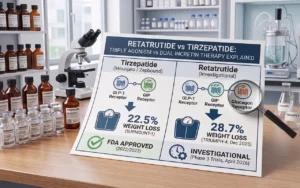
Retatrutide is a triple hormone receptor agonist. It works by
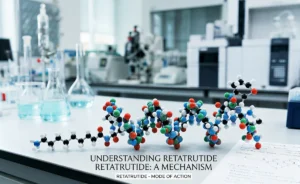
For decades, metabolic pharmacology focused on one goal: reducing calorie
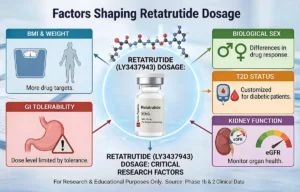
Several factors shape retatrutide dosage in clinical research. These include
 Sign In to Google