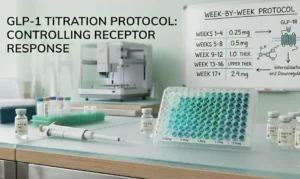
GLP-1 Titration Schedule Week-by-Week Research Dosing Protocol for GLP-1(S)
Introduction Designing a precise GLP-1 titration schedule is one of


Healing takes time. For many people, recovery feels slow and frustrating. Athletes, active adults, and those with long-term injuries often look for new research options to support healing.
One compound studied in this area is the BPC-157 peptide. It is a lab-made peptide that researchers are testing for its role in tissue repair. To understand its regenerative role in more detail, see our guide on BPC-157 as a regenerative peptide. Unlike typical supplements or medicines, BPC-157 is mainly discussed in scientific studies, not clinical treatment.
BPC-157 is based on a small protein sequence found in the stomach. In the body, similar compounds help protect the stomach lining and support repair. Scientists recreated this peptide in a stable form to study whether these effects may apply to other tissues, such as tendons, muscles, bones, and the gut.
Most research on BPC-157 comes from animal studies. These studies suggest it may support blood flow, cell protection, and healing processes. However, it is vital to be clear. The FDA has not approved BPC-157 for human use, and clinical data in humans remain limited.
This guide explains how BPC-157 works, what research suggests about its healing potential, and what safety and regulatory limits currently exist.

Understanding how BPC-157 promotes healing helps explain why researchers are so interested in its therapeutic potential. The peptide appears to work through several interconnected pathways that support tissue repair and regeneration.
One of BPC-157’s most significant effects is its promotion of angiogenesis, the formation of new blood vessels. When tissue is injured, it needs an increased blood supply to deliver oxygen, nutrients, and immune cells to the damaged site. BPC-157 appears to enhance this process by interacting with the VEGF (Vascular Endothelial Growth Factor) pathway and boosting nitric oxide (NO) signalling.
Research shows that BPC 157 can stabilize and protect the endothelium (the inner lining of blood vessels), improving blood flow to injured areas. This enhanced circulation creates an optimal environment for healing. Think of it as upgrading the highway system that delivers repair materials to a construction site.
BPC-157 doesn’t just improve blood supply; it also appears to orchestrate the cellular players involved in tissue repair. Studies indicate that it upregulates Growth Hormone Receptor expression in fibroblasts, the cells responsible for producing collagen and other structural proteins that form the scaffold of repaired tissue.
By stimulating fibroblast migration and proliferation, BPC-157 helps ensure that enough “builder cells” arrive at the injury site with the materials needed for reconstruction. This is particularly important for connective tissue healing, where collagen synthesis determines the strength and integrity of the repair.
Here’s where BPC 157 gets interesting: it doesn’t simply suppress inflammation like typical anti-inflammatory drugs. Instead, it appears to modulate the inflammatory response, helping the body transition smoothly from the initial inflammatory phase to the repair and remodelling phases of healing.
The peptide also demonstrates cytoprotective effects, protecting cells across various organ systems from damage. This protection extends beyond the injury site, which may explain why BPC-157 shows benefits in conditions affecting the gut, liver, and even the nervous system.
The most well-researched application of BPC-157 is in healing musculoskeletal injuries. This is where the peptide has shown some of its most dramatic effects in animal studies.
Tendon injuries are notoriously slow to heal due to poor blood supply. BPC-157 appears to address this limitation directly. Studies in rats with Achilles tendon injuries have shown that BPC 157 treatment significantly accelerates healing and improves repair quality.
One notable finding is that BPC-157 enhances tendon-to-bone reattachment, creating a stronger connection at this critical junction. The peptide appears to promote more organized collagen fibre alignment, which translates to a more functional, resilient tendon after healing.
For anyone who’s experienced the frustration of tendinitis or a ligament tear, these findings are compelling. While we can’t directly extrapolate animal results to humans, the mechanism suggests real potential for BPC-157 in tendon repair and ligament healing.
Muscle tissue, while generally better at healing than tendons, still benefits from BPC-157’s effects. Animal models of muscle crush injuries and tears have shown that the peptide speeds up recovery of both muscle structure and function.
This isn’t just about healing faster; it’s about healing better. BPC 157-treated muscle injuries show improved restoration of contractile function, meaning the muscle can perform closer to its pre-injury capacity. For athletes and active individuals, this could mean a shorter time away from training and a lower risk of re-injury.
BPC-157 is less studied than soft tissue applications. It still shows promise for bone healing. This area is explored further in our research on peptides for joint pain. Animal research suggests it may accelerate fracture healing and could potentially help with pseudoarthrosis (when a fracture fails to heal properly).
Some small-scale retrospective human studies have examined BPC-157’s effects on knee pain, with patients reporting improvements in pain and function. However, these studies lack the rigour of controlled clinical trials, so we should interpret them cautiously.

BPC-157’s healing effects extend beyond the musculoskeletal system. The peptide’s original discovery was in the context of gastrointestinal protection, and research continues to uncover benefits in unexpected areas.
BPC-157 was first identified for its ability to protect the stomach lining and promote ulcer healing. This makes sense given its origin in gastric juice, the body’s own protective mechanism for the gut.
Studies suggest that BPC-157 can help heal a damaged intestinal lining, which has led to interest in its potential for conditions such as inflammatory bowel disease (IBD) and leaky gut syndrome. The peptide appears to reduce gut inflammation while simultaneously promoting tissue repair, a dual action that could be valuable for chronic digestive conditions.
For anyone struggling with gut health issues, BPC-157 represents an intriguing area of research, though human trials specifically targeting these conditions remain limited.
Perhaps the most surprising research on BPC-157 involves the nervous system. Studies have explored its effects on the brain-gut axis and found evidence of neuroprotective benefits.
Animal models of traumatic brain injury (TBI) have shown that BPC-157 may reduce brain damage and improve recovery. The mechanisms aren’t fully understood, but they likely involve the peptide’s anti-inflammatory effects and its ability to protect blood-vessel integrity in the brain.
Some researchers have investigated BPC-157’s potential for neurological disorders, though this remains an emerging area of study. The idea that a peptide could support healing in tissues as different as tendons and neurons speaks to its broad biological activity.
Before anyone considers using BPC-157, it’s essential to understand its safety considerations and legal status.
The good news is that BPC-157 has shown a generally favourable safety profile in animal studies, with few reported adverse effects. Common mild side effects in human users (based on anecdotal reports, not clinical trials) include injection site reactions like redness or discomfort.
However, here’s a critical concern: BPC-157’s pro-angiogenic and growth factor effects raise theoretical questions about its use in individuals with cancer or pre-cancerous conditions. Because the peptide promotes cell growth and blood vessel formation, there’s a potential risk that it could support tumour growth or angiogenesis in existing cancers.
This is purely theoretical; no studies have demonstrated this effect, but it’s a serious consideration that requires more research. Anyone with a history of cancer or risk factors should be especially cautious.
Let’s be clear: BPC-157 is not FDA-approved for human use. It’s sold “for research purposes only,” which means it exists in a regulatory grey area. Some clinics and practitioners offer it off-label, but this doesn’t change its investigational status.
Competitive athletes should note that WADA has explicitly banned BPC-157. Using it could result in disqualification or other sanctions, regardless of whether it was used for legitimate healing purposes.
BPC-157, which is not FDA-approved by the FDA, is not sold through pharmacies regulated in the United States. Instead, it is purchased from suppliers who sell “for research only.” This poses a serious risk, which must be addressed.
In the research setting, BPC-157 is often explored using different delivery methods. This can depend on the tissue or condition that’s being studied. These protocols are research protocols and not medical treatments.
Many people interested in peptide therapy encounter the BPC-157 + TB-500 Wolverine Stack. TB-500 (or its active fragment TB4-FRAG) is another peptide with healing properties, but it works somewhat differently from BPC-157.
While BPC-157 tends to promote localized repair at specific injury sites, TB-500 has more systemic anti-inflammatory effects and is particularly noted for improving flexibility and reducing systemic inflammation. Some users combine the two peptides, reasoning that their complementary mechanisms might enhance overall healing.
However, it’s important to understand that stacking peptides multiplies the unknowns. We have limited data on BPC-157 alone in humans, and even less on combination protocols. This approach should only be considered under medical supervision.
BPC-157 represents a fascinating frontier in healing and tissue repair. The preclinical evidence is genuinely impressive, showing benefits across multiple organ systems from accelerated tendon healing and muscle regeneration to gut protection and even neuroprotection.
But impressive animal studies don’t automatically translate to safe and effective human therapies. We need large-scale, controlled clinical trials to answer crucial questions: What are the optimal doses? What’s the long-term safety profile? Which conditions benefit most? Are there specific populations who should avoid it?
Until we have those answers, BPC-157 remains an investigational compound with promising potential but incomplete safety data. The peptide’s broad biological activity is both its strength and a reason for caution; we simply don’t yet fully understand all its effects in the human body over time.
If you’re considering BPC-157, the most important step is consulting with a knowledgeable medical professional who can assess your individual health status, discuss the known risks and unknowns, and help you make an informed decision. Healing faster is appealing, but it should never come at the expense of long-term health.
The story of BPC-157 is still being written, and the most important chapters, rigorous human trials, are yet to come.
Animal studies show protective changes to the stomach, intestines, liver, and heart. Some evidence also showed improvements in blood vessel repair. We currently lack evidence in humans, and additional studies are needed to confirm these effects.
Bodybuilders are using BPC-157 to recover from muscle or tendon injuries. Some bodybuilders use it to reduce soreness and inflammation as well. The FDA does not approve BPC-157 for human use. It is banned in competitive sport by the World Anti-Doping Agency (WADA).
Side effects in humans are not fully understood. Scientists are concerned about its role in blood vessel growth. In theory, this could increase the risk of tumour growth if cancer cells are present. No long-term human studies exist to confirm safety.
Animal studies show that BPC-157 may protect the liver from toxic damage. The studies imply a potential role in liver repair. However, no clinical trials in humans confirm this effect. The long-term impact on the liver is unknown.
Research on animals supports that BPC-157 facilitates the healing of the nervous system. Some research also suggests that BPC-157 may protect the brain from injury or trauma to brain tissue. Although these findings are promising, they are still experimental. Human studies will have to confirm these findings before any conclusions are made.
There is no clear scientific timeline. Some reports suggest people feel effects within days. Others notice benefits over several weeks. Since there are no controlled human studies, results are uncertain and vary widely.
BPC-157 is sold as injections, capsules, sprays, and creams. Injections are said to work faster because they go directly into the body. Oral and topical forms may take longer to work and can vary in their effectiveness.
BPC-157 may help repair tissues by supporting blood flow, reducing inflammation, and promoting cell growth. It may also protect the stomach lining and nerves. Research is still limited, but studies suggest it helps the body heal faster.
Many athletes use BPC-157 to support recovery from muscle, tendon, or joint injuries. It may help reduce pain and speed up healing. However, it is still experimental and not approved for medical or sports use.
Reported side effects are rare but may include allergic reactions or stomach issues. The main concern is product quality, as some products may be impure or mislabeled. Long-term safety in humans is still unknown.
BPC-157 is not approved by the FDA because it lacks enough research on safety and effectiveness. It is considered a research compound, not a medical treatment.
There is no clear evidence that BPC-157 causes kidney stones. More research is needed to understand its long-term effects on the body.
Generating…
Disclaimer: This content is for informational and entertainment purposes only and should not be considered medical advice.
References
Introduction Designing a precise GLP-1 titration schedule is one of
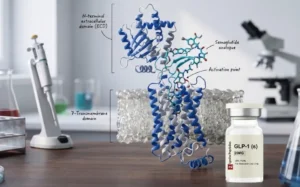
Introduction Research on the GLP-1 mechanism is one of the
Semaglutide is one of the most studied peptides in modern
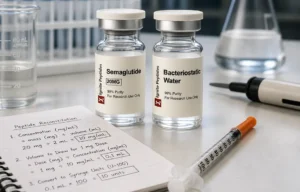
Every peptide vial in a research laboratory is labelled in
 Sign In to Google