How to Calculate mg to mL for Peptide Research (Step-by-Step)
Every peptide vial in a research laboratory is labelled in
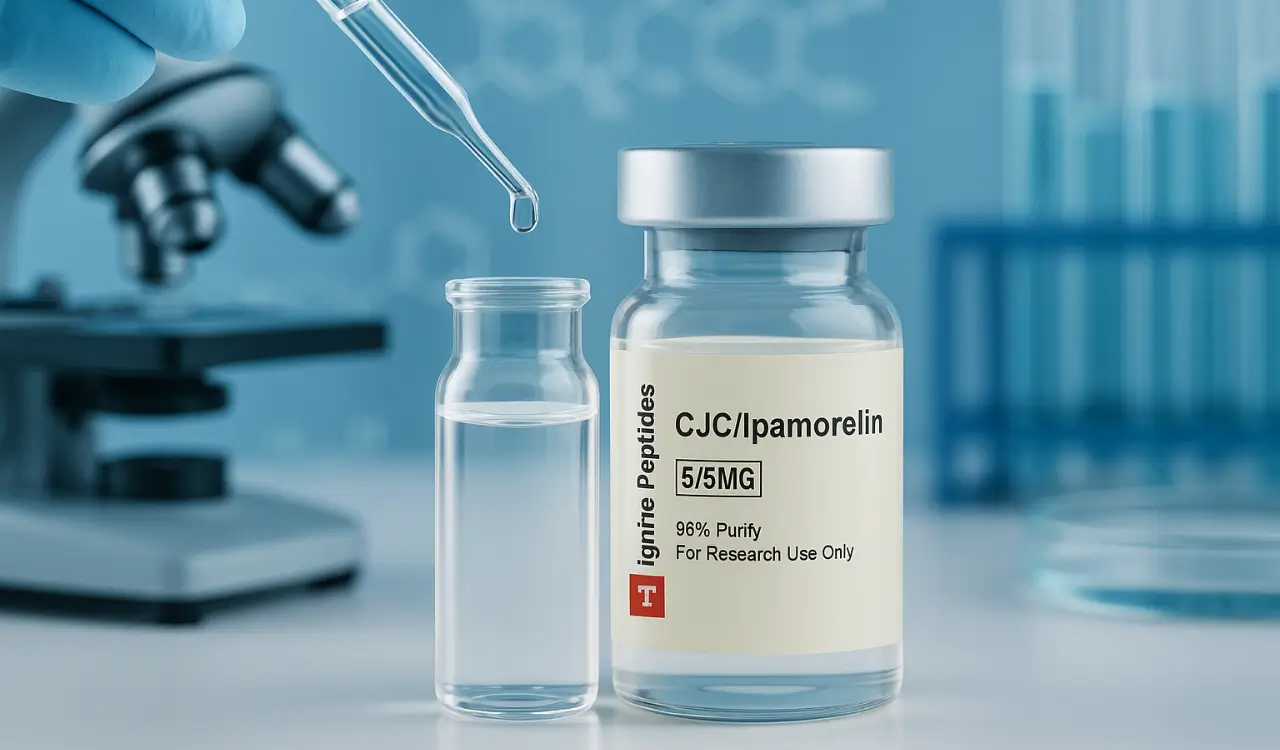
CJC-1295 and Ipamorelin are two of the most studied growth hormone secretagogues in peptide research. Researchers study them both separately and together.
This guide covers what the published science actually shows. It explains the mechanisms behind each peptide. It also reviews the key clinical findings. And it is honest about where the evidence currently ends.
You will find cited study data, a comparison of the two forms of CJC-1295, a full safety profile, and a breakdown of how these peptides work together in research settings.
CJC-1295 is a laboratory-made form of Growth Hormone-Releasing Hormone (GHRH). It stimulates the pituitary gland to produce and release growth hormone (GH).
It works by binding to GHRH receptors on the anterior pituitary. This triggers longer and stronger GH pulses compared to natural GHRH.
The standard version of CJC-1295 includes a modification known as the Drug Affinity Complex (DAC). This causes the peptide to bind to serum albumin in the blood. That binding protects it from being broken down quickly.
Because of the DAC modification, CJC-1295 has a long half-life of about 5.8–8.1 days. This was confirmed in two human clinical trials by Teichman et al. in 2006.
A single injection of CJC-1295 raised mean GH levels 2 to 10 times for 6 or more days. IGF-1 levels rose 1.5 to 3 times and stayed elevated for 9 to 11 days. These results came from two randomized, placebo-controlled, double-blind trials in healthy adults. (Teichman et al., 2006. PubMed ID: 16352683)
Ipamorelin is a short synthetic peptide. It belongs to a class called growth hormone secretagogues (GHS). It mimics ghrelin, a hormone that tells the pituitary gland to release GH.
It works by binding to the GHS-R1a receptor. This increases both the frequency and the size of GH pulses.
What sets Ipamorelin apart from older peptides in the same class is its selectivity. It raises GH without increasing cortisol, ACTH, prolactin, FSH, or LH. Older secretagogues like GHRP-6 raise stress hormones alongside GH. Ipamorelin does not.
This was confirmed in a 1998 pharmacology study by Raun et al. Even at doses 200 times the effective GH-stimulating amount, Ipamorelin did not trigger cortisol or ACTH release. (PubMed ID: 9849822)
Ipamorelin has an approximate half-life of two hours. A GH peak is typically observed around 40 minutes after administration in research settings.
Ipamorelin was the first GHRP-receptor agonist shown to exhibit selectivity comparable to that of GHRH itself. It stimulates GH release without activating stress-hormone pathways that limit the use of earlier secretagogues. (Raun et al., 1998.) PubMed ID: 9849822)
CJC-1295 and Ipamorelin function through different receptor pathways in the body. CJC-1295 targets GHRH receptors. Ipamorelin targets GHS-R1a receptors. Using both peptides simultaneously produces a stronger, more balanced GH response than either peptide alone.
CJC-1295 extends how long GH pulses last. Ipamorelin increases the strength of those pulses. Together, they produce a more complete and sustained GH secretion pattern.
This is why researchers studying GH signalling, metabolism, and recovery commonly pair these two peptides in their protocols.
There are two versions of CJC-1295. Understanding the difference is important for any researcher working with this peptide.
The first version includes DAC, which stands for Drug Affinity Complex. DAC adds a maleimidopropionic acid group to the peptide. This group binds covalently to serum albumin upon entering the bloodstream. That binding dramatically slows the clearance of CJC-1295 from the body.
The second version lacks a DAC. It is sometimes called Mod GRF 1-29. When DAC is not included, the peptide typically stays active for about 30 minutes. The body clears it quickly, which creates a short, sharp GH pulse rather than a sustained elevation.
Most research protocols that combine CJC-1295 with Ipamorelin use the no-DAC version. The reason is that pulsatile GH release more closely mimics the body’s natural GH rhythm. Sustained, constant GH elevation can reduce the sensitivity of GH receptors over time.
| Feature | CJC-1295 With DAC | CJC-1295 Without DAC (Mod GRF 1-29) |
| Half-life | 5.8 to 8.1 days (confirmed in human trials) | Around 30 minutes |
| Dosing frequency | Once weekly or every two weeks | Multiple times daily |
| GH elevation pattern | Sustained baseline elevation | Pulsatile, mimics natural rhythm |
| Use with Ipamorelin | Pharmacokinetic and long-duration studies | Pulsatile GH secretion protocols |
| WADA status | Prohibited – Section S2 | Prohibited – Section S2 |
Most Ipamorelin combination research uses CJC-1295 without DAC (Mod GRF 1-29) to preserve the pulsatile GH pattern that mimics natural secretion. The with-DAC version is more commonly used in pharmacokinetic research that requires sustained GH elevation over days.
Each benefit below follows the same structure. First, the biological mechanism is explained. Then, the relevant evidence from the study is cited. Finally, any honest limitations in the research are noted.
The strongest evidence concerns elevated GH and IGF-1. All other benefits are mechanistically supported by the broader GH science but have not been confirmed in direct CJC-1295 and Ipamorelin combination trials in healthy adults.
This is the area with the clearest human clinical evidence. CJC-1295 and Ipamorelin both act directly on the pituitary gland to raise GH output. That GH signal then tells the liver to produce IGF-1, which drives most of the downstream effects researchers are studying.
In two randomized, double-blind, placebo-controlled trials, Teichman and colleagues measured GH and IGF-1 levels after a single subcutaneous injection of CJC-1295 in healthy adults aged 21 to 61.
The results were as follows:
A second study by Ionescu and Frohman in 2006 added an important finding. Using overnight GH sampling, they confirmed that GH pulsatility was preserved even while mean GH levels were elevated by CJC-1295. This means the natural rhythm of GH release was not disrupted. (PubMed ID: 17018654)
Elevation of GH and IGF-1 is the directly confirmed mechanism for this peptide combination. The downstream effects described below are biologically plausible based on what GH and IGF-1 do in the body. Direct combination trials specifically studying those outcomes in healthy adults are still limited in the published literature.
GH and IGF-1 are both central to muscle protein synthesis. When GH rises, the liver produces more IGF-1. IGF-1 then signals muscle cells to take up amino acids and build new proteins. It also supports satellite cell activity, which helps repair muscle tissue after stress.
A 2006 study using a mouse model showed that daily CJC-1295 normalized lean body mass and bone growth in animals that naturally lacked GHRH. (Alba et al., 2006.) PubMed ID: 16822960)
The broader GH literature in humans shows that raising GH levels in older adults and in GH-deficient individuals supports gains in lean mass and faster recovery from physical stress.
However, published randomized controlled trials specifically showing superior muscle gain or strength from the CJC-1295 and Ipamorelin combination in healthy, trained adults do not currently exist. Researchers studying this area should note that distinction. For a broader look at how peptides support muscle repair and recovery, see our guide on the best peptides for muscle recovery.
GH has a direct role in lipolysis, which is the breakdown of stored fat. It activates hormone-sensitive lipase inside fat cells. This triggers the release of fatty acids into the bloodstream to be used as fuel.
At the same time, IGF-1 helps preserve lean muscle tissue while the body is in a fat-burning state. This combination of fat breakdown and muscle preservation is why GH-related peptides attract attention in metabolic research.
Studies in GH-deficient adults who received GH replacement therapy showed meaningful reductions in body fat and increases in lean mass compared to placebo. These effects were clearly linked to the rise in GH and IGF-1 levels.
That said, those findings come from GH-deficient populations or full GH replacement therapy. They have not been replicated in direct CJC-1295 and Ipamorelin combination trials in healthy individuals. Researchers should interpret metabolic claims with this in mind. For a wider look at how peptides are used in fat loss research, see our guide on the best peptides for fat loss.
GHRH and its analogues are closely linked to slow-wave sleep, the deepest and most restorative stage of the sleep cycle. Research since the 1990s (1) has consistently shown that GHRH activity drives the initiation and maintenance of slow-wave sleep.
The largest natural GH pulse of the day occurs during the first slow-wave sleep episode of each night. CJC-1295, as a GHRH analogue, supports the same biological pathway that governs this process.
This makes sleep quality one of the more biologically supported secondary benefits associated with GHRH analogue use. Researchers studying sleep architecture and recovery often include nighttime administration in their protocols for this reason.
Direct human evidence on sleep outcomes from the CJC-1295 and Ipamorelin combination remains limited in the published literature.
IGF-1 is a key driver of osteoblast activity. Osteoblasts are the cells that build new bone. Higher IGF-1 levels are consistently associated with better bone mineral density in human studies.
Ipamorelin has specific evidence here. In a 1999 study, Johansen and colleagues administered Ipamorelin to adult female rats for 15 days. They found a dose-dependent increase in the longitudinal bone growth rate, rising from 42 to 52 micrometres per day depending on dose. Body weight also increased in a dose-dependent pattern. (PubMed ID: 10373343)
The broader GH literature in adults with GH deficiency shows that GH replacement therapy improves bone density over months to years of treatment. Human combination trial data for CJC-1295 and ipamorelin are not yet available.
GH and IGF-1 receptors are found on immune cells. Both hormones support the production and function of white blood cells. GH therapy in GH-deficient adults has been linked to improvements in immune markers.
This benefit has the weakest direct evidence for the CJC-1295 and Ipamorelin combination. The supporting data comes almost entirely from the broader GH biology literature. Researchers studying immune outcomes would need purpose-designed trials to draw firm conclusions.
GH replacement therapy in GH-deficient adults has been associated with improved quality of life, better mental clarity, and faster processing speed. These improvements are thought to be driven partly by GH’s effects on brain metabolism and partly by the sleep improvement that follows GH normalization.
Evidence for cognitive benefits in healthy, non-GH-deficient adults using secretagogues is much weaker. This is an area where more targeted research is needed before meaningful conclusions can be drawn.
Being honest about the limits of evidence is part of responsible science. Here is what the current published literature does not yet support for this peptide combination.
There are no published, peer-reviewed randomized controlled trials demonstrating muscle gain, fat loss, or strength improvements specifically from the CJC-1295 and Ipamorelin combination in healthy, trained adults. The mechanistic evidence is strong. The hard outcome data for this population are not yet available.
GH levels naturally decline with age. That much is well established. But raising GH through secretagogues has not been shown to reverse or slow the biological ageing process in controlled human trials. Anti-ageing claims require stronger evidence than currently exists.
Most of the compelling body composition results in the literature come from GH-deficient adults or older populations receiving full GH replacement therapy. Those findings do not automatically translate to healthy individuals using secretagogues at lower stimulation levels.
Controlled trials have studied short- to medium-dosing periods. Long-term safety data for extended secretagogue use in humans are not available in the published literature.
This is why CJC-1295 and Ipamorelin remain classified as research compounds. Ongoing controlled research will clarify the full scope of what these peptides can and cannot do.
The table below lists the primary published research referenced in this article. Each row is a self-contained summary of the study design and key findings.
| Study | Peptide | Design | Key Finding |
| Teichman et al., 2006 (J Clin Endocrinol Metab) – PubMed ID: 16352683 | CJC-1295 | 2 randomized, double-blind, placebo-controlled trials in healthy adults | GH increased 2 to 10 times for 6+ days. IGF-1 rose 1.5 to 3 times for 9 to 11 days. No serious side effects reported. |
| Ionescu and Frohman, 2006 (J Clin Endocrinol Metab) – PubMed ID: 17018654 | CJC-1295 | Single injection with overnight GH sampling | GH pulsatility was preserved while mean GH rose. Half-life confirmed at 5.8-8.1 days. |
| Alba et al., 2006 (Am J Physiol Endocrinol Metab) – PubMed ID: 16822960 | CJC-1295 | GHRH knockout mice, daily dosing for 5 weeks | Normalized body weight, lean mass, and bone length compared to placebo. |
| Raun et al., 1998 (Eur J Endocrinol) – PubMed ID: 9849822 | Ipamorelin | In vivo rat and swine pharmacology study | Ipamorelin raised GH without increasing ACTH, cortisol, prolactin, FSH, or LH. First GHRP with GHRH-like selectivity. |
| Johansen et al., 1999 (Growth Horm IGF Res) – PubMed ID: 10373343 | Ipamorelin | Subcutaneous dosing in adult female rats for 15 days | Dose-dependent increase in bone growth rate (42 to 52 mcm per day) and body weight gain. |
| Zdravkovic et al., 2000 (Int J Colorectal Dis) | Ipamorelin | Double-blind, placebo-controlled clinical trial after bowel surgery | Well-tolerated. Accelerated recovery of gut motility compared to placebo. |
All PubMed IDs above can be verified at pubmed.ncbi.nlm.nih.gov. Searching by PubMed ID returns the full abstract and, in many cases, the complete study.
CJC-1295 was described as safe and relatively well-tolerated in the Teichman 2006 trials. Doses of 30 to 60 mcg/kg were administered subcutaneously. No serious adverse reactions were reported across two controlled human trials.
The most commonly observed effects in research were:
These effects were dose-dependent and short-lived.
Ipamorelin has a particularly clean safety profile compared to older secretagogues. As confirmed by Raun et al. in 1998, it does not raise ACTH, cortisol, prolactin, FSH, or LH. This makes it one of the most selective GH-stimulating compounds studied to date.
In a separate clinical trial by Zdravkovic and colleagues, Ipamorelin was well-tolerated in patients recovering from bowel surgery. The trial was double-blind and placebo-controlled.
Researchers and study designers should be aware of the following considerations drawn from the GH and IGF-1 literature:
The following information describes dosing ranges and administration approaches observed in published clinical research and scientific literature. This is not individual dosing advice. These figures reflect study design choices made by researchers in controlled settings.
The Teichman 2006 trials used single ascending doses of 30, 60, 90, and 125 mcg/kg administered subcutaneously. The multiple-dose study used weekly and biweekly injection schedules across observation periods of 28 to 49 days.
The confirmed half-life of 5.8 to 8.1 days makes weekly administration the natural choice for research designs using the DAC version.
Scientific and clinical literature commonly references doses of 100 to 300 mcg of each peptide per administration for combined protocols.
Research timing frequently uses pre-sleep administration windows. The rationale is that the largest natural GH pulse occurs during the first slow-wave sleep episode. Aligning peptide administration with this window is intended to study amplification of the natural GH rhythm.
Common research cycle durations cited in the literature range from 8 to 12 weeks. Observations at different time points within these cycles are used to track cumulative effects on GH, IGF-1, body composition, and recovery markers.
Accurate preparation is important for consistent research outcomes. Use the free Peptide Calculator to calculate precise reconstitution volumes for CJC-1295 and Ipamorelin. Use the Bacteriostatic Water Calculator to determine the correct diluent volume for your vial concentration. Both tools are designed for research settings and help prevent manual calculation errors that can compromise experimental consistency.
The answers below are written to be direct and factual. Each one is a complete, self-contained response based on published research or established regulatory information.
CJC-1295 with DAC binds to serum albumin. This extends its half-life to about 5.8-8.1 days. It supports once-weekly dosing in research. CJC-1295 without DAC, also called Mod GRF 1-29, has a half-life of around 30 minutes. It is used in pulsatile protocols. Most research on the combination of ipamorelin uses the non-DAC version.
Ipamorelin raises GH without increasing cortisol, ACTH, or prolactin. This remains the case even at high doses. GHRP-6, by contrast, significantly raises ACTH and cortisol. Ipamorelin was the first GHRP-receptor agonist with selectivity comparable to that of GHRH itself.
In two randomized, placebo-controlled, double-blind trials, a single dose of CJC-1295 raised mean GH levels 2 to 10 times for 6 or more days. IGF-1 levels rose 1.5 to 3 times for 9 to 11 days. Multiple doses produced cumulative elevations lasting up to 28 days (Teichman et al., 2006).
No. Neither peptide is FDA-approved for any medical use. Both are classified as research compounds only. Compounded versions of CJC-1295 have been subject to FDA scrutiny. Both are also prohibited under WADA anti-doping rules for competitive athletes.
No direct testosterone-stimulating mechanism has been found for either peptide. Both act on the GH-IGF-1 pathway, not the testosterone axis. Any indirect effect would be secondary to better sleep or improved metabolism. This has not been confirmed in clinical research.
No. CJC-1295 is listed under WADA Section S2 as a prohibited substance. Ipamorelin, as a GH secretagogue, is similarly prohibited. Athletes subject to anti-doping testing must not use either compound.
CJC-1295 and Ipamorelin are among the most studied peptide combinations for metabolic research. Together, they raise GH and IGF-1 levels. This supports lipolysis and lean mass preservation in research models. Results in healthy, non-GH-deficient adults have not been confirmed in direct combination trials.
CJC-1295 extends the duration of GH pulses. Ipamorelin increases the amplitude and frequency of GH pulses. They act on two different receptor pathways. Together, they produce a more sustained and amplified GH release pattern than either peptide alone.
Higher GH and IGF-1 levels support collagen production and cell repair. These are linked to better skin tone, faster recovery, and improved sleep in the broader GH literature. Direct anti-ageing evidence from human combination trials of CJC-1295 and Ipamorelin is currently limited.
Research reports mild, transient side effects. These include redness at the injection site, slight water retention, and fatigue. Ipamorelin does not raise cortisol or stress hormones, making it one of the better-tolerated GH secretagogues studied to date. All observations are from research settings only.
CJC-1295 and Ipamorelin are among the most studied GH secretagogues in peptide research. The strongest direct evidence supports their ability to raise GH and IGF-1 levels in a sustained, controlled manner.
Secondary effects on muscle, fat metabolism, sleep, bone density, and recovery are grounded in solid GH biology. Direct combination trial data in healthy adults are still being developed.
What makes this peptide combination particularly useful for research is the complementary nature of the two peptides’ actions. CJC-1295 sustains GH pulse duration. Ipamorelin amplifies GH pulse strength. Together, they produce a GH secretion pattern that is broader and more complete than either peptide creates alone.
Ipamorelin’s clean hormonal profile, confirmed across multiple studies, makes it a practical tool for research designs that require GH stimulation without interference from cortisol or other stress hormones.
As more controlled trials are conducted, the full picture of what CJC-1295 and Ipamorelin can do in research settings will become clearer. The evidence base is solid and growing.
Researchers working with this peptide combination can use our free Peptide Calculator and Bacteriostatic Water Calculator to ensure precise reconstitution for every experiment. For researchers sourcing CJC-1295 Ipamorelin for study, our CJC-1295 Ipamorelin blend is independently tested to over 99% purity by GMP- and ISO 9001:2015-certified manufacturers.
Every peptide vial in a research laboratory is labelled in
The most common peptide mixing mistakes are reported in research
Knowing how to store reconstituted peptides correctly is critical for
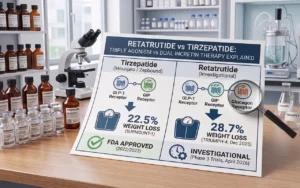
Retatrutide is a triple hormone receptor agonist. It works by

At Ignite Peptides, we provide a secure and reliable way to source high-quality research peptides online. As a trusted U.S.-based peptide supplier, we focus on lab-verified products, full transparency, and consistent quality. With fast shipping and responsive support, we’re committed to advancing safe, dependable research you can trust.
This helps us maintain strict standards for regulatory compliance, researcher verification, and responsible product access.
 Sign In to Google