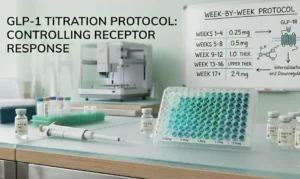
GLP-1 Titration Schedule Week-by-Week Research Dosing Protocol for GLP-1(S)
Introduction Designing a precise GLP-1 titration schedule is one of


If you train hard, you know recovery matters. Sore muscles. Slow healing. These things hold you back. That’s where peptides come in. Peptides are tiny proteins. But they can do big things. Some things help your muscles heal faster. A few are linked to calming pain and rebuilding injured areas.
Athletes and bodybuilders are starting to use them. So are people who just want to recover better after a workout.
This guide covers the top peptides that help muscles heal. We’ll also look at what the science says, what works, and what’s just hype.
These small molecules may play a role in muscle repair. These chains work like messengers. They tell your body to start fixing damage and building new muscle.
Tough workouts or injuries can cause small damage to muscle fibers. Peptides help repair these tears. They may boost circulation, calm swelling, and help build new muscle.
Hard training breaks down muscle fibers. This is part of how your body builds strength. This is normal. It’s how your body gets stronger. Muscles only grow after they’ve had time to recover.
Peptides can speed up that healing.
They send signals to your cells. These signals tell your body to start fixing the damaged tissue. Some peptides also boost blood flow. Others support the body’s production of healing compounds like collagen.
The result?
Peptides don’t just help after injuries. They also support day-to-day recovery from intense workouts. That’s why many athletes and researchers are taking a closer look at them.
In the next section, we’ll look at some of the most popular peptides used for muscle recovery, starting with BPC-157.

Now let’s look at some popular peptides for muscle recovery. These are the ones most athletes and researchers talk about.
BPC-157 has gained attention for its possible role in injury recovery. It stands for Body Protection Compound 157. It’s made in labs and based on a protein from the gut.
Early studies suggest it might support the body’s natural healing process.
Animal studies show strong results. BPC-157 helped speed up healing in torn muscles, crushed nerves, and damaged tendons. It also showed promise for gut and brain injuries.
Human studies are still limited. But many researchers and athletes are interested in its effects on recovery and injury repair.
Important: BPC-157 is only approved for lab research. It’s not cleared for use in humans. Always follow laws and safety guidelines.
TB-500 is a synthetic version of Thymosin Beta-4. This protein is naturally produced in the body. Researchers are studying TB-500 for its role in healing and physical recovery.
TB-500 may boost the production of action. Actin helps your cells move and create fresh tissue during healing. This may aid recovery.
Many users stack TB-500 with BPC-157. This combination is often used to support joint recovery and mobility.
Animal studies report faster healing and less inflammation. Studies on humans are still new and not yet conclusive.
IGF-1 LR3 is a lab-made version of a natural growth factor your body already produces. It plays a key role in muscle growth, repair, and recovery after tough workouts.
IGF-1 stands for Insulin-like Growth Factor 1. It helps cells grow, divide, and repair. The LR3 form stays active in the body longer, which may enhance its effects. Scientists are looking at how it may support muscle repair.
Some researchers pair IGF-1 LR3 with peptides like CJC-1295, Ipamorelin, or BPC-157. These combinations may support faster recovery, better muscle response, and overall performance.
Some studies show it may support tissue repair and lean mass gains. It may help the body respond better to training. But like many peptides, research in humans is limited, and long-term effects aren’t fully known.
CJC-1295 and Ipamorelin are lab-made peptides often used as a pair for recovery. They help the body release more growth hormone, which may support recovery and muscle repair.
CJC-1295 boosts growth hormone levels slowly over time. Ipamorelin gives a quick pulse of growth hormone without raising stress hormones like cortisol. Together, they may speed up healing and support better recovery.
Often used with BPC-157 or TB-500. This stack is popular for healing, muscle support, and better energy. For a deeper look at how certain peptides support vitality, check out our article on peptides for energy
Animal studies and small trials suggest positive results. But large human studies are still limited.
Peptides work at different speeds. It depends on the type, the dose, and your health. Some people feel results fast. Others need more time.
Peptides can support recovery, but safety depends on how they’re used. The FDA hasn’t approved many peptides for human use. That means there are still unknowns, especially with long-term use.
Reactions are often light but can change from one person to another.
Understanding exactly why unregulated sources are dangerous is just as important as knowing which sources to trust. The risks of using unapproved peptides guide explains what can go wrong with contaminated or mislabelled products.
Peptides are changing how athletes and fitness lovers recover. From faster healing to less soreness, they offer exciting benefits. But they’re not magic. Results depend on the peptide, your body, and how you use it.
If your goal goes beyond recovery and you also want to boost stamina, our guide on peptides for energy may be helpful.
Research is still early. Some peptides are still banned for regular use. Always stay safe. Start low, go slow, and talk to a healthcare provider before you begin.
Some peptides show promise in early studies. BPC-157 and TB-500, for example, may help speed up healing in muscles and tendons. But most human research is still limited.
Many peptides are not FDA-approved. That means long-term safety is still unknown. Side effects like redness, swelling, or tiredness can happen too.
It depends on your goal. Peptides focus on healing and recovery. SARMs are more about muscle growth. Peptides are often seen as gentler, but both need more long-term research.
Both support healing, but in different ways. BPC-157 may help with gut, tendon, and soft tissue repair. TB-500 is often used for joint issues and flexibility. Many people stack both for better results.
BPC-157 is one of the most popular for healing. It’s been studied for the repair of muscle, tendon, and nerve tissue. TB-500 and IGF-1 LR3 also show good potential.
Peptides may support healing without the harsh side effects of steroids. They don’t carry the same risks for hormone imbalance or liver damage. But results can be slower.
Many users report relief in 3 to 7 days. But results vary based on injury type, dose, and how your body responds.
TB-500 is often used alongside or instead of BPC-157. Other options include CJC-1295 with Ipamorelin, or natural recovery tools such as physical therapy and anti-inflammatory foods.
BPC-157 does not work right away. Most people start feeling results in a few days. Healing improves slowly over time.
BPC-157 stays in the body for about 4–6 hours. Its healing effects can last longer.
BPC-157 helps heal muscles, tendons, ligaments, the stomach, and the intestines. It may also protect the liver and other organs.
BPC-157 helps muscles recover and repair. A stronger recovery can help muscles grow over time.
Yes, you can inject BPC-157 into the muscle or under the skin near the injury. Follow safe use instructions.
Introduction Designing a precise GLP-1 titration schedule is one of
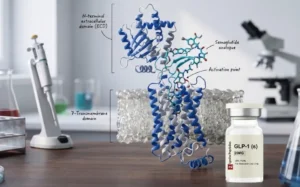
Introduction Research on the GLP-1 mechanism is one of the
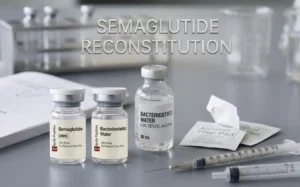
Semaglutide is one of the most studied peptides in modern
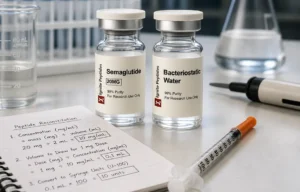
Every peptide vial in a research laboratory is labelled in
 Sign In to Google