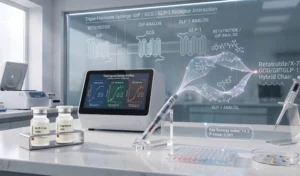
CagriSema Research: Combining Cagrilintide and Semaglutide Dosing
CagriSema is Novo Nordisk’s investigational fixed-dose combination of cagrilintide 2.4

| Medical Disclaimer: This article is for informational and research purposes only. The FDA does not approve the human therapeutic use of KPV (Lys-Pro-Val) because it qualifies as a research peptide. Always consult a licensed healthcare provider before using any peptide therapy. |
If you follow peptide research, you have probably come across KPV. It is a naturally occurring tripeptide of three amino acids bonded together: lysine (K), proline (P), and valine (V). That is exactly where the name comes from.
KPV Peptide is not synthetic in the traditional sense. Your body already produces it. It sits at the C-terminus of alpha-melanocyte-stimulating hormone (α-MSH), a peptide your pituitary gland releases as part of the melanocortin system. Researchers isolate KPV specifically because it retains the powerful anti-inflammatory properties of α-MSH but without triggering melanin production or skin pigmentation changes.
In practical terms, that means you get the inflammation-fighting benefits without the side effects associated with the full parent molecule. That distinction matters enormously when you are researching targeted interventions for gut health, autoimmune activity, or inflammatory skin conditions.
| Quick Answer: What Is KPV? KPV is a tripeptide made from three amino acids: lysine, proline, and valine. It is derived from alpha-Melanocyte Stimulating Hormone (α-MSH). It is an endogenous anti-inflammatory molecule that inhibits the NF-κB signaling pathway, suppresses pro-inflammatory cytokines (TNF-α, IL-1β, IL-6), and is uniquely absorbed through the gut via the PepT1 transporter, giving it strong oral bioavailability compared to most peptides. |
Alpha-MSH is a 13-amino acid peptide. It does a lot, including stimulating melanocytes, which produce pigment in your skin and hair. That makes full α-MSH a poor clinical candidate for chronic anti-inflammatory therapy.
KPV is positioned 11-13 of α-MSH. It carries the anti-inflammatory signaling but leaves the pigmentation-stimulating portion behind. Research by Catania et al., published in the Annals of the New York Academy of Sciences, confirmed that the KPV fragment retains NF-κB-inhibiting and antimicrobial properties comparable to those of the full peptide, making it a cleaner and more targeted research tool.
| Property | Alpha-MSH (Full) | KPV Peptide |
| Amino acid length | 13 amino acids | 3 amino acids (tripeptide) |
| Anti-inflammatory effect | Strong | Strong (comparable) |
| Melanin/pigmentation effect | Yes, stimulates melanocytes | None |
| Oral bioavailability | Poor | Good, via PepT1 transporter |
| NF-κB inhibition | Yes | Yes |
| Antimicrobial activity | Yes | Yes |
| Research complexity | Higher | Lower, more targeted |

Understanding the mechanism is what separates biohackers from supplement shoppers. KPV does not work through a single pathway. It has at least 4 identified mechanisms of action that work together to produce its anti-inflammatory and gut-healing effects.
NF-κB (nuclear factor kappa B) is the master switch for inflammation. When your body detects a threat, such as a pathogen, tissue damage, or oxidative stress, NF-κB activates. It triggers the production of pro-inflammatory cytokines, such as tumor necrosis factor alpha (TNF-α), interleukin-1 beta (IL-1β), and interleukin-6 (IL-6). In acute situations, that is exactly what you want.
The problem is chronic NF-κB activation. In conditions such as IBD, psoriasis, or systemic autoimmune disease, NF-κB remains activated when it should not. That is where KPV comes in. It directly inhibits NF-κB activation, dialing down cytokine production without shutting down the immune system entirely.
This is a critical distinction. Corticosteroids, the standard clinical tool for reducing inflammation, broadly suppress the immune system. KPV Peptide modulates it selectively. That means you can reduce damaging inflammation without increasing your vulnerability to infection.
KPV exerts some of its effects by interacting with melanocortin receptors, particularly MC1R and MC3R. These receptors are expressed on immune cells, gut epithelial cells, and skin cells. When KPV binds to them, it triggers downstream signaling cascades that further suppress inflammatory responses.
Importantly, research from Kannengiesser et al. (2008) in Inflammatory Bowel Diseases found that KPV retains significant anti-inflammatory effects even in mice with a non-functional MC1R receptor. That suggests KPV’s mechanism is not entirely receptor-dependent; its inhibition of the NF-κB pathway operates independently, broadening its therapeutic potential.
Most peptides are notoriously difficult to deliver orally. The gut breaks them down before they can reach the target tissue. KPV is an exception, and the reason is the PepT1 transporter.
PepT1 (peptide transporter 1) is a carrier protein expressed on intestinal epithelial cells. It normally transports dietary di- and tri-peptides across the gut wall. KPV’s structure allows it to be recognized and actively transported by PepT1, meaning it gets absorbed through the very cells that are inflamed in conditions like ulcerative colitis (UC) and Crohn’s disease.
Research published in ACS Applied Materials and Interfaces (Zeng et al., 2017) confirmed that PepT1 is overexpressed in colonic epithelial cells of patients with chronic ulcerative colitis, indicating that KPV has enhanced absorption precisely where inflammation is most severe. That is a remarkable pharmacological advantage.
A secondary but meaningful mechanism involves the mitogen-activated protein kinase (MAPK) signaling cascade. MAPK pathways regulate cellular responses to stress, inflammation, and cytokine signals. KPV has been shown to inhibit MAPK activation in intestinal cells, adding another layer of anti-inflammatory control, particularly relevant in the context of colitis pathogenesis, where MAPK signaling plays a recognized role.
The research base for KPV is concentrated but growing. Here is what peer-reviewed studies actually support, separated from speculation and extrapolation.
This is KPV’s strongest evidence base. The gut lining, particularly the mucosal barrier, is the first line of defense against everything that enters your digestive system. When tight junctions between intestinal epithelial cells break down, bacteria, undigested food particles, and inflammatory compounds leak into the intestinal lumen. The result is increased intestinal permeability, commonly called leaky gut.
In a landmark 2017 study in Molecular Therapy, Xiao et al. loaded KPV into hyaluronic acid-functionalized nanoparticles and administered them orally to mouse models of colitis. The results were striking: KPV accelerated mucosal healing, reduced inflammatory infiltrates, and significantly downregulated TNF-α levels. The combined effects on both tissue repair and inflammation reduction made KPV-loaded nanoparticles significantly more effective than standard interventions in the model.
For those dealing with IBD, leaky gut syndrome, or post-antibiotic gut damage, KPV’s dual action, repairing the barrier while calming the inflammatory cascade, is what makes it particularly interesting.
The Kannengiesser et al. 2008 study in Inflammatory Bowel Diseases tested KPV in two distinct IBD animal models: dextran sulfate sodium (DSS)-induced colitis and CD45RBhi transfer colitis. In both models, KPV treatment led to earlier recovery, significant body weight regain (a key marker of disease severity), and reduced histologically confirmed inflammatory infiltrates.
Perhaps most significantly, in mice with a non-functional MC1R, KPV treatment rescued all animals in the treatment group from death during DSS colitis. This survival data underscores the potency of KPV’s inflammation modulation and suggests mechanisms beyond simple receptor binding.
For biohackers with a family history of IBD or those managing sub-clinical gut inflammation, KPV represents one of the most targeted research peptides available for this specific application.
While gut healing is the primary focus of KPV Peptide research, its NF-κB inhibition operates systemically. Chronic low-grade inflammation, now recognized as a driver of metabolic disease, cardiovascular risk, neurodegeneration, and accelerated aging, is mediated heavily by the same cytokines KPV suppresses.
TNF-α, IL-1β, and IL-6 are the same markers elevated in metabolic syndrome, obesity-driven inflammation, autoimmune flares, and post-viral inflammation. While direct human clinical data for systemic use is limited, the mechanistic case for KPV as part of a broader anti-inflammatory stack is strong, particularly when used alongside protocols targeting root-cause inflammation drivers.
KPV’s anti-inflammatory action extends to skin-resident immune cells and keratinocytes. Conditions such as eczema, psoriasis, and contact dermatitis involve NF-κB-driven inflammatory cascades in skin tissue. Because KPV does not activate melanocortin pathways associated with pigmentation, it can be used topically without the tanning effect associated with full α-MSH peptides like Melanotan.
Topical KPV formulations are being explored for their potential to reduce markers of inflammatory dermatitis. The same MC1R and MC3R receptors that mediate gut anti-inflammatory effects are expressed in skin immune cells, suggesting a parallel mechanism for dermatological applications.
An often-overlooked dimension of KPV is its antimicrobial activity. Research by Cutuli et al. (2000) in the Journal of Leukocyte Biology demonstrated that KPV inhibited Staphylococcus aureus colony formation and reduced viability and germ tube formation in Candida albicans at concentrations as low as the physiological (picomolar) range. Crucially, KPV did not impair neutrophil killing capacity. It enhanced its meaning; antimicrobial defense was preserved alongside anti-inflammatory modulation.
This matters in the context of gut healing. Dysbiosis, an imbalance in the gut microbiome, often involves opportunistic overgrowth of organisms such as Candida. A peptide that simultaneously reduces inflammatory damage and inhibits pathogenic organisms represents a meaningful synergy.
This distinction deserves its own dedicated point because it is frequently misunderstood. Immunosuppression, the approach taken by steroids, methotrexate, and biologics like infliximab, blunts immune activity across the board. That reduces inflammation, but it also increases infection susceptibility, impairs wound healing, and carries serious long-term risks.
KPV does not suppress your immune system. It modulates it. Specifically, it reduces pathological inflammatory signaling while preserving and in some contexts enhancing antimicrobial defense. For biohackers interested in managing inflammation without compromising immune surveillance, that is a fundamentally different risk-benefit calculus.

KPV does not exist in a vacuum. Serious researchers typically evaluate it alongside other well-studied peptides. Here is a direct comparison.
| Peptide | Primary Mechanism | Best Use Case | Gut Effect | Inflammation | Oral? |
| KPV | NF-κB inhibition, PepT1 uptake | IBD, leaky gut, skin inflammation | Direct, mucosal healing | Strong (targeted) | Yes, via PepT1 |
| BPC-157 | Angiogenesis, growth factor upregulation | Soft tissue repair, gut injury | Strong, ulcer healing | Moderate (indirect) | Yes |
| TB-500 | Actin regulation, angiogenesis | Injury recovery, tissue repair | Minimal | Moderate | No, injectable |
| α-MSH | Melanocortin receptors (full) | Broad anti-inflammatory | Moderate | Strong | Poor, degrades |
| LL-37 | Antimicrobial peptide | Immune defense, skin | Indirect | Dual (can increase) | No |
Among biohackers, the KPV and BPC-157 combination is gaining attention for its role in gut-healing protocols. The logic is sound: BPC-157 accelerates tissue repair by upregulating growth factors and promoting angiogenesis, thereby rebuilding damaged gut tissue. KPV simultaneously dials down the inflammatory environment that caused the damage. Together, they address both the fire and the cleanup.
There is no clinical trial data on this specific combination, but the mechanistic rationale is well-supported. Both peptides are orally bioavailable for gut-targeted delivery, simplifying administration.
The conventional treatment for gut inflammation and related conditions typically involves corticosteroids (such as prednisone) or NSAIDs (such as ibuprofen). Both create significant problems with chronic use. NSAIDs damage the gut lining directly, a painful irony for anyone using them for gut-related inflammatory conditions. Corticosteroids suppress immune function, impair bone density, alter cortisol physiology, and require careful tapering.
KPV avoids both problems. It targets the inflammatory cascade without compromising gut integrity or broadly suppressing immune function. That does not make it a replacement for clinical pharmacology in severe disease, but it does make it a compelling research tool for those exploring alternatives to long-term NSAID or steroid reliance.
Oral (capsule/tablet): The most practical route for gut-targeted applications. KPV’s PepT1 transporter affinity means oral delivery is genuinely effective for intestinal inflammation, an unusual advantage for a peptide. Best for IBD, leaky gut, and colitis protocols.
Subcutaneous injection: Delivers KPV systemically. Faster onset, useful for systemic anti-inflammatory applications or when gut absorption is compromised. Standard peptide injection protocol applies.
Topical cream/gel: Applied directly to affected skin areas for eczema, psoriasis, or dermatitis. Concentration varies by formulation. Avoids systemic exposure for skin-only applications.
Suppository: Experimental route for direct colonic delivery. Used in some compounding pharmacy protocols for ulcerative colitis, targeting the sigmoid colon and rectum. Limited published data.
| Route | Reported Range | Frequency | Best For |
| Oral capsule | 250–500 mcg | Once daily | IBD, leaky gut, colitis |
| Subcutaneous injection | 200–500 mcg | Once daily | Systemic inflammation |
| Topical cream | 0.005–0.1% concentration | Twice daily | Eczema, psoriasis, dermatitis |
| Suppository | 500 mcg–1 mg | Once daily | Distal colitis, rectal inflammation |
Acute inflammatory flare: 7–14 days. Reassess symptoms and inflammatory markers before extending.
Chronic gut conditions (IBD, leaky gut): 4–8 weeks minimum with physician oversight. Some protocols cycle, four weeks on, two weeks off.
Skin conditions: Pulsed protocols of two-week cycles with one-week breaks are commonly reported.
Systemic anti-inflammatory maintenance: Low-dose, long-cycle protocols under clinical supervision. No established standard yet.
For accurate KPV vial reconstitution in research settings, the KPV dosage calculator removes manual math errors by calculating exact syringe draw volumes instantly.
| Quick Answer: Is KPV Safe? In preclinical research, KPV shows an excellent tolerability profile. It does not cause immune suppression, hormonal disruption, or pigmentation changes. The most commonly reported adverse effects in practice are mild injection-site irritation (with subcutaneous use) and brief gastrointestinal adjustment during the first few days of oral use. |
This matters for proper risk assessment. Unlike many anti-inflammatory interventions:
While the preclinical safety profile is favorable, certain populations warrant caution:
It is important to be direct here. Long-term human clinical trial data for KPV do not yet exist. All available safety data comes from preclinical (animal) studies, where it has been consistently well-tolerated. Extrapolating from preclinical to human safety is standard in research peptide communities, but it is an extrapolation. Responsible use means working with a physician who can monitor inflammatory markers, organ function, and symptom response over time.
KPV is classified as a research peptide in the United States and most Western countries. It is not FDA-approved as a drug or dietary supplement. That classification means:
Compounding pharmacy (with prescription): The most legitimate route. A physician prescribes a compounding pharmacy, which prepares pharmaceutical-grade KPV Pein in the required form (oral capsule, injectable solution, topical cream). This requires a prescribing relationship with a licensed provider.
Telehealth peptide therapy platforms: A growing number of US-based telehealth services now offer peptide therapy consultations. Physicians on these platforms can evaluate your case and, where appropriate, prescribe compounded KPV.
Research suppliers: Labeled strictly for research use only. These suppliers serve legitimate laboratory and research contexts. Quality varies significantly.
KPV stands apart from most anti-inflammatory peptides for a specific reason: it combines genuine mechanistic specificity targeting NF-κB and cytokine production with practical oral delivery advantages that most peptides lack. For those dealing with gut inflammation, IBD, or skin-driven inflammatory conditions, that combination is hard to find elsewhere in the research peptide landscape.
The evidence base, while primarily preclinical, is credible. The 2008 IBD study by Kannengiesser et al. and the 2017 Molecular Therapy nanoparticle delivery work by Xiao et al. represent serious peer-reviewed research, not supplement marketing. The mechanistic grounding in NF-κB biology, PepT1 pharmacokinetics, and melanocortin receptor physiology holds up to scrutiny.
That said, the absence of long-term human clinical trial data is a real limitation. Responsible use means working with a physician, monitoring markers, and treating KPV as the research tool it is, not a finished pharmaceutical product.
For biohackers with a serious interest in gut health, inflammation management, and evidence-based peptide research, KPV deserves a place in your working knowledge. It is one of the more compelling research peptides available, and the science behind it is only getting stronger.
1. Catania A, et al. The neuropeptide alpha-MSH in host defense. Ann N Y Acad Sci. 2000;917:227-31. DOI: 10.1111/j.1749-6632.2000.tb05387.x
2. Cutuli M, et al. Antimicrobial effects of alpha-MSH peptides. J Leukoc Biol. 2000;67(2):233-9. DOI: 10.1002/jlb. 67.2.233
3. Kannengiesser K, et al. Melanocortin-derived tripeptide KPV has anti-inflammatory potential in murine models of inflammatory bowel disease. Inflamm Bowel Dis. 2008;14(3):324-31. DOI: 10.1002/ibd.20334
4. Xiao B, et al. Orally Targeted Delivery of Tripeptide KPV via Hyaluronic Acid-Functionalized Nanoparticles Efficiently Alleviates Ulcerative Colitis. Mol Ther. 2017;25(7):1628-1640. DOI: 10.1016/j.ymthe.2016.11.020
CagriSema is Novo Nordisk’s investigational fixed-dose combination of cagrilintide 2.4
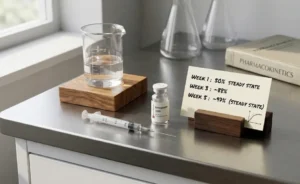
Semaglutide is one of the most studied GLP-1 receptor agonists
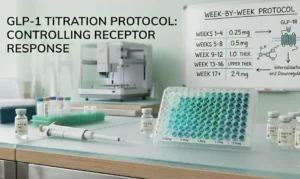
Introduction Designing a precise GLP-1 titration schedule is one of
Introduction Research on the GLP-1 mechanism is one of the
 Sign In to Google