
CagriSema Research: Combining Cagrilintide and Semaglutide Dosing
CagriSema is Novo Nordisk’s investigational fixed-dose combination of cagrilintide 2.4


Everyone wants healthy, radiant skin. Many skincare products like creams, serums, and vitamins promise a radiant glow. However, true skin health starts much deeper. It begins within the cells themselves. This is where the body manages repair, regeneration, and protection.
Peptides, short chains of amino acids, are being widely studied in scientific research for their role in cell signalling, tissue repair, and antioxidant defence. Peptides for skin are of particular interest because they work at the molecular level to guide the body’s natural repair and regeneration processes.
At Ignite Peptides, research-grade peptides are available to support studies in skin biology, cellular regeneration, and aging mechanisms. These products are tools for laboratory research and are not intended for direct cosmetic use. By studying peptides, scientists explore how collagen production, antioxidant defence, and tissue maintenance contribute to healthy skin.
Our skin is more than just the surface we see. Deep within, millions of cells work hard. They repair damage, produce vital proteins, and keep elasticity. Skin health depends on how well these cells function. Aging, stress from the environment, and lifestyle choices can impact cells. This can cause wrinkles, dryness, or dull skin. To grasp how peptides boost tissue regeneration and skin strength, it’s essential to understand skin cells.
In research settings, peptides for skin are examined as biological messengers that communicate with cells and influence key biological processes.
Peptides are short chains of amino acids that act as messengers for cells. In scientific research, they are studied for their ability to communicate with cells and influence biological processes. Peptides can:
Peptides work at the molecular level. This helps us see how skin stays firm, hydrated, and healthy as time goes on.
Research shows that peptides can:
This makes peptides an important tool in understanding how skin maintains a youthful appearance.

GHK-Cu (glycol-L-histidyl-L-lysine copper complex) is found naturally in the human body. It is well-studied for its role in skin and tissue repair.
Research indicates that GHK-Cu can:
Why it matters: Studies on GHK-Cu show how skin keeps its firmness, flexibility, and health. It’s not a cosmetic product, but it shows key processes that help keep skin radiant.

Epithalon is a peptide studied for its role in cellular aging and telomere maintenance. Telomeres are protective caps on chromosomes. They shorten over time. This leads to cell aging and slows down tissue regeneration.
Studies show that Epithalon can:
Why it matters: Healthy cells are essential for maintaining skin structure and repairing tissue. Research on Epithalon shows how cells can stay functional longer. This, in turn, helps studies on skin health.

GLOW70 is a research blend that includes peptides such as GHK-Cu.
Scientists use blends like this to study:
Why it matters: Multi-peptide blends show how combined signals impact cell behavior. They help us understand how different peptides work together to improve skin tissue and resilience.
Disclaimer: These products are meant strictly for laboratory research purposes. It is not intended for human, medical, veterinary, or household use. Researchers must handle these peptides with care. They should also follow all safety guidelines during experiments.
Beyond GHK-Cu, Epithalon, and GLOW70, several other peptides are being explored for their role in skin biology:
These peptides are mainly used in labs. They help study tissue resilience, cellular signaling, and repair mechanisms. They help us understand how various peptide types affect skin research.
A glowing complexion is often linked to cellular health. Key factors include:
Peptides can affect these factors by telling cells to make structural proteins. They help with repair and lower oxidative stress. While peptides in this context are used for research purposes, studying these mechanisms helps scientists better understand what supports natural skin radiance.
Traditional creams, serums, and vitamins mainly act on the skin’s surface. They can hydrate, exfoliate, or provide antioxidants, but they cannot influence cellular processes deeply.
Peptides, in contrast, are studied as biological messengers:
By using research-grade peptides, Ignite Peptides provides a way to explore skin health mechanisms scientifically, rather than offering cosmetic solutions.
Peptides for skin are gaining significant attention in skin science as researchers explore what happens beneath the skin’s surface. They help researchers learn about what occurs beneath the skin’s surface. Peptides don’t provide quick fixes. They help with cellular communication, repair, and protection.
Compounds like GHK-Cu, Epithalon, and multi-peptide blends can boost collagen production. They also enhance antioxidant defense and support tissue regeneration. These peptides are only for lab research. Yet, studying them helps us understand what makes skin healthy and glowing. Peptides are a key tool in scientific research. They help us explore skin health, aging, and cellular resilience in greater depth.
GHK-Cu is studied for collagen signaling, tissue repair, and antioxidant protection. Researchers explore how it affects skin regeneration, wound healing, and cellular repair pathways.
Epithalon is researched for cellular longevity and telomere maintenance. Laboratory studies indicate that it may support healthy cell division and reduce aging biomarkers, providing insights into skin regeneration.
GLOW70 is a multi-peptide blend. It enables scientists to study the combined effects of multiple peptides on cellular signaling and tissue repair, providing a broader perspective than single peptides.
No. All Ignite Peptides products are intended for laboratory and scientific research only. They are not approved for cosmetic, therapeutic, or clinical use.
Peptides allow scientists to explore fundamental mechanisms of tissue repair, aging, and regeneration, providing insights that could one day influence cosmetic and medical applications.
CagriSema is Novo Nordisk’s investigational fixed-dose combination of cagrilintide 2.4

Semaglutide is one of the most studied GLP-1 receptor agonists
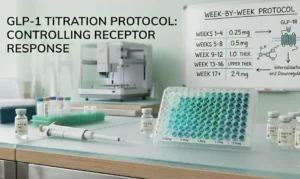
Introduction Designing a precise GLP-1 titration schedule is one of
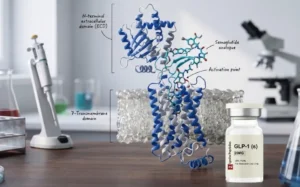
Introduction Research on the GLP-1 mechanism is one of the
 Sign In to Google