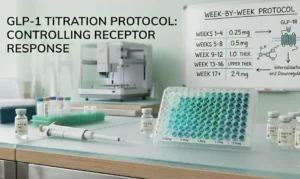
GLP-1 Titration Schedule Week-by-Week Research Dosing Protocol for GLP-1(S)
Introduction Designing a precise GLP-1 titration schedule is one of

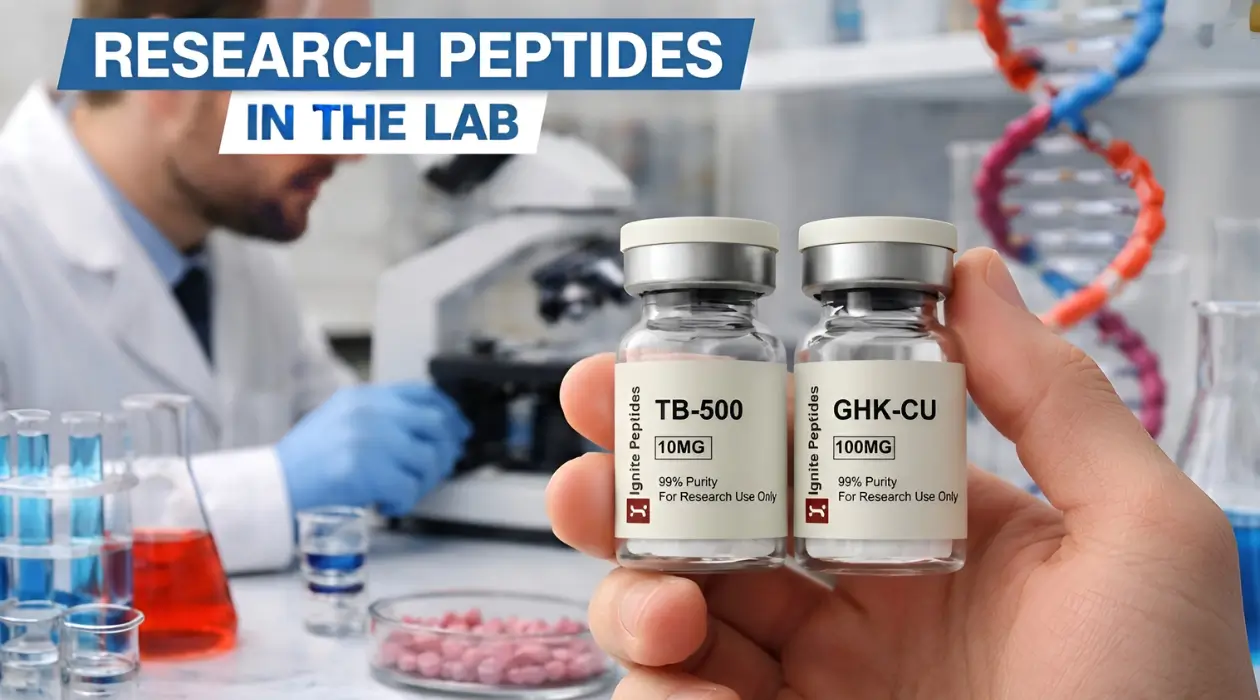
If you work in a lab, you’ve probably heard a lot about peptides lately. Research on these compounds has grown fast. Scientists are studying them for healing, hormones, ageing, and more.
Understanding how peptides are used in research helps you make better decisions in the lab. It also helps you pick the right compounds for your work.
But what exactly are research peptides? How are they made? So, what do current scientific studies show?
This guide answers all of that. It covers key compounds like BPC-157, TB-500, GHK-Cu, CJC-1295, and Ipamorelin. It also explains what to look for when you source lab-grade peptides.
Let’s start from the beginning.
Peptides are short chains of amino acids. They are smaller than proteins. In most cases, research peptides contain about 2 to 50 amino acids.
Your body already makes peptides naturally. They act as hormones, growth factors, and immune signals. They act as signals that guide how cells respond.
In labs, scientists make synthetic versions of these peptides. They use them to study how the body works. They can isolate one specific pathway and watch what happens. That level of control is hard to get with other tools.
This is the core reason why peptides are used in research. They let scientists zoom in on specific biological processes without interference from other variables.
Most research peptides are made using a process called solid-phase peptide synthesis, or SPPS.
Here’s how it works in simple terms. Scientists attach amino acids one by one to a solid support. Scientists attach each amino acid step by step in a specific sequence. Once the chain is complete, it is removed from the support. Then it gets purified.
Purification is performed using HPLC. This removes impurities from the final product.
Good research peptides should be over 99% pure. This is confirmed through a Certificate of Analysis (CoA). The CoA comes from independent third-party testing. If a supplier cannot show this document, it should raise concerns.
Labs certified under ISO 9001:2015 and GMP standards follow strict quality controls during manufacturing. These certifications matter. They reduce the risk of contaminated or low-quality compounds.
There are several reasons researchers prefer peptides over other tools.
They are specific. Peptides target particular receptors or enzymes. This helps produce clearer results that are easier for researchers to understand.
They are adjustable. Scientists can tweak a peptide’s structure. This changes how long it stays active in a model.
They have a good safety profile. In animal studies, most research peptides exhibit lower toxicity than synthetic small molecules.
They are affordable. Peptides cost less to produce than full proteins. This makes large-scale research more practical.
They give clear results. Short chains mean fewer variables. This makes it easier to understand what’s causing what.
These advantages explain why peptide research has grown so much. They also explain why so many labs today look specifically at how peptides are used in research settings. Searches for compounds like BPC-157, GHK-Cu, and TB-500 have risen sharply since 2024.
To understand how peptides are used in research today, it helps to look at specific compounds. Every peptide interacts with a different biological pathway in the body. Each one tells a different story about what science is trying to learn.
BPC-157 stands for Body Protection Compound-157. It is a 15-amino acid peptide. It comes from a protein found in human gastric juice.
It is one of the most researched peptides in the world right now.
A 2025 review in the HSS Journal (Vasireddi et al., PMID: 40756949) found 544 published articles on BPC-157. That covers research from 1993 to 2024. In 2025 alone, over 180 new studies were indexed on PubMed. That’s four times more than just five years ago.
BPC-157 appears to support tissue repair across several models. Studies have looked at muscle injuries, tendon tears, ligament damage, and bone fractures. Results in preclinical models have been consistent.
Here’s how researchers think it works:
It promotes blood vessel growth. BPC-157 activates a receptor called VEGFR2. This kicks off a signalling chain that helps new blood vessels form. New vessels bring blood and oxygen to damaged tissue. That matters a lot in healing.
It boosts growth hormone sensitivity. Studies show BPC-157 increases growth hormone receptor expression in tendon cells. This may help tissue respond better to its own repair signals.
It works on the nitric oxide system. BPC-157 interacts with the body’s nitric oxide pathway. This helps regulate blood flow and reduce inflammation at the site of injury.
It reduces inflammatory signals. Several studies found lower levels of pro-inflammatory compounds in models treated with BPC-157.
A 2026 review in the International Journal of Molecular Sciences (Yuan et al., doi: 10.3390/ijms27062876) backed these findings. It confirmed BPC-157’s role in collagen production and tissue repair across multiple tissue types.
One important note: BPC-157 is on the WADA 2025 Prohibited List. It is banned in professional sport. It is also not FDA-approved. Human safety data is still limited. An early IV pilot study by Lee and Burgess (2025) reported no harmful effects at the tested doses. Even so, bigger clinical studies in humans are still required to confirm the findings.
TB-500 is a synthetic version of a protein called Thymosin Beta-4. This substance exists in nearly all cells throughout the human body. It is especially common in platelets and immune cells.
Thymosin Beta-4 has one main job: it binds to actin. Actin is a structural protein that allows cells to move and adjust their shape. When a wound occurs, cells need to migrate to the site. TB-500 helps manage that process.
Think of it this way. Cells are like workers. Actin is their scaffolding. TB-500 controls how that scaffolding is built and broken down. Without that control, wound healing slows down.
A 2025 review in Current Reviews in Musculoskeletal Medicine grouped TB-500 alongside BPC-157 as a leading compound in peptide-based regenerative research.
Like BPC-157, TB-500 is on the WADA prohibited list. This substance is not authorized for medical treatment in humans. It is sold strictly as a research chemical.
GHK-Cu is a small tripeptide. It is only three amino acids long. It naturally occurs in human blood, saliva, and urine.
What makes it unique is copper. GHK-Cu binds to copper ions and carries them into cells. Copper plays a key role in many biological processes, including collagen production and antioxidant defence.
Research suggests GHK-Cu influences over 4,000 genes. That’s a wide range of activity for such a small molecule. The genes it affects are linked to tissue repair, inflammation control, and cellular aging.
Skin and connective tissue. GHK-Cu stimulates fibroblasts, the cells that produce collagen. It also regulates enzymes that break down and rebuild tissue. This makes it interesting for both wound healing and anti-aging research.
Longevity science. Search interest in GHK-Cu grew by over 1,000% in 2025. Researchers are exploring its role in cellular aging, oxidative stress, and tissue maintenance.
Orthopaedics. Scientists are now testing GHK-Cu in connective tissue models. Its blood vessel-promoting effects look similar to BPC-157 and TB-500.
GHK-Cu is not on the WADA prohibited list. It is in a different regulatory category from growth hormone secretagogues.
These two peptides are often studied together.
CJC-1295 mimics a hormone your body already makes. That hormone is called GHRH, growth hormone-releasing hormone. CJC-1295 tells your pituitary gland to release growth hormone. It is a longer-acting version that stays active well beyond what the natural hormone can do.
Ipamorelin works differently. It blocks a different signal, one that normally stops growth hormone from being released. The result is a cleaner, more controlled GH pulse. Unlike older compounds in this class, Ipamorelin doesn’t spike cortisol or prolactin levels. That makes it easier to study in isolation.
Together, CJC-1295 and Ipamorelin produce a synergistic rise in growth hormone and IGF-1. Labs use this pairing to study:
These two compounds are listed as prohibited by the World Anti-Doping Agency (WADA). They are not FDA-approved for general use. Their application in labs is strictly preclinical.
| Peptide | Size | Main Mechanism | Primary Research Focus |
| BPC-157 | 15 amino acids | VEGFR2 signaling, nitric oxide, GH receptors | Tissue repair, GI healing, nerve research |
| TB-500 | Tβ4 analog | Actin regulation, cell migration | Wound healing, musculoskeletal repair |
| GHK-Cu | 3 amino acids + copper | Gene expression, collagen regulation | Anti-aging, skin, connective tissue |
| CJC-1295 | GHRH analog | Stimulates GH release | GH axis, metabolism, body composition |
| Ipamorelin | Ghrelin receptor agonist | VEGFR2 signalling, nitric oxide, GH receptors | GH pulsatility, anabolic signalling |

Here’s something that gets overlooked: the purity of your peptide affects your results.
Impure peptides contain unwanted molecules. These can change how your experiment behaves. They can cause false results. They can make a compound look more or less effective than it really is.
Impure peptides contain unwanted molecules. These can change how your experiment behaves. They can cause false results. They can make a compound look more or less effective than it really is.
This is why 99%+ purity is the standard for research-grade peptides. It’s not just a marketing claim. It’s a scientific necessity.
Good labs confirm purity using mass spectrometry and HPLC. They test every batch. And they publish the results in a Certificate of Analysis (CoA).
You should always request a Certificate of Analysis (CoA) before making a purchase. Make sure it is batch-specific. A generic or undated CoA doesn’t tell you much.
At Ignite Peptides, all compounds are made in ISO 9001:2015 and GMP-certified facilities. Every batch goes through independent third-party testing. Each product comes with its own Certificate of Analysis.
All compounds are shipped within the United States. Every product carries a clear label stating “For Research Use Only.”
When choosing a supplier, look for:
Avoid suppliers who can’t explain their testing process. And never buy from a site that doesn’t include a legal disclaimer on its products.
In the United States, it is legal to sell peptides for laboratory research. But there are clear limits.
Before sourcing any peptide, researchers should understand what can go wrong with unregulated compounds — the risks of using unapproved peptides guide covers contamination, mislabelling, and legal exposure in detail.
You cannot sell research peptides for human use. You cannot market them as treatments or supplements. Several compounds, including BPC-157, TB-500, CJC-1295, and Ipamorelin, are banned by WADA in competitive sport. TB-500 has also been flagged by the FDA for concerns related to compounding pharmacy use.
As a researcher, you should:
The field is moving fast. Here are four areas researchers are watching closely.
Longevity peptides. Compounds like Epithalon, GHK-Cu, MOTS-c, and SS-31 are being studied for their effects on cellular ageing. Scientists are looking at how these peptides influence telomere length, mitochondrial health, and circadian rhythms.
Triple-receptor agonists. After the success of GLP-1/GIP drugs, researchers are now testing triple-agonist compounds. These target three receptors at once. Retatrutide is one example drawing a lot of attention.
Combination protocols. More labs are testing multiple peptides together. For example, BPC-157 + TB-500 + GHK-Cu. The goal is to see if different pathways can be activated at the same time for stronger effects.
Better delivery methods. Scientists are working on ways to make peptides last longer in the body. Methods include PEGylation, lipid attachment, and nanoparticle encapsulation. Some of this work is aimed at making oral peptide delivery more practical.
Yes, as a class, they are well-supported by research. Some peptides, like insulin and GLP-1 drugs, are FDA-approved. Others like BPC-157 and TB-500 have strong preclinical data but still need human clinical trials before they can be approved as therapies.
SPPS stands for solid-phase peptide synthesis. It’s the standard method for making research peptides in labs. It is precise and repeatable. This consistency is important for producing peptides that behave the same way from batch to batch.
Yes. A 2025 systematic review found 544 published studies on BPC-157. It is one of the clearest examples of how peptides are used in research to study tissue repair. Researchers have identified specific mechanisms, including VEGFR2 signalling and nitric oxide modulation, that explain its effects in preclinical models.
The main issue is the gap between animal studies and human trials. Many peptides show strong results in preclinical models. But very few have gone through full human clinical trials. That gap creates uncertainty and sometimes misleading marketing.
No. Peptides don’t edit or alter DNA. They influence how genes are expressed and how cells behave. But they don’t change the underlying genetic code.
Keep lyophilized (freeze-dried) peptides at -20°C or colder. Store them in a dry, dark place. Once reconstituted, keep them at 4°C and use them within the recommended window. Always follow the storage instructions on your CoA.
Peptide research is one of the most active areas of science right now. Compounds like BPC-157, TB-500, GHK-Cu, CJC-1295, and Ipamorelin are giving researchers new ways to study the body. The data is building fast.
Knowing how peptides are used in research is only half the picture. The other half is making sure the compounds you use are pure, well-documented, and sourced from a verified supplier. Purity matters. Documentation matters. Sourcing matters.
If you’re looking for lab-grade peptides with full CoA documentation and third-party testing, visit Ignite Peptides and browse the full catalogue.
References:
Disclaimer: This content is for informational and educational purposes only. It does not constitute medical advice. All peptides discussed are For Research Use Only and are not intended for human consumption.
Introduction Designing a precise GLP-1 titration schedule is one of
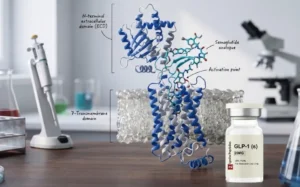
Introduction Research on the GLP-1 mechanism is one of the
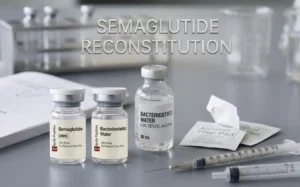
Semaglutide is one of the most studied peptides in modern
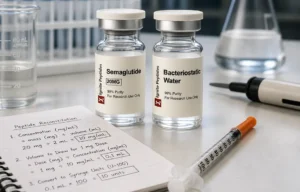
Every peptide vial in a research laboratory is labelled in
 Sign In to Google